

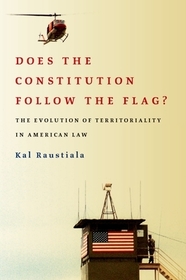
Does the Constitution Follow the Flag?
The Evolution of Territoriality in American Law
-
10% KEDVEZMÉNY?
- A kedvezmény csak az 'Értesítés a kedvenc témákról' hírlevelünk címzettjeinek rendeléseire érvényes.
- Kiadói listaár GBP 29.99
-
13 540 Ft (12 895 Ft + 5% áfa)
Az ár azért becsült, mert a rendelés pillanatában nem lehet pontosan tudni, hogy a beérkezéskor milyen lesz a forint árfolyama az adott termék eredeti devizájához képest. Ha a forint romlana, kissé többet, ha javulna, kissé kevesebbet kell majd fizetnie.
- Kedvezmény(ek) 10% (kb. 1 354 Ft)
- Kedvezményes ár 12 186 Ft (11 606 Ft + 5% áfa)
Iratkozzon fel most és részesüljön kedvezőbb árainkból!
Feliratkozom
13 540 Ft

Beszerezhetőség
Megrendelésre a kiadó utánnyomja a könyvet. Rendelhető, de a szokásosnál kicsit lassabban érkezik meg.
Why don't you give exact delivery time?
A beszerzés időigényét az eddigi tapasztalatokra alapozva adjuk meg. Azért becsült, mert a terméket külföldről hozzuk be, így a kiadó kiszolgálásának pillanatnyi gyorsaságától is függ. A megadottnál gyorsabb és lassabb szállítás is elképzelhető, de mindent megteszünk, hogy Ön a lehető leghamarabb jusson hozzá a termékhez.
A termék adatai:
- Kiadó OUP USA
- Megjelenés dátuma 2011. szeptember 29.
- ISBN 9780199858170
- Kötéstípus Puhakötés
- Terjedelem328 oldal
- Méret 234x156x17 mm
- Súly 458 g
- Nyelv angol 0
Kategóriák
Rövid leírás:
The Bush Administration has notoriously argued that detainees at Guantanamo do not enjoy constitutional rights because they are held outside American borders. But where do rules about territorial legal limits such as this one come from? Why does geography make a difference for what legal rules apply? Most people intuitively understand that location affects constitutional rights, but the legal and political basis for territorial jurisdiction is poorly understood.
TöbbHosszú leírás:
The Bush Administration has notoriously argued that detainees at Guantanamo do not enjoy constitutional rights because they are held outside American borders. But where do rules about territorial legal limits such as this one come from? Why does geography make a difference for what legal rules apply? Most people intuitively understand that location affects constitutional rights, but the legal and political basis for territorial jurisdiction is poorly understood. In this novel and accessible treatment of territoriality in American law and foreign policy, Kal Raustiala begins by tracing the history of the subject from its origins in post-revolutionary America to the Indian wars and overseas imperialism of the 19th century. He then takes the reader through the Cold War and the globalization era before closing with a powerful explanation of America's attempt to increase its extraterritorial power in the post-9/11 world. As American power has grown, our understanding of extraterritorial legal rights has expanded too, and Raustiala illuminates why America's assumptions about sovereignty and territory have changed. Throughout, he focuses on how the legal limits of territorial sovereignty have diminished to accommodate the expanding American empire, and addresses how such limits ought to look in the wake of Iraq, Afghanistan, and the war on terror. A timely and engaging narrative, Does the Constitution Follow the Flag? will change how we think about American territory, American law, and-ultimately-the changing nature of American power.
TöbbTartalomjegyzék:
Preface
1. Territoriality in American Law
2. Territory and the Republic
3. The Imperial Constitution
4. The Fall and Rise of Extraterritoriality
5. America Abroad
6. The Long Arm of the Law
7. Offshoring the War on Terror
8. Territoriality's Evolution

