

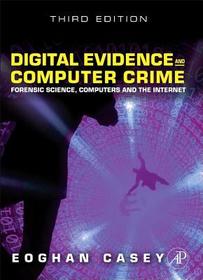
Digital Evidence and Computer Crime
Forensic Science, Computers, and the Internet
-
10% KEDVEZMÉNY?
- A kedvezmény csak az 'Értesítés a kedvenc témákról' hírlevelünk címzettjeinek rendeléseire érvényes.
- Kiadói listaár EUR 61.95
-
24 197 Ft (23 045 Ft + 5% áfa)
Az ár azért becsült, mert a rendelés pillanatában nem lehet pontosan tudni, hogy a beérkezéskor milyen lesz a forint árfolyama az adott termék eredeti devizájához képest. Ha a forint romlana, kissé többet, ha javulna, kissé kevesebbet kell majd fizetnie.
- Kedvezmény(ek) 10% (kb. 2 419 Ft)
- Kedvezményes ár 21 778 Ft (20 741 Ft + 5% áfa)
Iratkozzon fel most és részesüljön kedvezőbb árainkból!
Feliratkozom
24 197 Ft

Beszerezhetőség
Megrendelésre a kiadó utánnyomja a könyvet. Rendelhető, de a szokásosnál kicsit lassabban érkezik meg.
Why don't you give exact delivery time?
A beszerzés időigényét az eddigi tapasztalatokra alapozva adjuk meg. Azért becsült, mert a terméket külföldről hozzuk be, így a kiadó kiszolgálásának pillanatnyi gyorsaságától is függ. A megadottnál gyorsabb és lassabb szállítás is elképzelhető, de mindent megteszünk, hogy Ön a lehető leghamarabb jusson hozzá a termékhez.
A termék adatai:
- Kiadás sorszáma 3
- Kiadó Elsevier Science
- Megjelenés dátuma 2011. június 17.
- ISBN 9780123742681
- Kötéstípus Keménykötés
- Terjedelem840 oldal
- Méret 234x190 mm
- Súly 1950 g
- Nyelv angol 0
Kategóriák
Hosszú leírás:
Digital Evidence and Computer Crime, Third Edition, provides the knowledge necessary to uncover and use digital evidence effectively in any kind of investigation.
It offers a thorough explanation of how computer networks function, how they can be involved in crimes, and how they can be used as a source of evidence. In particular, it addresses the abuse of computer networks as well as privacy and security issues on computer networks.
This updated edition is organized into five parts. Part 1 is about digital forensics and covers topics ranging from the use of digital evidence in the courtroom to cybercrime law. Part 2 explores topics such as how digital investigations are conducted, handling a digital crime scene, and investigative reconstruction with digital evidence. Part 3 deals with apprehending offenders, whereas Part 4 focuses on the use of computers in digital investigation. The book concludes with Part 5, which includes the application of forensic science to networks.
New to this edition are updated information on dedicated to networked Windows, Unix, and Macintosh computers, as well as Personal Digital Assistants; coverage of developments in related technology and tools; updated language for search warrant and coverage of legal developments in the US impacting computer forensics; and discussion of legislation from other countries to provide international scope. There are detailed case examples that demonstrate key concepts and give students a practical/applied understanding of the topics, along with ancillary materials that include an Instructor's Manual and PowerPoint slides.
This book will prove valuable to computer forensic students and professionals, lawyers, law enforcement, and government agencies (IRS, FBI, CIA, CCIPS, etc.).
TöbbTartalomjegyzék:
PART 1: Digital Forensics
1. Foundations of Digital Forensics
2. Language of Computer Crime Investigation
3. Digital Evidence in the Courtroom
4. Cybercrime Law: A United States Perspective
5. Cybercrime Law: European Perspective
PART 2: Digital Investigations
6. Conducting Digital Investigations
7. Handling a Digital Crime Scene
8. Investigative Reconstruction with Digital Evidence
9. Modus Operandi, Motive, and Technology
PART 3: Apprehending Offenders
10. Violent Crime and Digital Evidence
11. Digital Evidence as Alibi
12. Sex Offenders on the Internet
13. Investigating Computer Intrusions
14. Cyberstalking
PART 4: Computers
15. Computer Basics for Digital Investigators
16. Applying Forensic Science to Computers
17. Forensic Examination of Windows Systems
18. Forensic Examination of UNIX Systems
19. Forensic Examination of Macintosh Systems
20. Forensic Examination of Mobile Devices (online only)
PART 5: Network Forensics
21. Network Basics for Digital Investigators
22. Applying Forensic Science to Networks
23. Digital Evidence on the Internet
24. Digital Evidence on Physical and Data-Link Layers
25. Digital Evidence at the Network and Transport Layers

