

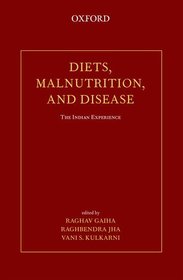
Diets, Malnutrition, and Disease
The Indian Experience
-
10% KEDVEZMÉNY?
- A kedvezmény csak az 'Értesítés a kedvenc témákról' hírlevelünk címzettjeinek rendeléseire érvényes.
- Kiadói listaár GBP 53.00
-
23 929 Ft (22 790 Ft + 5% áfa)
Az ár azért becsült, mert a rendelés pillanatában nem lehet pontosan tudni, hogy a beérkezéskor milyen lesz a forint árfolyama az adott termék eredeti devizájához képest. Ha a forint romlana, kissé többet, ha javulna, kissé kevesebbet kell majd fizetnie.
- Kedvezmény(ek) 10% (kb. 2 392 Ft)
- Kedvezményes ár 21 537 Ft (20 511 Ft + 5% áfa)
Iratkozzon fel most és részesüljön kedvezőbb árainkból!
Feliratkozom
23 929 Ft

Beszerezhetőség
Csak rendelésre kapható a kiadónál, kissé időigényes.
Why don't you give exact delivery time?
A beszerzés időigényét az eddigi tapasztalatokra alapozva adjuk meg. Azért becsült, mert a terméket külföldről hozzuk be, így a kiadó kiszolgálásának pillanatnyi gyorsaságától is függ. A megadottnál gyorsabb és lassabb szállítás is elképzelhető, de mindent megteszünk, hogy Ön a lehető leghamarabb jusson hozzá a termékhez.
A termék adatai:
- Kiadó OUP India
- Megjelenés dátuma 2014. október 2.
- ISBN 9780198099215
- Kötéstípus Keménykötés
- Terjedelem296 oldal
- Méret 223x149x25 mm
- Súly 496 g
- Nyelv angol
- Illusztrációk graphs 0
Kategóriák
Rövid leírás:
This book is a comprehensive analysis of malnutrition, meticulous exploration of dietary transition, poverty nutrition traps, links between multiple anthropometric failures among children and their vulnerability to infectious diseases, abysmal performance of the Public Distribution System and a critique of its conversion into a universal food subsidy, the links between affluence, obesity and non-communicable diseases (NCDs) and the health policy challenge of a "double burden of disease" of high communicable disease mortality and a growing burden of NCD mortality.
TöbbHosszú leírás:
What distinguishes this book from the current literature is its comprehensive analysis of malnutrition, meticulous exploration of dietary transition, poverty nutrition traps, links between multiple anthropometric failures among children and their vulnerability to infectious diseases, abysmal performance of the Public Distribution System and a critique of its conversion into a universal food subsidy, the links between affluence, obesity, and non-communicable diseases (NCDs) and the health policy challenge of a 'double burden of disease' of high communicable disease mortality and a growing burden of NCD mortality.
Why has calorie intake declined despite rapid economic growth is puzzling. An explanation is developed that encompasses the influences of food prices, growing affluence, urbanization, life-style changes and less strenuous activity levels. Dietary diversification had a role in lowering calorie intake. New light is shed on poverty-nutrition traps that limit the ability of undernourished to engage in productive and remunerative employment. Child malnutrition has remained stubbornly high. As simultaneous anthropometric failures among children (e.g. wasting, stunting, and underweight) are closely related to infectious diseases, a composite indicator of malnutrition, its variation and links to infectious diseases are analysed. Amelioration of child malnutrition through women's empowerment is emphasised. As an epidemiological transition is underway-higher deaths from chronic degenerative non-communicable diseases (NCDs) than from communicable diseases-key contributory factors are aging, affluence, and overweight/obesity. Health policy choices are, however, confounded by the irreversibility of growing affluence, life-style changes and urbanization. Although controversial, a universal food subsidy was legislated recently as the National Food Security Act (NFSA). The critique rests on huge leakages that will magnify under NFSA and aggravate fiscal deficit without a drastic overhaul of the PDS. A distillation of lessons from policies pursued elsewhere and various initiatives in India is given. The vision that emerges is unavoidably incomplete in some respects but illuminates successes, and failures in designing policies and in their implementation.
Tartalomjegyzék:
List of Tables and Figures
Foreword by C. Peter Timmer
Preface
1. Diets, Malnutrition, and Disease in India: An Overview
Raghav Gaiha, Raghbendra Jha, and Vani S. Kulkarni
2. Demand for Nutrients in India, 1993-2004
Raghav Gaiha, Raghbendra Jha, and Vani S. Kulkarni
3. Dietary Transition in India: An Analysis based on NSS Data for 1993 and 2004
Nidhi Kaicker, Vani S. Kulkarni, and Raghav Gaiha
4. How Pervasive is Eating Out in India?
Raghav Gaiha, Raghbendra Jha, and Vani S. Kulkarni
5. Calorie Thresholds and Undernutrition in India, 1993-2004
Nidhi Kaicker and Raghav Gaiha
6. Poverty Nutrition Traps in Rural India
Raghbendra Jha, Raghav Gaiha, and Anurag Sharma
7. Child Undernutrition in India
Raghav Gaiha, Raghbendra Jha, Vani S. Kulkarni
8. Affluence, Obesity, and Non-Communicable Diseases in India
Raghav Gaiha, Raghbendra Jha, and Vani S. Kulkarni
9. Food Subsidy, Income Transfer, and the Poor: A Comparative Analysis of the Public Distribution System in India's States
Raghbendra Jha, Raghav Gaiha, Manoj K. Pandey, and Nidhi Kaicker
10. Policies, Implementation, and Impact
Raghav Gaiha, Raghbendra Jha, Vani S. Kulkarni
References
Index
About the Editors and Contributors

