
• Kapcsolat

  • Hírlevél

  • Rólunk

  • Szállítási lehetőségek

  • Prospero könyvpiaci podcast

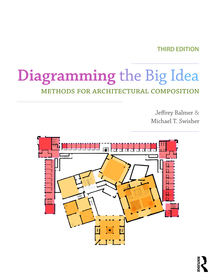
  • Diagramming the Big Idea: Methods for Architectural Composition

    Diagramming the Big Idea by Balmer, Jeffrey; Swisher, Michael;

    Methods for Architectural Composition

      • 10% KEDVEZMÉNY?

      • Kiadói listaár GBP 41.99
      • Az ár azért becsült, mert a rendelés pillanatában nem lehet pontosan tudni, hogy a beérkezéskor milyen lesz a forint árfolyama az adott termék eredeti devizájához képest. Ha a forint romlana, kissé többet, ha javulna, kissé kevesebbet kell majd fizetnie.

        20 060 Ft (19 105 Ft + 5% áfa)
      • Kedvezmény(ek) 10% (cc. 2 006 Ft off)
      • Kedvezményes ár 18 054 Ft (17 195 Ft + 5% áfa)

    Beszerezhetőség

    Még nem jelent meg, de rendelhető. A megjelenéstől számított néhány héten belül megérkezik.

    Why don't you give exact delivery time?

    A beszerzés időigényét az eddigi tapasztalatokra alapozva adjuk meg. Azért becsült, mert a terméket külföldről hozzuk be, így a kiadó kiszolgálásának pillanatnyi gyorsaságától is függ. A megadottnál gyorsabb és lassabb szállítás is elképzelhető, de mindent megteszünk, hogy Ön a lehető leghamarabb jusson hozzá a termékhez.

    A termék adatai:

    • Kiadás sorszáma 3
    • Kiadó Routledge
    • Megjelenés dátuma 2026. május 13.

    • ISBN 9781032937601
    • Kötéstípus Puhakötés
    • Terjedelem344 oldal
    • Méret 11x8 mm
    • Súly 453 g
    • Nyelv angol
    • Illusztrációk 1423 Illustrations, color; 1423 Halftones, color
    • 700

    Kategóriák

    Rövid leírás:

    Becoming an architect is a daunting task. This book introduces the fundamentals of design thinking by illustrating how architects make and use diagrams to clarify their understanding of both specific architectural projects and universal principles of form and order. 

    Több

    Hosszú leírás:

    Becoming an architect is a daunting task. Beyond the acquisition of new skills and procedures, beginning designers face an entirely unfamiliar mode of knowledge: design thinking. 


    In Diagramming the Big Idea, Jeffrey Balmer and Michael T. Swisher introduce the fundamentals of design thinking by illustrating how architects make and use diagrams to clarify their understanding of both specific architectural projects and universal principles of form and order. With accessible, step-by-step procedures that interweave diagrams, drawings and models, the authors demonstrate how to compose clear and revealing diagrams.


    This newly revised edition features:


    • An expanded array of global and contemporary works of architecture as precedents that demonstrate fundamental aspects of architectural composition.

    • Significantly enhanced coloration throughout, including 1400+ revised and new illustrations across 330 pages.

    • Three new illustrated essays adding depth to additional components of design thinking.


    'With each new iteration of this ambitious work its intentions become clearer and its content more generous. Of particular note in this third edition are the additional precedents provided to support the design strategies explored. These include, amongst many others, some fascinating spatial analyses of Ottoman mosques presented in the form of delicate geometric watercolours. There is also a new chapter illustrating the fruits of this innovative teaching method through the built works of former students.'


    Simon Unwin, Emeritus Professor of Architecture, University of Dundee, Scotland


    'Diagramming the Big Idea walks students – and architects – through thinking about design graphically, showing how complex ideas can be distilled, processed, manipulated, and refined through an active process. Whether drawn or modeled, diagrams are tools for understanding the built world and experimenting with how to change it. Balmer and Swisher patiently explain how diagrams underlie all design, and how diagramming allows us to engage with architectural fundamentals with precision and agility.'


    Thomas Leslie, FAIA, Ralph Johnson Professor of Architecture, University of Illinois, Urbana-Champaign


    'Diagramming the Big Idea was a tremendous help to me when first learning to teach beginning design. The book is full of useful techniques and processes that distill the basics of teaching architecture. The book continues to help me focus and target my teaching on foundational principles of the discipline.'


    Sallie Hambright-Belue, Associate Professor Clemson University, School of Architecture, USA


    Reviews of Diagramming the Big Idea – previous edition:


    'The book is expansive but deep – indeed, even tenacious – in its treatment of architectural composition. As a result, it is an ideal textbook for students and a perfect resource for enlightened practitioners.'


    Jim Sullivan, Dean, College of Professional Studies, Marywood University, USA


    'This book offers logical and concise discussions on basic design thinking and provides succinct demonstrations on the fundamentals of diagramming in a manner useful for both students and instructors. Armed with this book as a guide and a reference, beginning design students will have an easier time producing thoughtfully practiced diagrams aimed at clarifying architecture.'


    Bill Willoughby, Associate Dean, College of Architecture & Environmental Design, Kent State University, USA


    'This book is excellent for students and those interested in composition and architectural design. It allows readers to understand the diagramming process, techniques and their use. The many examples and descriptions in this book provide the foundations for becoming more design oriented while at the same time helping to provide alternate ideas and possibilities for including them into their own designs. The inclusion of a glossary of terms in each section is very helpful for keeping readers on track with the written material and the principles expressed. There is a lot of material to absorb here, and readers will likely find this book acting as a reference because of the wealth of practice and knowledge within it.'


    Jeff Thurston, Editor, 3D Visualization World Magazine, Germany


    'This is a charmingly disarming primer on the drawn line. Maybe it's the duplica- tor machine quality of the photos, its reliance on the orthogonal line, or the way it bursts into primary colour at the end...whatever, you might want this curio lin- ing your bookshelf.'


    Jan-Carlos Kucharek, RIBA Journal, UK

    Több

    Tartalomjegyzék:

    Part I: Setting the Stage. 1. Introduction. 2. Sorting through ideas. 3. Order First. Part II: The First Project Set. 4. Design & drawing fundamentals. 5. Building on proportion. 6. Conventions in Design. Part III: The third project set. 7. Starting in three dimensions. 8. Models & diagrams. Part IV: Precedents. 9. Precedent diagrams in two dimensions. 10. Precedent diagrams in three dimensions. Part V: Resources

    Több
    0