
• Kapcsolat

  • Hírlevél

  • Rólunk

  • Szállítási lehetőségek

  • Prospero könyvpiaci podcast

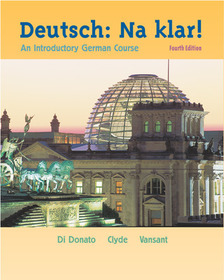
  • Deutsch: Na klar! An Introductory German Course (Student Edition)

    Deutsch: Na klar! An Introductory German Course (Student Edition) by Di Donato, Robert; Clyde, Monica; Vansant, Jacqueline;

      • 10% KEDVEZMÉNY?

      • A kedvezmény csak az 'Értesítés a kedvenc témákról' hírlevelünk címzettjeinek rendeléseire érvényes.
      • Kiadói listaár GBP 67.99
      • Az ár azért becsült, mert a rendelés pillanatában nem lehet pontosan tudni, hogy a beérkezéskor milyen lesz a forint árfolyama az adott termék eredeti devizájához képest. Ha a forint romlana, kissé többet, ha javulna, kissé kevesebbet kell majd fizetnie.

        32 482 Ft (30 935 Ft + 5% áfa)
      • Kedvezmény(ek) 10% (cc. 3 248 Ft off)
      • Kedvezményes ár 29 234 Ft (27 842 Ft + 5% áfa)

    32 482 Ft

    Beszerezhetőség

    Megjelenése törölve vagy kivonva a forgalomból. Sajnos nem rendelhető.

    Why don't you give exact delivery time?

    A beszerzés időigényét az eddigi tapasztalatokra alapozva adjuk meg. Azért becsült, mert a terméket külföldről hozzuk be, így a kiadó kiszolgálásának pillanatnyi gyorsaságától is függ. A megadottnál gyorsabb és lassabb szállítás is elképzelhető, de mindent megteszünk, hogy Ön a lehető leghamarabb jusson hozzá a termékhez.

    A termék adatai:

    • Kiadás sorszáma 4
    • Kiadó McGraw-Hill Education
    • Megjelenés dátuma 2003. február 16.

    • ISBN 9780072408171
    • Kötéstípus Keménykötés
    • Terjedelem oldal
    • Méret 259x213x23 mm
    • Súly 1198 g
    • Nyelv angol
    • 0

    Kategóriák

    Tartalomjegyzék:

    Einführung

    Hallo! Guten Tag! Herzlich willkommen!

    Wie schreibt man das?

    Hallo!?Macht's gut!

    So zählt man auf Deutsch

    Nützliche Ausdrücke im Sprachkurs

    Sie können schon etwas Deutsch!

    Wo spricht man Deutsch?

    Kapitel 1: Über mich und andere

    Grammatik im Kontext

    Nouns, Gender, and Definite Articles
    Personal Pronouns
    The Verb: Infinitive and Present Tense
    Word Order in Sentences
    Asking Questions
    denn, doch, and ja

    Kapitel 2: Wie ich wohne

    Grammatik im Kontext

    The Plural of nouns
    The Nominative and Accusative Cases
    Weak Masculine Nouns
    The Verb haben
    Negations With nicht and the Negative Article kein
    Verbs with Stem-vowel Changes
    Demonstrative Pronouns

    Kapitel 3: Familie und Freunde

    Grammatik im Kontext

    Possessive Adjectives
    Personal Pronouns in the Accusative Case
    Prepositions in the Accusative Case
    The Verb werden
    The Verbs wissen and kennen

    Kapitel 4: Mein Tag

    Grammatik im Kontext

    Separable-Prefix Verbs
    The Imperative

    Kapitel 5: Einkaufen

    Grammatik im Kontext

    The Dative Case
    Interrogative Pronouns wo, wohin, and woher
    der-Words: dieser, jeder, and welcher

    Kapitel 6: Wir gehen aus

    Grammatik im Kontext

    Two-Way Prepositions
    Describing Location: hängen, liegen, sitzen, and stehen
    Describing Placement
    Expressing Time with Prepositions
    Expressing Events in the Past

    Kapitel 7: Freizeit und Sport

    Grammatik im Kontext

    Connecting Ideas: Coordinating Conjunctions
    Expressing Events in the Past: The Present Perfect Tense
    Formation of the Past Participle
    The Use of sein in the Present Perfect Tense

    Kapitel 8: Wie man fit und gesund bleibt

    Grammatik im Kontext

    Connecting Sentences: Subordinating Conjunctions
    Reflexive Pronouns and Verbs
    Reflexive Pronouns
    Verbs with Accusative Reflexive Pronouns
    Verbs with Dative Reflexive Pronouns

    Kapitel 9: In der Stadt

    Grammatik im Kontext

    The Genitive Case
    Attributive Adjectives
    Adjectives after a Definite Article or Other der-Word
    Adjectives after an Indefinite Article or Other ein-word
    Adjectives without a Preceding Article
    Indefinite Numerals and alle

    Kapitel 10: Auf Reisen

    Grammatik im Kontext

    Comparing Things and People
    Narrating Events in the Past
    The conjunction als
    The Past Perfect Tense

    Kapitel 11: Der Start in die Zukunft

    Grammatik im Kontext

    The Future Tense
    Describing People or Things: Relative Clauses
    The Interrogative Pronoun was für (ein)
    Negating Sentences

    Kapitel 12: Haus, Haushalt und Finanzen

    Grammatik im Kontext

    Referring to things and Ideas: da-Compounds
    Asking About Things and Ideas: wo-Compounds
    Subjunctive
    Units of Measurement: Fractions and Percentages

    Kapitel 13: Medien und Tecknik

    Grammatik im Kontext

    The verbs brauchen and scheinen
    Infinitive Clauses with zu
    Indirect Discourse
    Infinitive Clauses with um? zu and ohne ? zuKapitel 14: Die öffenliche MeinungGrammatik im Kontext
    The Passive Voice
    The Present Participle

    Übergang: Gestern und heute

    Kleine Chronik deutscher Geschichte von 1939?1991

    Beiträge zur deutschen Geschichte
    ?Wir leben im Verborgenen? von Ceja Stojka
    ?Briefe an Herber Hoover??Berlin: Hauptstadt im Wand?

    Több
    0