

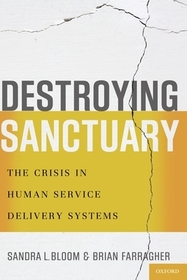
Destroying Sanctuary
The Crisis in Human Service Delivery Systems
-
10% KEDVEZMÉNY?
- A kedvezmény csak az 'Értesítés a kedvenc témákról' hírlevelünk címzettjeinek rendeléseire érvényes.
- Kiadói listaár GBP 56.00
-
26 754 Ft (25 480 Ft + 5% áfa)
Az ár azért becsült, mert a rendelés pillanatában nem lehet pontosan tudni, hogy a beérkezéskor milyen lesz a forint árfolyama az adott termék eredeti devizájához képest. Ha a forint romlana, kissé többet, ha javulna, kissé kevesebbet kell majd fizetnie.
- Kedvezmény(ek) 10% (cc. 2 675 Ft off)
- Kedvezményes ár 24 079 Ft (22 932 Ft + 5% áfa)
Iratkozzon fel most és részesüljön kedvezőbb árainkból!
Feliratkozom
26 754 Ft

Beszerezhetőség
Megrendelésre a kiadó utánnyomja a könyvet. Rendelhető, de a szokásosnál kicsit lassabban érkezik meg.
Why don't you give exact delivery time?
A beszerzés időigényét az eddigi tapasztalatokra alapozva adjuk meg. Azért becsült, mert a terméket külföldről hozzuk be, így a kiadó kiszolgálásának pillanatnyi gyorsaságától is függ. A megadottnál gyorsabb és lassabb szállítás is elképzelhető, de mindent megteszünk, hogy Ön a lehető leghamarabb jusson hozzá a termékhez.
A termék adatai:
- Kiadó OUP USA
- Megjelenés dátuma 2013. február 14.
- ISBN 9780199977918
- Kötéstípus Puhakötés
- Terjedelem442 oldal
- Méret 234x155x27 mm
- Súly 703 g
- Nyelv angol 0
Kategóriák
Rövid leírás:
This groundbreaking work outlines a vision for transforming our mental health and social service systems by addressing the deeply rooted organizational trauma that has come to define the very systems that are charged with ensuring our nation's collective mental health and well being.
TöbbHosszú leírás:
For the last thirty years, the nation's mental health and social service systems have been under relentless assault, with dramatically rising costs and the fragmentation of service delivery rendering them incapable of ensuring the safety, security, and recovery of their clients. The resulting organizational trauma both mirrors and magnifies the trauma-related problems their clients seek relief from. Just as the lives of people exposed to chronic trauma and abuse become organized around the traumatic experience, so too have our social service systems become organized around the recurrent stress of trying to do more under greater pressure: they become crisis-oriented, authoritarian, disempowered, and demoralized, often living in the present moment, haunted by the past, and unable to plan for the future.
Complex interactions among traumatized clients, stressed staff, pressured organizations, and a social and economic climate that is often hostile to recovery efforts recreate the very experiences that have proven so toxic to clients in the first place. Healing is possible for these clients if they enter helping, protective environments, yet toxic stress has destroyed the sanctuary that our systems are designed to provide.
This thoughtful, impassioned critique of business as usual begins to outline a vision for transforming our mental health and social service systems. Linking trauma theory to organizational function, Destroying Sanctuary provides a framework for creating truly trauma-informed services. The organizational change method that has become known as the Sanctuary Model lays the groundwork for establishing safe havens for individual and organizational recovery. The goals are practical: improve clinical outcomes, increase staff satisfaction and health, increase leadership competence, and develop a technology for creating and sustaining healthier systems. Only in this way can our mental health and social service systems become empowered to make a more effective contribution to the overall health of the nation.
Destroying Sanctuary is a stirring call for reform and recovery, required reading for anyone concerned with removing the formidable barriers to mental health and social services, from clinicians and administrators to consumer advocates.
Tartalomjegyzék:
Prologue
Introduction
Chapter 1: Human Service Delivery Organizations: Dead or Alive?
Chapter 2: "I Gotta Get out of This Place": Workplace Stress as a Threat to Public Health
Chapter 3: When Terror Becomes a Way of Life
Chapter 4: Parallel Processes and Trauma-Organized Systems
Chapter 5: Lack of Basic Safety
Chapter 6: Loss of Emotional Management
Chapter 7: Organizational Learning Disabilities, Organizational Amnesia, and Decision-Making Under Stress
Chapter 8: Miscommunication, Conflict, and Organizational Alexithymia
Chapter 9: Authoritarianism, Disempowerment, and Learned Helplessness
Chapter 10: Punishment, Revenge, and Organizational Injustice
Chapter 11: Unresolved Grief, Reenactment, and Decline
Chapter 12: Restoring Sanctuary: Organizations as Living, Complex Adaptive Social Systems
References
Index

