

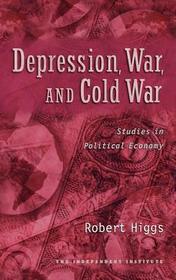
Depression, War, and Cold War
Studies in Political Economy
-
10% KEDVEZMÉNY?
- A kedvezmény csak az 'Értesítés a kedvenc témákról' hírlevelünk címzettjeinek rendeléseire érvényes.
- Kiadói listaár GBP 78.00
-
35 217 Ft (33 540 Ft + 5% áfa)
Az ár azért becsült, mert a rendelés pillanatában nem lehet pontosan tudni, hogy a beérkezéskor milyen lesz a forint árfolyama az adott termék eredeti devizájához képest. Ha a forint romlana, kissé többet, ha javulna, kissé kevesebbet kell majd fizetnie.
- Kedvezmény(ek) 10% (cc. 3 522 Ft off)
- Kedvezményes ár 31 695 Ft (30 186 Ft + 5% áfa)
Iratkozzon fel most és részesüljön kedvezőbb árainkból!
Feliratkozom
35 217 Ft

Beszerezhetőség
Megrendelésre a kiadó utánnyomja a könyvet. Rendelhető, de a szokásosnál kicsit lassabban érkezik meg.
Why don't you give exact delivery time?
A beszerzés időigényét az eddigi tapasztalatokra alapozva adjuk meg. Azért becsült, mert a terméket külföldről hozzuk be, így a kiadó kiszolgálásának pillanatnyi gyorsaságától is függ. A megadottnál gyorsabb és lassabb szállítás is elképzelhető, de mindent megteszünk, hogy Ön a lehető leghamarabb jusson hozzá a termékhez.
A termék adatai:
- Kiadó OUP USA
- Megjelenés dátuma 2006. július 13.
- ISBN 9780195182927
- Kötéstípus Keménykötés
- Terjedelem240 oldal
- Méret 242x183x21 mm
- Súly 485 g
- Nyelv angol
- Illusztrációk 14 line illus. 0
Kategóriák
Rövid leírás:
In Depression, War, and Cold War, economic historian and political economist Robert Higgs recasts our view of the relations between the federal government and the economy from the New Deal era to the end of the Cold War, presenting new evidence, new statistical analyses, and new interpretations of familiar data. The result is a strikingly altered panorama of recent U.S. history.
TöbbHosszú leírás:
Other books exist that warn of the dangers of empire and war. However, few, if any, of these books do so from a scholarly, informed economic standpoint. In Depression, War, and Cold War , Robert Higgs, a highly regarded economic historian, makes pointed, fresh economic arguments against war, showing links between government policies and the economy in a clear, accessible way. He boldly questions, for instance, the widely accepted idea that World War II was the chief reason the Depression-era economy recovered. The book as a whole covers American economic history from the Great Depression through the Cold War. Part I centers on the Depression and World War II. It addresses the impact of government policies on the private sector, the effects of wartime procurement policies on the economy, and the economic consequences of the transition to a peacetime economy after the victorious end of the war. Part II focuses on the Cold War, particularly on the links between Congress and defense procurement, the level of profits made by defense contractors, and the role of public opinion andnt ideological rhetoric in the maintenance of defense expenditures over time. This new book extends and refines ideas of the earlier book with new interpretations, evidence, and statistical analysis. This book will reach a similar audience of students, researchers, and educated lay people in political economy and economic history in particular, and in the social sciences in general.
A reading of the distressingly true facts and arguments in these essays raises fundamental questions as to what can be done: how to find and apply the necessary correctives to the popular and scholarly willingness to remain emotionally invested in erroneous explanations, and how to avoid responding to social and economic problems by waging destructive war. This most recent addition to Robert Higg's body of work is an invaluable guide in that further quest.

