

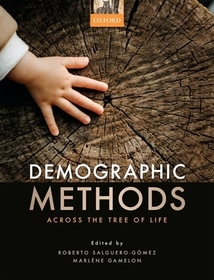
Demographic Methods across the Tree of Life
-
10% KEDVEZMÉNY?
- A kedvezmény csak az 'Értesítés a kedvenc témákról' hírlevelünk címzettjeinek rendeléseire érvényes.
- Kiadói listaár GBP 53.00
-
23 929 Ft (22 790 Ft + 5% áfa)
Az ár azért becsült, mert a rendelés pillanatában nem lehet pontosan tudni, hogy a beérkezéskor milyen lesz a forint árfolyama az adott termék eredeti devizájához képest. Ha a forint romlana, kissé többet, ha javulna, kissé kevesebbet kell majd fizetnie.
- Kedvezmény(ek) 10% (cc. 2 393 Ft off)
- Kedvezményes ár 21 537 Ft (20 511 Ft + 5% áfa)
Iratkozzon fel most és részesüljön kedvezőbb árainkból!
Feliratkozom
23 929 Ft

Beszerezhetőség
Becsült beszerzési idő: A Prosperónál jelenleg nincsen raktáron, de a kiadónál igen. Beszerzés kb. 3-5 hét..
A Prosperónál jelenleg nincsen raktáron.
Why don't you give exact delivery time?
A beszerzés időigényét az eddigi tapasztalatokra alapozva adjuk meg. Azért becsült, mert a terméket külföldről hozzuk be, így a kiadó kiszolgálásának pillanatnyi gyorsaságától is függ. A megadottnál gyorsabb és lassabb szállítás is elképzelhető, de mindent megteszünk, hogy Ön a lehető leghamarabb jusson hozzá a termékhez.
A termék adatai:
- Kiadó OUP Oxford
- Megjelenés dátuma 2021. augusztus 31.
- ISBN 9780198838616
- Kötéstípus Puhakötés
- Terjedelem400 oldal
- Méret 246x190x18 mm
- Súly 854 g
- Nyelv angol
- Illusztrációk 86 colour line figures and illustrations 117
Kategóriák
Rövid leírás:
This novel book provides the reader with the fundamentals of data collection, model construction, analyses, and interpretation across a wide repertoire of demographic techniques and protocols, clearly guided throughout with fully reproducible R scripts.
TöbbHosszú leírás:
Demography is everywhere in our lives: from birth to death. Indeed, the universal currencies of survival, development, reproduction, and recruitment shape the performance of all species, from microbes to humans. The number of techniques for demographic data acquisition and analyses across the entire tree of life (microbes, fungi, plants, and animals) has drastically increased in recent decades. These developments have been partially facilitated by the advent of technologies such as GIS and drones, as well as analytical methods including Bayesian statistics and high-throughput molecular analyses. However, despite the universality of demography and the significant research potential that could emerge from unifying: (i) questions across taxa, (ii) data collection protocols, and (iii) analytical tools, demographic methods to date have remained taxonomically siloed and methodologically disintegrated. This is the first book to attempt a truly unified approach to demography and population ecology in order to address a wide range of questions in ecology, evolution, and conservation biology across the entire spectrum of life.
This novel book provides the reader with the fundamentals of data collection, model construction, analyses, and interpretation across a wide repertoire of demographic techniques and protocols. It introduces the novice demographer to a broad range of demographic methods, including abundance-based models, life tables, matrix population models, integral projection models, integrated population models, individual based models, and more. Through the careful integration of data collection methods, analytical approaches, and applications, clearly guided throughout with fully reproducible R scripts, the book provides an up-to-date and authoritative overview of the most popular and effective demographic tools.
Demographic Methods across the Tree of Life is aimed at graduate students and professional researchers in the fields of demography, ecology, animal behaviour, genetics, evolutionary biology, mathematical biology, and wildlife management.
This book is a gold mine of modern demographic tools, research ideas, and applications and presents solutions through the use of cutting-edge demographic tools and frameworks applied to data collected across the tree of life.
Tartalomjegyzék:
Foreword
Introduction: From Lions, to Lion's Manes, and Dandelions: Why Using (which types of) Demographic Data and Methods
Part I: Demographic Data Collection: From Genes to Environment
Genetic Data Collection, Pedigrees and Phylogenies
Biochemical and Physiological Data Collection
Social Data Collection and Analyses
Growth Rings across the Tree of Life: Demographic Insights from Biogenic Time Series Data
Longitudinal Demographic Data Collection
Drivers of Demography: Past Challenges and a Promise for a Changed Future
Part II: Data and Research Question-Driven Methods
Abundance Based Approaches
Life Tables: Construction and Interpretation
Introduction to Matrix Population Models
Integral Projection Models
Transient Analyses of Population Dynamics Using Matrix Projection Models
Individual-Based Models
Survival Analyses
Efficient use of demographic Data: Integrated Population Models
Part III: Applications
Spatial Demography
Evolutionary Demography
Reproductive value and analyses of population dynamics of age-structured populations
Applying Comparative Methods to Different Databases: Lessons from Demographic Analyses Across Mammal Species
Adaptive Management: Making Recurrent Decisions in the Face of Uncertainty
Heritability, Polymorphism and Population Dynamics: Individual-Based Eco-Evolutionary Simulations
Demographic Processes in Socially Structured Populations
Demographic Methods in Epidemiology

