

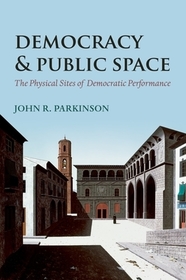
Democracy and Public Space
The Physical Sites of Democratic Performance
-
10% KEDVEZMÉNY?
- A kedvezmény csak az 'Értesítés a kedvenc témákról' hírlevelünk címzettjeinek rendeléseire érvényes.
- Kiadói listaár GBP 38.99
-
17 603 Ft (16 765 Ft + 5% áfa)
Az ár azért becsült, mert a rendelés pillanatában nem lehet pontosan tudni, hogy a beérkezéskor milyen lesz a forint árfolyama az adott termék eredeti devizájához képest. Ha a forint romlana, kissé többet, ha javulna, kissé kevesebbet kell majd fizetnie.
- Kedvezmény(ek) 10% (kb. 1 760 Ft)
- Kedvezményes ár 15 843 Ft (15 089 Ft + 5% áfa)
Iratkozzon fel most és részesüljön kedvezőbb árainkból!
Feliratkozom
17 603 Ft

Beszerezhetőség
Megrendelésre a kiadó utánnyomja a könyvet. Rendelhető, de a szokásosnál kicsit lassabban érkezik meg.
Why don't you give exact delivery time?
A beszerzés időigényét az eddigi tapasztalatokra alapozva adjuk meg. Azért becsült, mert a terméket külföldről hozzuk be, így a kiadó kiszolgálásának pillanatnyi gyorsaságától is függ. A megadottnál gyorsabb és lassabb szállítás is elképzelhető, de mindent megteszünk, hogy Ön a lehető leghamarabb jusson hozzá a termékhez.
A termék adatai:
- Kiadó OUP Oxford
- Megjelenés dátuma 2014. január 16.
- ISBN 9780199676941
- Kötéstípus Puhakötés
- Terjedelem272 oldal
- Méret 233x156x14 mm
- Súly 456 g
- Nyelv angol 0
Kategóriák
Rövid leírás:
Democracy and Public Space claims that the current fashion for online democracy risks undermining democracy's very foundations. Challenging the received academic wisdom, the author offers a compelling, new vision of democratic public space and assesses the success of eleven world cities in the light of it.
TöbbHosszú leírás:
In an online, interconnected world, democracy is increasingly made up of wikis and blogs, pokes and tweets. Citizens have become accidental journalists thanks to their handheld devices, politicians are increasingly working online, and the traditional sites of democracy - assemblies, public galleries, and plazas - are becoming less and less relevant with every new technology. And yet, this book argues, such views are leading us to confuse the medium with the message, focusing on electronic transmission when often what cyber citizens transmit is pictures and narratives of real democratic action in physical space. Democratic citizens are embodied, take up space, battle over access to physical resources, and perform democracy on physical stages at least as much as they engage with ideas in virtual space. Combining conceptual analysis with interviews and observation in capital cities on every continent, John Parkinson argues that democracy requires physical public space; that some kinds of space are better for performing some democratic roles than others; and that some of the most valuable kinds of space are under attack in developed democracies. He argues that accidental publics like shoppers and lunchtime crowds are increasingly valued over purposive, active publics, over citizens with a point to make or an argument to listen to. This can be seen not just in the way that traditional protest is regulated, but in the ways that ordinary city streets and parks are managed, even in the design of such quintessentially democratic spaces as legislative assemblies. The book offers an alternative vision for democratic public space, and evaluates 11 cities - from London to Tokyo - against that ideal.
... the strength of the book lies in Parkinsons careful and thoughtful consideration of democracy and democratic roles and in the way in which he analyses space and place as an essential element in democratic performance. As such his book should be read not only by all those with an interest in legislative behaviour, urban politics, public participation, and protest politics, but also by others with a genuine interest in how our political systems work in practice. Highly recommended.
Tartalomjegyzék:
Contents
List of Figures
Illustrations
Preface
Introduction
Part I: The Theory of Democratic Public Space
Democratic Theory, Democratic Performance
Theorizing Public Space
Place and Politics
Part II: Public Space and Democratic Performance
Assemblies I: Performing Public Roles
Assemblies II: The Public and Accessibility
Protest and the Plaza: Engaging the Formal Public Sphere
The City as Representative Space
Conclusions and Implications
References

