

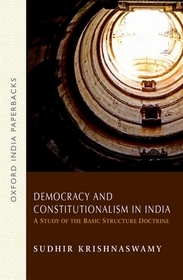
Democracy and Constitutionalism in India
A Study of the Basic Structure Doctrine
-
10% KEDVEZMÉNY?
- A kedvezmény csak az 'Értesítés a kedvenc témákról' hírlevelünk címzettjeinek rendeléseire érvényes.
- Kiadói listaár GBP 11.99
-
5 413 Ft (5 155 Ft + 5% áfa)
Az ár azért becsült, mert a rendelés pillanatában nem lehet pontosan tudni, hogy a beérkezéskor milyen lesz a forint árfolyama az adott termék eredeti devizájához képest. Ha a forint romlana, kissé többet, ha javulna, kissé kevesebbet kell majd fizetnie.
- Kedvezmény(ek) 10% (cc. 541 Ft off)
- Kedvezményes ár 4 871 Ft (4 640 Ft + 5% áfa)
Iratkozzon fel most és részesüljön kedvezőbb árainkból!
Feliratkozom
5 413 Ft

Beszerezhetőség
Csak rendelésre kapható a kiadónál, kissé időigényes.
Why don't you give exact delivery time?
A beszerzés időigényét az eddigi tapasztalatokra alapozva adjuk meg. Azért becsült, mert a terméket külföldről hozzuk be, így a kiadó kiszolgálásának pillanatnyi gyorsaságától is függ. A megadottnál gyorsabb és lassabb szállítás is elképzelhető, de mindent megteszünk, hogy Ön a lehető leghamarabb jusson hozzá a termékhez.
A termék adatai:
- Kiadó OUP India
- Megjelenés dátuma 2011. január 27.
- ISBN 9780198071617
- Kötéstípus Puhakötés
- Terjedelem280 oldal
- Méret 219x141x17 mm
- Súly 268 g
- Nyelv angol 0
Kategóriák
Rövid leírás:
This is a unique work aimed at completely refiguring our understanding of the judicial role in Indian constitutional law and the significance of the review of basic structure doctrine.
TöbbHosszú leírás:
This book presents a completely reconfigured understanding of the judicial role in Indian constitutional law. The author presents a completely reconfigured understanding of the judicial role in Indian constitutional law. He lucidly and critically examines the significance and status of the basic structure doctrine today. He addresses the question whether basic structure review is an appropriate exercise of judicial power or an abuse of it. He argues that much of the criticism against the doctrine emerges from a failure to adequately map the contours of constitutional judicial review. He assesses the legitimacy of basic structure review under three categories-legal, moral, and sociological. It critiques the views of major scholars including Seervai, Sathe, Austin, and Baxi. It also analyses the post Kesavananda Bharti cases and studies how the scope of the basic structure doctrine has been expanded by the court. He tries to develop an essential benchmark against which judicial performance may be assessed and the confusions currently inherent in the Indian debate on judicial activism finally eliminated.
Sudhir Krishnaswamy has put forward one of the most comprehensive and convincing defences of the basic structure doctrine and its application in India.

