

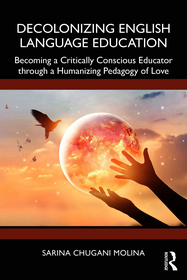
Decolonizing English Language Education
Becoming a Critically Conscious Educator through a Humanizing Pedagogy of Love
-
10% KEDVEZMÉNY?
- Kiadói listaár GBP 41.99
-
18 958 Ft (18 055 Ft + 5% áfa)
Az ár azért becsült, mert a rendelés pillanatában nem lehet pontosan tudni, hogy a beérkezéskor milyen lesz a forint árfolyama az adott termék eredeti devizájához képest. Ha a forint romlana, kissé többet, ha javulna, kissé kevesebbet kell majd fizetnie.
- Kedvezmény(ek) 10% (cc. 1 896 Ft off)
- Kedvezményes ár 17 062 Ft (16 250 Ft + 5% áfa)
17 062 Ft

Beszerezhetőség
Még nem jelent meg, de rendelhető. A megjelenéstől számított néhány héten belül megérkezik.
Why don't you give exact delivery time?
A beszerzés időigényét az eddigi tapasztalatokra alapozva adjuk meg. Azért becsült, mert a terméket külföldről hozzuk be, így a kiadó kiszolgálásának pillanatnyi gyorsaságától is függ. A megadottnál gyorsabb és lassabb szállítás is elképzelhető, de mindent megteszünk, hogy Ön a lehető leghamarabb jusson hozzá a termékhez.
A termék adatai:
- Kiadás sorszáma 1
- Kiadó Taylor & Francis
- Megjelenés dátuma 2026. szeptember 4.
- ISBN 9781032909035
- Kötéstípus Puhakötés
- Terjedelem248 oldal
- Méret 234x156 mm
- Nyelv angol
- Illusztrációk 36 Illustrations, black & white 700
Kategóriák
Rövid leírás:
Decolonising English Language Education offers a grounded introduction to decolonial practices in language learning. It invites readers to problematise and rethink English language education by uncovering its deep ties to colonial history and imagining new, more humanizing possibilities for the contemporary classroom.
TöbbHosszú leírás:
Decolonizing English Language Education offers a grounded introduction to decolonial practices in language learning. It invites readers to problematize and rethink English language education by uncovering its deep ties to colonial history and imagining new, more humanizing possibilities for the contemporary classroom.
Spanning histories of empire to present-day policies and practices, this book traces how English has been commonly associated with power, opportunity, and mobility while also perpetuating inequality and marginalization. Molina guides teachers through a reflective and methodical journey: first, understanding how colonial legacies shape language education; then, moving toward decolonizing one’s own consciousness; and, ultimately, adopting practical strategies for a transformative pedagogy rooted in critical, decolonial love. Drawing on the author’s own experience and insights from Indigenous knowledge systems and critical traditions, this book emphasizes the importance of love, spirituality, and relationality in language teacher education. Case studies and hands-on examples highlight how teachers can use translingual, multimodal, and culturally sustaining practices to affirm learners’ diverse identities and gifts. This book effectively re-imagines language teaching not just as skills-based instruction but as a moral and transformative endeavor.
By incorporating decolonial practice and reflection into research, this book is ideal for policymakers, scholars, and teachers alike. It is a valuable resource for applied linguistics, language acquisition, second language acquisition theory and methodology, and practical courses offering work placements.
TöbbTartalomjegyzék:
Introduction Part I. Understanding Coloniality, Raciolinguistics, and Power in the Field of English Language Education Chapter 1. Understanding Coloniality in the Field of English Language Education Chapter 2. Tracing Language Learning Theories: from Behaviorism to Raciolinguistic Theory Chapter 3. Messaging of Power in the Field of English Language Education Part II. Decolonizing Consciousness and Examining Policies, Pedagogies, and Practices Chapter 4. The Inner Work of Decolonizing Consciousness and the Journey Toward Onto-Epistemological Integration Chapter 5. Examining Our Own Policies, Pedagogies, and Practices Through Critical, Decolonial Inquiry Part III. Reimagining English Language Education Through Critical and Humanizing Pedagogies Chapter 6. Critical, Decolonial Love as Healing, Resistance, and Relational Praxis in English Language Education Chapter 7. Critical, Decolonial Love in English Language Education: from Theory to Praxis Chapter 8. Imagining, Dreaming, Decolonial Possibilities in Teaching English to Speakers of Other Languages
Több
