

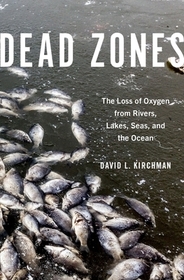
Dead Zones
The Loss of Oxygen from Rivers, Lakes, Seas, and the Ocean
-
10% KEDVEZMÉNY?
- A kedvezmény csak az 'Értesítés a kedvenc témákról' hírlevelünk címzettjeinek rendeléseire érvényes.
- Kiadói listaár GBP 38.99
-
17 603 Ft (16 765 Ft + 5% áfa)
Az ár azért becsült, mert a rendelés pillanatában nem lehet pontosan tudni, hogy a beérkezéskor milyen lesz a forint árfolyama az adott termék eredeti devizájához képest. Ha a forint romlana, kissé többet, ha javulna, kissé kevesebbet kell majd fizetnie.
- Kedvezmény(ek) 10% (kb. 1 760 Ft)
- Kedvezményes ár 15 843 Ft (15 089 Ft + 5% áfa)
Iratkozzon fel most és részesüljön kedvezőbb árainkból!
Feliratkozom
17 603 Ft

Beszerezhetőség
Becsült beszerzési idő: A Prosperónál jelenleg nincsen raktáron, de a kiadónál igen. Beszerzés kb. 3-5 hét..
A Prosperónál jelenleg nincsen raktáron.
Why don't you give exact delivery time?
A beszerzés időigényét az eddigi tapasztalatokra alapozva adjuk meg. Azért becsült, mert a terméket külföldről hozzuk be, így a kiadó kiszolgálásának pillanatnyi gyorsaságától is függ. A megadottnál gyorsabb és lassabb szállítás is elképzelhető, de mindent megteszünk, hogy Ön a lehető leghamarabb jusson hozzá a termékhez.
A termék adatai:
- Kiadó OUP USA
- Megjelenés dátuma 2021. április 8.
- ISBN 9780197520376
- Kötéstípus Keménykötés
- Terjedelem228 oldal
- Méret 155x236x20 mm
- Súly 476 g
- Nyelv angol 77
Kategóriák
Rövid leírás:
The number and size of dead zones, uninhabitable zones in our water, are on the rise. In this book, David L. Kirchman explains how they were discovered and what we can do to reduce their threat on human and aquatic life.
TöbbHosszú leírás:
Dead zones are on the rise...
Human activity has caused an increase in uninhabitable, oxygen-poor zones--also known as "dead zones"--in our waters. Oxygen is the third most abundant element in the universe, and it is a necessity for nearly all life on Earth. Yet many rivers, estuaries, coastal waters, and parts of the open ocean lack enough of it.
In this book, David L. Kirchman explains the impacts of dead zones and provides an in-depth history of oxygen loss in water. He details the role the agricultural industry plays in water pollution, showcasing how fertilizers contaminate water supplies and kickstart harmful algal blooms in local lakes, reservoirs, and coastal oceans. Algae decomposition requires so much oxygen that levels drop low enough to kill fish, destroy bottom-dwelling biota, reduce biological diversity, and rearrange food webs. We can't undo the damage completely, but we can work together to reduce the size and intensity of dead zones in places like the Gulf of Mexico, Chesapeake Bay, and the Baltic Sea.
Not only does Kirchman clearly outline what dead zones mean for humanity, he also supplies ways we can reduce their deadly impact on human and aquatic life. Nutrient pollution in some regions has already begun to decline because of wastewater treatment, buffer zones, cover crops, and precision agriculture. More needs to be done, though, to reduce the harmful impact of existing dead zones and to stop the thousands of new ones from cropping up in our waters. Kirchman provides insight into the ways changing our diet can reduce nutrient pollution while also lowering greenhouse gasses emitted by the agricultural industry. Individuals can do something positive for their health and the world around them. The resulting book allows readers interested in the environment--whether students, policymakers, ecosystem managers, or science buffs--to dive into these deadly zones and discover how they can help mitigate the harmful effects of oxygen-poor waters today.
This book weaves a great story about the most insidious form of aquatic pollution, encompassing greed, denial, and stupidity on the one hand, and human ingenuity and the triumph of science on the other. This mixture makes for great reading -- a true detective yarn if you will ... I highly recommend this book to everyone -- ecologists, teachers, monitoring experts, fishers, conservation organizations, policymakers -- in my opinion its even qualifies as a summer beach read for the broader public. A bookshelf must!
Tartalomjegyzék:
Prologue
Chapter 1: The Great Stinks
Chapter 2: Dead Zones Discovered in Coastal Waters
Chapter 3: Coastal Dead Zones in the Past
Chapter 4: What Happened in 1950?
Chapter 5: Giving the Land a Lick
Chapter 6: Liebig's Law and Haber's Tragedy
Chapter 7: The Case for Phosphorus
Chapter 8: Fish and Fisheries
Chapter 9: Dead Zones in the Open Oceans
Chapter 10: Reviving Dead Zones
Acknowledgments
Selected Bibliography
Index

