

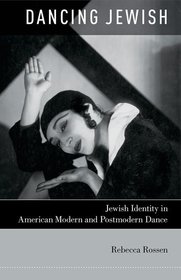
Dancing Jewish
Jewish Identity in American Modern and Postmodern Dance
-
10% KEDVEZMÉNY?
- A kedvezmény csak az 'Értesítés a kedvenc témákról' hírlevelünk címzettjeinek rendeléseire érvényes.
- Kiadói listaár GBP 145.00
-
65 467 Ft (62 350 Ft + 5% áfa)
Az ár azért becsült, mert a rendelés pillanatában nem lehet pontosan tudni, hogy a beérkezéskor milyen lesz a forint árfolyama az adott termék eredeti devizájához képest. Ha a forint romlana, kissé többet, ha javulna, kissé kevesebbet kell majd fizetnie.
- Kedvezmény(ek) 10% (kb. 6 546 Ft)
- Kedvezményes ár 58 921 Ft (56 115 Ft + 5% áfa)
Iratkozzon fel most és részesüljön kedvezőbb árainkból!
Feliratkozom
65 467 Ft

Beszerezhetőség
Megrendelésre a kiadó utánnyomja a könyvet. Rendelhető, de a szokásosnál kicsit lassabban érkezik meg.
Why don't you give exact delivery time?
A beszerzés időigényét az eddigi tapasztalatokra alapozva adjuk meg. Azért becsült, mert a terméket külföldről hozzuk be, így a kiadó kiszolgálásának pillanatnyi gyorsaságától is függ. A megadottnál gyorsabb és lassabb szállítás is elképzelhető, de mindent megteszünk, hogy Ön a lehető leghamarabb jusson hozzá a termékhez.
A termék adatai:
- Kiadó OUP USA
- Megjelenés dátuma 2014. június 5.
- ISBN 9780199791767
- Kötéstípus Keménykötés
- Terjedelem336 oldal
- Méret 157x236x25 mm
- Súly 709 g
- Nyelv angol
- Illusztrációk over 50 illustrations 0
Kategóriák
Rövid leírás:
Jewish choreographers have not only been vital contributors to American modern and postmodern dance, but they have also played a critical and unacknowledged role in American Jewish culture. This book delineates this rich history, demonstrating how, over the twentieth century, dance enabled American Jews to grapple with identity, difference, cultural belonging, and pride.
TöbbHosszú leírás:
While Jews are commonly referred to as the "people of the book," American Jewish choreographers have consistently turned to dance as a means to articulate personal and collective identities; tangle with stereotypes; advance social and political agendas; and imagine new possibilities for themselves as individuals, artists, and Jews. Dancing Jewish delineates this rich history, demonstrating that Jewish choreographers have not only been vital contributors to American modern and postmodern dance, but that they have also played a critical and unacknowledged role in the history of Jews in the United States. By examining the role dance has played in the struggle between Jewish identification and integration into American life, the book moves across disciplinary boundaries to show how cultural identity, nationality, ethnicity, and gender are formed and performed through the body and its motions.
A dancer and choreographer, as well as an historian, Rebecca Rossen offers evocative analyses of dances while asserting the importance of embodied methodologies to academic research. Featuring over fifty images, a companion website, and key works from 1930 to 2005 by a wide range of artists-including David Dorfman, Dan Froot, David Gordon, Hadassah, Margaret Jenkins, Pauline Koner, Dvora Lapson, Liz Lerman, Sophie Maslow, Anna Sokolow, and Benjamin Zemach-Dancing Jewish offers a comprehensive framework for interpreting performance and establishes dance as a crucial site in which American Jews have grappled with cultural belonging, personal and collective histories, and the values that bind and pull them apart.
Rossen's deft interweaving of beautifully-written movement descriptions with rigorous scholarship produces a multifaceted analysis of the role of Jewish identity within the development of modern and postmodern dance. Dancing Jewish is an important original contribution to dance studies.
Tartalomjegyzék:
Introduction
Prelude: Make Me a Jewish Dance
Act I: Dancing the Jew
Chapter 1: The Dancing Jew(ess): Ethnic Ambiguity and Hasidic Drag
Chapter 2: Biblical Heroines and Anti-Heroines
Chapter 3: The Jewish Man and His Dancing Shtick
Entr'acte: Make Me a Jewish Dance
Act II: Dancing Jewish
Chapter 4: Dancing Folk: Jewish Memory and Amnesia
Chapter 5: Dancing Zionism, Embodying Conflict
Conclusion: Dancing Jewish, Dancing American
Curtain Call: Dance Me My Jewish Dance
Bibliography
Index

