

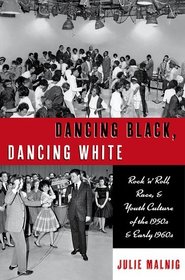
Dancing Black, Dancing White
Rock 'n' Roll, Race, and Youth Culture of the 1950s and Early 1960s
-
10% KEDVEZMÉNY?
- A kedvezmény csak az 'Értesítés a kedvenc témákról' hírlevelünk címzettjeinek rendeléseire érvényes.
- Kiadói listaár GBP 25.99
-
11 734 Ft (11 175 Ft + 5% áfa)
Az ár azért becsült, mert a rendelés pillanatában nem lehet pontosan tudni, hogy a beérkezéskor milyen lesz a forint árfolyama az adott termék eredeti devizájához képest. Ha a forint romlana, kissé többet, ha javulna, kissé kevesebbet kell majd fizetnie.
- Kedvezmény(ek) 10% (kb. 1 174 Ft)
- Kedvezményes ár 10 560 Ft (10 058 Ft + 5% áfa)
Iratkozzon fel most és részesüljön kedvezőbb árainkból!
Feliratkozom
11 734 Ft

Beszerezhetőség
Becsült beszerzési idő: A Prosperónál jelenleg nincsen raktáron, de a kiadónál igen. Beszerzés kb. 3-5 hét..
A Prosperónál jelenleg nincsen raktáron.
Why don't you give exact delivery time?
A beszerzés időigényét az eddigi tapasztalatokra alapozva adjuk meg. Azért becsült, mert a terméket külföldről hozzuk be, így a kiadó kiszolgálásának pillanatnyi gyorsaságától is függ. A megadottnál gyorsabb és lassabb szállítás is elképzelhető, de mindent megteszünk, hogy Ön a lehető leghamarabb jusson hozzá a termékhez.
A termék adatai:
- Kiadó OUP USA
- Megjelenés dátuma 2023. június 29.
- ISBN 9780197536261
- Kötéstípus Puhakötés
- Terjedelem240 oldal
- Méret 236x156x14 mm
- Súly 354 g
- Nyelv angol
- Illusztrációk 23 b&w halftones 299
Kategóriák
Rövid leírás:
Dancing Black, Dancing White offers a new look at a popular phenomenon of the 1950s and 1960s---the televised teen dance program. Through a social and cultural history lens, the book uses these shows to explore rock and roll and how it affected both white and Black teenagers. The crux of the book is twofold: to explore how social and popular dance styles were created and disseminated within the new technology of television and to investigate how the shows both reflected and re-affirmed the racial politics and attitudes of the time.
TöbbHosszú leírás:
Dancing Black, Dancing White: Rock 'n' Roll, Race, and Youth Culture of the 1950s and Early 1960s offers a new look at the highly popular phenomenon of the televised teen dance program. These teen shows were incubators of new styles of social and popular dance and both reflected and shaped pressing social issues of the day. Often referred to as "dance parties," the televised teen dance shows helped cultivate a nascent youth culture in the post-World War II era. The youth culture depicted on the shows, however, was primarily white. Black teenagers certainly had a youth culture of their own, but the injustice was glaring: Black culture was not always in evident display on the airwaves, as television, like the nation at large, was deeply segregated and appealed to a primarily white, homogenous audience. The crux of the book, then, is twofold: to explore how social and popular dance styles were created and disseminated within the new technology of television and to investigate how the shows both reflected and re-affirmed the racial politics and attitudes of the time.
The 1950s was a watershed decade for American culture and dance. The era witnessed the ascendancy of rock and roll music and recorded sound, the rise of the teenager as a marketing demographic, the beginnings of television, and a new phase of the country's struggle with race. The story of televised teen dance told here is about Black and white teenagers wanting to dance to rock 'n' roll music despite the barriers placed on their ability to do so. It is also a story that fuses issues of race, morality, and sexuality. Dancing Black, Dancing White weaves together these elements to tell two stories: that of the different experiences of Black and white adolescents and their desires to have a space of their own where they could be seen, heard, appreciated, and understood.
Malnig's work traces and digs into how polyvalent local, vernacular styles become commodified, national, popular styles.
Tartalomjegyzék:
Foreword
Introduction
1. Rock and Roll Dance and the TV Experiment
2. Transgressing Boundaries: Restraint and Rebellion in the Teen Dance Shows
3. "'Movin' and Groovin'": Black Teen Dance Shows of the 1950s and Early 1960s
4. Rock and Roll Dances and the Africanist Aesthetic
5. Girl Power: Youth Culture and Female Fandom
6. Storming the Sixties: From Teen Dances to Shindig!
Epilogue: Soul Train
Notes
Index

