

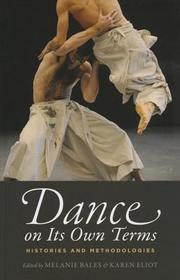
Dance on Its Own Terms
Histories and Methodologies
-
10% KEDVEZMÉNY?
- A kedvezmény csak az 'Értesítés a kedvenc témákról' hírlevelünk címzettjeinek rendeléseire érvényes.
- Kiadói listaár GBP 112.50
-
50 793 Ft (48 375 Ft + 5% áfa)
Az ár azért becsült, mert a rendelés pillanatában nem lehet pontosan tudni, hogy a beérkezéskor milyen lesz a forint árfolyama az adott termék eredeti devizájához képest. Ha a forint romlana, kissé többet, ha javulna, kissé kevesebbet kell majd fizetnie.
- Kedvezmény(ek) 10% (cc. 5 079 Ft off)
- Kedvezményes ár 45 714 Ft (43 538 Ft + 5% áfa)
Iratkozzon fel most és részesüljön kedvezőbb árainkból!
Feliratkozom
50 793 Ft

Beszerezhetőség
Megrendelésre a kiadó utánnyomja a könyvet. Rendelhető, de a szokásosnál kicsit lassabban érkezik meg.
Why don't you give exact delivery time?
A beszerzés időigényét az eddigi tapasztalatokra alapozva adjuk meg. Azért becsült, mert a terméket külföldről hozzuk be, így a kiadó kiszolgálásának pillanatnyi gyorsaságától is függ. A megadottnál gyorsabb és lassabb szállítás is elképzelhető, de mindent megteszünk, hogy Ön a lehető leghamarabb jusson hozzá a termékhez.
A termék adatai:
- Kiadó OUP USA
- Megjelenés dátuma 2013. június 13.
- ISBN 9780199939985
- Kötéstípus Keménykötés
- Terjedelem456 oldal
- Méret 157x234x27 mm
- Súly 896 g
- Nyelv angol
- Illusztrációk 35 line drawings, 42 halftones 0
Kategóriák
Rövid leírás:
Dance on its Own Terms: Histories and Methodologies anthologizes a wide range of subjects examined from dance-centered methodologies: modes of research that are emergent, based in relevant systems of movement analysis, use primary sources, and rely on critical, informed observation of movement. The anthology fills a gap in current scholarship by emphasizing dance history and core disciplinary knowledge rather than theories imported from disciplines outside dance.
TöbbHosszú leírás:
Dance on its Own Terms: Histories and Methodologies anthologizes a wide range of subjects examined from dance-centered methodologies: modes of research that are emergent, based in relevant systems of movement analysis, use primary sources, and rely on critical, informed observation of movement. The anthology fills a gap in current scholarship by emphasizing dance history and core disciplinary knowledge rather than theories imported from disciplines outside dance. Individual chapters serve as case studies that are further organized into three categories of significant dance activity: performance and reconstruction, pedagogy and choreographic process, and notational and other written forms that analyze and document dance. The breadth of the content reflects the richness and vibrancy of the dance field; each deeply informed examination serves as a window opening onto the larger world of dance. Conceptually, each chapter also raises concerns and questions that point to broadly inclusive methodological applications. Engaging and insightful, Dance on its Own Terms represents a major contribution to research on dance.
Here is an unquestionably lively book of dance essays, made more stimulating by the variety of new voices on the subject. Especially welcome is the central place given to dance itself, bravely situated here within a framework of current theory.
Tartalomjegyzék:
INTRODUCTION
SECTION ONE: In the moment of re-creation and performance
Section One Introduction
Chapter 1: "Dancing the Canon in Wartime: Sergeyev, de Valois, and Inglesby and the Classics of British Ballet," Karen Eliot
Chapter 2: "Reimagining Le Boeuf sur le Toit," Ann Dils
Chapter 3: "Reframing the Recent Past: Issues of Reconstruction in Israeli Contemporary Dance," Deborah Friedes Galili
Chapter 4: "The Body Censored: Dance, Morality and the Production Code during the Golden Age of the Film Musical," Betsy Cooper
Chapter 5: "'Single Ladies' is Gay: Queer Performances and Mediated Masculinities on YouTube," Harmony Bench
SECTION TWO: Within the body and mind of the dancer and choreographer
Section Two Introduction
Chapter 6: "La Cosmografia del minor mondo: Recovering Dance Theory to Create Today's Baroque Practice," Catherine Turocy
Chapter 7: "Touchstones of Tradition and Innovation: Pas de Deux by Petipa, Balanchine and Forsythe," Melanie Bales
Chapter 8: "Pavlova and her Daughters: Genealogies of Contingent Autonomy," Carrie Gaiser Casey
Chapter 9: "Joined-up Fragments in A Wedding Bouquet: Ashton, Berners and Stein," Geraldine Morris
Chapter 10: "Kaddish at the Wall: The Long Life of Anna Sokolow's 'Prayer for the Dead,'" Hannah Kosstrin
Chapter 11: "Developing the American Ballet Dancer: The Pedagogical Lineage of Rochelle Zide-Booth," Jessica Zeller
SECTION THREE: In the shape of written records
Section Three Introduction
Chapter 12: "Recording the Imperial Ballet: Anatomy and Ballet in Stepanov's Notation," Sheila Marion
Chapter 13: "Musical Expression in the Bournonville-L?venskjold La Sylphide Variation," Rebecca Schwartz-Bishir
Chapter 14: "Archives of Embodiment: Visual Culture and the Practice of Score Reading," Victoria Watts
Chapter 15: "Reading Music, Gesture, and Dualism in Mark Morris' Dido and Aeneas," Rachael Riggs-Leyva
Chapter 16: "What's in a Dance? The Complexity of Information in Writings about Dance," Candace Feck
CONTRIBUTOR BIOGRAPHIES
INDEX

