

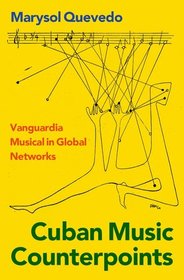
Cuban Music Counterpoints
Vanguardia Musical in Global Networks
Sorozatcím: CURRENTS IN LATIN AMER AND IBERIAN MUSIC;
-
10% KEDVEZMÉNY?
- A kedvezmény csak az 'Értesítés a kedvenc témákról' hírlevelünk címzettjeinek rendeléseire érvényes.
- Kiadói listaár GBP 79.00
-
35 668 Ft (33 970 Ft + 5% áfa)
Az ár azért becsült, mert a rendelés pillanatában nem lehet pontosan tudni, hogy a beérkezéskor milyen lesz a forint árfolyama az adott termék eredeti devizájához képest. Ha a forint romlana, kissé többet, ha javulna, kissé kevesebbet kell majd fizetnie.
- Kedvezmény(ek) 10% (kb. 3 566 Ft)
- Kedvezményes ár 32 102 Ft (30 573 Ft + 5% áfa)
Iratkozzon fel most és részesüljön kedvezőbb árainkból!
Feliratkozom
35 668 Ft

Beszerezhetőség
Becsült beszerzési idő: A Prosperónál jelenleg nincsen raktáron, de a kiadónál igen. Beszerzés kb. 3-5 hét..
A Prosperónál jelenleg nincsen raktáron.
Why don't you give exact delivery time?
A beszerzés időigényét az eddigi tapasztalatokra alapozva adjuk meg. Azért becsült, mert a terméket külföldről hozzuk be, így a kiadó kiszolgálásának pillanatnyi gyorsaságától is függ. A megadottnál gyorsabb és lassabb szállítás is elképzelhető, de mindent megteszünk, hogy Ön a lehető leghamarabb jusson hozzá a termékhez.
A termék adatai:
- Kiadó OUP USA
- Megjelenés dátuma 2023. október 4.
- ISBN 9780197552230
- Kötéstípus Keménykötés
- Terjedelem296 oldal
- Méret 237x164x26 mm
- Súly 562 g
- Nyelv angol
- Illusztrációk 30 426
Kategóriák
Rövid leírás:
Cuban Music Counterpoints traces the continuities and ruptures in the Cuban classical music scene between 1940 and 1991. The book focuses on specific events, objects, and compositions that reveal how composers forged connections with local and foreign composers, visual artists, writers, dancers, and film makers by placing them within emergent global, social, political, and cultural contexts.
TöbbHosszú leírás:
Cuban Music Counterpoints maps the intellectual and artistic networks Cuban composers forged between 1940 and 1991 by exploring moments--concerts, festivals, recordings--that shed light on how they negotiated aesthetic and political agendas at local and international levels. Beginning with the modernist neoclassicism of the Grupo de Renovación Musical in the 1940s and its Pan Americanist backdrop, the book moves through the more turbulent 1950s, when a more politically engaged organization, the Sociedad Cultural Nuestro Tiempo, promoted contemporary socially engaged art of Cuba and the Americas. Their activities set the stage for the post-1959 Revolutionary period of aesthetic and political experimentation in the 1960s, subsequent institutionalization of the 1970s, and the pluralist global turn of the 1980s.
Through musical analysis, reception history, and historical contextualization, various case studies demonstrate that, due to music's polyvalent capacities, composers were able to experiment aesthetically with a much higher degree of freedom than their Cuban counterparts in other artistic fields--such as literature and visual arts--as well as their counterparts in other socialist countries, such as East Germany and the Soviet Union. Three key terms--innovation, revolution, and vanguardia--serve as anchors for exploring how composers tied the post-revolutionary present and future to the pre-revolutionary past. The aesthetic and political concepts of cubanía (Cubanness), national identity versus cosmopolitanism and universalism, modernism, Pan-Americanism, internationalism, socialism, and the revolution, guide our understandings of how Cuban composers created meaning and connected their work to vast local and global networks of art music production. This book sheds light not only on the classical music scene in Cuba, but also the international classical music network with which Cuban composers engaged during this time.
Tartalomjegyzék:
Introduction
1. Neoclassicism Meets 1940s Pan Americanism: The Grupo de Renovación Musical as the First Cuban School of Composition
2. The Sociedad Cultural Nuestro Tiempo: Precursor to the Cuban Revolutionary Cultural Projects, 1950-1958
3. A Decade of Revolution and Experimentation in Music: Grafting Experimentalism onto the Cuban Revolutionary-Socialist Trunk
4. Institutionalization and Fissures in the Cuban Classical Music Landscape: the 1970s
5. "Hacia nuevos horizontes": Electroacoustic Music and Globalization in 1980s Cuba
Epilogue: El 'período especial' que nunca termina/The Never-Ending Special Period
Bibliography
Index

