
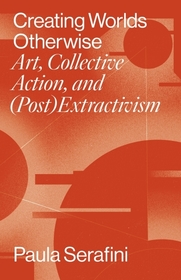
Creating Worlds Otherwise – Art, Collective Action, and (Post)Extractivism
Art, Collective Action, and (Post)Extractivism
Sorozatcím: Performing Latin American and Caribbean Identities;
-
10% KEDVEZMÉNY?
- A kedvezmény csak az 'Értesítés a kedvenc témákról' hírlevelünk címzettjeinek rendeléseire érvényes.
- Kiadói listaár GBP 28.00
-
13 377 Ft (12 740 Ft + 5% áfa)
Az ár azért becsült, mert a rendelés pillanatában nem lehet pontosan tudni, hogy a beérkezéskor milyen lesz a forint árfolyama az adott termék eredeti devizájához képest. Ha a forint romlana, kissé többet, ha javulna, kissé kevesebbet kell majd fizetnie.
- Kedvezmény(ek) 10% (cc. 1 338 Ft off)
- Kedvezményes ár 12 039 Ft (11 466 Ft + 5% áfa)
Iratkozzon fel most és részesüljön kedvezőbb árainkból!
Feliratkozom
13 377 Ft
Beszerezhetőség
Még nem jelent meg, de rendelhető. A megjelenéstől számított néhány héten belül megérkezik.
Why don't you give exact delivery time?
A beszerzés időigényét az eddigi tapasztalatokra alapozva adjuk meg. Azért becsült, mert a terméket külföldről hozzuk be, így a kiadó kiszolgálásának pillanatnyi gyorsaságától is függ. A megadottnál gyorsabb és lassabb szállítás is elképzelhető, de mindent megteszünk, hogy Ön a lehető leghamarabb jusson hozzá a termékhez.
A termék adatai:
- Kiadó University of Chicago Press
- Megjelenés dátuma 2026. április 23.
- ISBN 9780826504555
- Kötéstípus Puhakötés
- Terjedelem298 oldal
- Méret 228x152 mm
- Nyelv angol 700
Kategóriák
Hosszú leírás:
Latin American extractivism has become the ground on which activists and scholars frame the dynamics of ecological devastation, accumulation of wealth, and erosion of rights. These maladies are the detritus of longstanding extraction-oriented economies, and more recently from the expansion of the extractive frontier and the implementation of new technologies in the extraction of fossil fuels, mining, and agriculture. But the fields of sociology, political ecology, anthropology, and geography have largely ignored the role of art and cultural practices in studies of extractivism and postextractivism.
The field of art theory on the other hand, has offered a number of texts that put forward insightful analyses of artwork addressing extraction, environmental devastation, and the climate crisis. However, an art theory perspective that does not engage firsthand with collective action remains limited, and fails to provide an account of the role, processes and politics of art in anti- and post-extractivist movements.
Creating Worlds Otherwise offers the narratives that subaltern groups generate around extractivism, and how they develop, communicate, and mobilize these narratives through art and cultural practices. The book reports on a two-year research project into creative resistance to extractivism in Argentina, and builds on long-term engagement working on environmental justice projects and campaigns in Argentina and the UK.
Creating Worlds Otherwise is structured according to the main themes of anti and post-extractivist movements: territoriality; ecofeminism and the ethics of care; human rights and the rights of nature; urban extractivism; sovereignty, autonomy and self-determination; and postextractivism and alternatives to development. It is an innovative contribution to the fields of Latin American studies, political ecology, cultural studies, and art theory, and addresses pressing questions regarding what post-extractivist worlds might look like as well as how such visions are put into practice.