

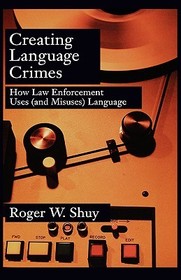
Creating Language Crimes
How Law Enforcement Uses (and Misuses) Language
-
10% KEDVEZMÉNY?
- A kedvezmény csak az 'Értesítés a kedvenc témákról' hírlevelünk címzettjeinek rendeléseire érvényes.
- Kiadói listaár GBP 48.99
-
22 118 Ft (21 065 Ft + 5% áfa)
Az ár azért becsült, mert a rendelés pillanatában nem lehet pontosan tudni, hogy a beérkezéskor milyen lesz a forint árfolyama az adott termék eredeti devizájához képest. Ha a forint romlana, kissé többet, ha javulna, kissé kevesebbet kell majd fizetnie.
- Kedvezmény(ek) 10% (kb. 2 212 Ft)
- Kedvezményes ár 19 906 Ft (18 959 Ft + 5% áfa)
Iratkozzon fel most és részesüljön kedvezőbb árainkból!
Feliratkozom
22 118 Ft

Beszerezhetőség
Megrendelésre a kiadó utánnyomja a könyvet. Rendelhető, de a szokásosnál kicsit lassabban érkezik meg.
Why don't you give exact delivery time?
A beszerzés időigényét az eddigi tapasztalatokra alapozva adjuk meg. Azért becsült, mert a terméket külföldről hozzuk be, így a kiadó kiszolgálásának pillanatnyi gyorsaságától is függ. A megadottnál gyorsabb és lassabb szállítás is elképzelhető, de mindent megteszünk, hogy Ön a lehető leghamarabb jusson hozzá a termékhez.
A termék adatai:
- Kiadó OUP USA
- Megjelenés dátuma 2005. október 13.
- ISBN 9780195181661
- Kötéstípus Keménykötés
- Terjedelem208 oldal
- Méret 217x148x20 mm
- Súly 363 g
- Nyelv angol 0
Kategóriák
Rövid leírás:
This book illustrates how lingusitic analysis of undercover tape recordings made by law enforcement can help defense attorneys, law enforcement officers, judges, and juries better understand the effects of conversational strategies used to give the appearance of criminal activity. If only the appearance of such crime is created, law enforcement has not reached its evidentiary goal. Eleven conversational strategies were used in the twelve actual criminal cases described in this book.
TöbbHosszú leírás:
This book by Roger W. Shuy, the senior figure in forensic linguistics, is the first to explain in an accessible way the vital role that linguistic evidence and its proper analysis play in criminal investigations. Shuy provides compelling case studies of how language functions in investigations involving, among others, wired undercover operatives, and the interrogation of suspects. He makes the point that language evidence can be as important as physical evidence, but yet does not enjoy the same degree of scrutiny by investigators, attorneys, and the courts. Beyond this, however, his more controversial thesis is that police frequently misuse or manipulate language, using various powerful controversial strategies, in order to intentionally create an impression of the targets' guilt or even to get them to confess. attorneys, law enforcement officers, judges, and juries This book makes its case by analyzing a dozen criminal cases involving a variety of crimes, such as fraud, bribery, stolen property, murder, and others. About half involve co-operating witnesses who do the tape recording, and the other half undercover police officers. These cases demonstrate how undercover operatives use different conversational strategies, such as overlapping conversation, ambiguity, interruption, refusing to take "no" for an answer, and others to create a negative impression of the targets on later listeners. Creating Language Crimes provides a fascinating window into a little-known and discussed facet of law enforcement. It will appeal to anyone concerned with language (particularly sociolinguists and discourse analysts), as well as to those involved in law enforcement and criminal cases. the appearance of such crime is created, law enforcement has not reached its evidentiary goal. Eleven conversational strategies were used in the twelve actual criminal cases described in this book.
Creating Language Crimes will easily fit into any undergraduate course on discourse analysis, and it will serve as an excellent primer for non-specialists who wish to understand how the study of language and the practice of law enforcement and investigation converge.

