

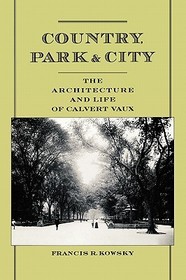
Country, Park, and City
The Architecture and Life of Calvert Vaux
-
10% KEDVEZMÉNY?
- A kedvezmény csak az 'Értesítés a kedvenc témákról' hírlevelünk címzettjeinek rendeléseire érvényes.
- Kiadói listaár GBP 135.00
-
60 952 Ft (58 050 Ft + 5% áfa)
Az ár azért becsült, mert a rendelés pillanatában nem lehet pontosan tudni, hogy a beérkezéskor milyen lesz a forint árfolyama az adott termék eredeti devizájához képest. Ha a forint romlana, kissé többet, ha javulna, kissé kevesebbet kell majd fizetnie.
- Kedvezmény(ek) 10% (kb. 6 095 Ft)
- Kedvezményes ár 54 857 Ft (52 245 Ft + 5% áfa)
Iratkozzon fel most és részesüljön kedvezőbb árainkból!
Feliratkozom
60 952 Ft

Beszerezhetőség
Megrendelésre a kiadó utánnyomja a könyvet. Rendelhető, de a szokásosnál kicsit lassabban érkezik meg.
Why don't you give exact delivery time?
A beszerzés időigényét az eddigi tapasztalatokra alapozva adjuk meg. Azért becsült, mert a terméket külföldről hozzuk be, így a kiadó kiszolgálásának pillanatnyi gyorsaságától is függ. A megadottnál gyorsabb és lassabb szállítás is elképzelhető, de mindent megteszünk, hogy Ön a lehető leghamarabb jusson hozzá a termékhez.
A termék adatai:
- Kiadó OUP USA
- Megjelenés dátuma 1998. április 30.
- ISBN 9780195114959
- Kötéstípus Keménykötés
- Terjedelem392 oldal
- Méret 261x186x28 mm
- Súly 1070 g
- Nyelv angol
- Illusztrációk numerous halftones, 19 line drawings, architectural plans 0
Kategóriák
Rövid leírás:
Calvert Vaux (1824--1895) designed Central Park and other parks in American cities with Frederick Law Olmsted. Trained in England as an architect, Vaux also planned buildings that mirrored the advance of urbanization in America. Museums, exhibition halls, model tenements, and dwellings, as well as many structures in Central Park, were among his designs. This book is an in-depth study of Vaux's life and work.
TöbbHosszú leírás:
After beginning his architectural career in England, Calvert Vaux came to America in 1850 at the invitation of architect Andrew Jackson Downing. In 1852, he moved to New York City and asked Frederick Law Olmsted, the landscape architect, to join him in preparing a design for Central Park. During the next thirty-eight years in New York, Vaux defended and refined his vision of Central Park and pursued a distinguished architectural practice. After the Civil War, he and Olmsted led the nascent American park movement with their designs for parks in many American cities. And as a pioneering advocate for apartment houses in American cities, Vaux designed buildings that mirrored the advance of urbanization in America, including early model-housing for the poor. His works also include many Gothic and Palladian style dwellings, the original portions of the Metropolitan Museum of Art and the American Museum of Natural History, and a stunning proposal for a vast iron and glass building to house the Centennial Exhibition in Philadelphia. Most notable, perhaps, are the many bridges and other structures that he designed for Central Park. This book is the first in-depth study of Vaux's life and work.
Francis R. Kowsky...gives us a richly detailed and meticulously researched account of Calbert Vaux....a model of careful scholarship...

