

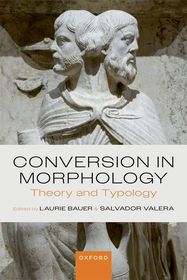
Conversion in Morphology
Theory and Typology
-
10% KEDVEZMÉNY?
- A kedvezmény csak az 'Értesítés a kedvenc témákról' hírlevelünk címzettjeinek rendeléseire érvényes.
- Kiadói listaár GBP 104.00
-
46 956 Ft (44 720 Ft + 5% áfa)
Az ár azért becsült, mert a rendelés pillanatában nem lehet pontosan tudni, hogy a beérkezéskor milyen lesz a forint árfolyama az adott termék eredeti devizájához képest. Ha a forint romlana, kissé többet, ha javulna, kissé kevesebbet kell majd fizetnie.
- Kedvezmény(ek) 10% (kb. 4 696 Ft)
- Kedvezményes ár 42 260 Ft (40 248 Ft + 5% áfa)
Iratkozzon fel most és részesüljön kedvezőbb árainkból!
Feliratkozom
46 956 Ft

Beszerezhetőség
Megrendelésre a kiadó utánnyomja a könyvet. Rendelhető, de a szokásosnál kicsit lassabban érkezik meg.
Why don't you give exact delivery time?
A beszerzés időigényét az eddigi tapasztalatokra alapozva adjuk meg. Azért becsült, mert a terméket külföldről hozzuk be, így a kiadó kiszolgálásának pillanatnyi gyorsaságától is függ. A megadottnál gyorsabb és lassabb szállítás is elképzelhető, de mindent megteszünk, hogy Ön a lehető leghamarabb jusson hozzá a termékhez.
A termék adatai:
- Kiadó OUP Oxford
- Megjelenés dátuma 2026. április 7.
- ISBN 9780198943976
- Kötéstípus Keménykötés
- Terjedelem368 oldal
- Méret 21x156x234 mm
- Súly 668 g
- Nyelv angol 787
Kategóriák
Rövid leírás:
This book provides a detailed account of morphological conversion, a process whereby a word is turned into a distinct but semantically and/or grammatically related word without any change of form. The chapters explore key questions relating to conversion and offer accounts of the process in a range of language families.
TöbbHosszú leírás:
This book provides a detailed account of morphological conversion-also known by various other names, including zero-derivation- a process whereby a word is turned into a distinct but semantically and/or grammatically related word without any change of form. Following an introductory chapter that offers an overview of morphological conversion and the main questions of interest, the volume is divided into two parts. In the first, contributors consider a range of issues relating to conversion, such as word classes, inflection, figurative language, and directionality. The chapters in the second part explore specific typological aspects of the process of conversion in a wide range of language families, including Austronesian, Dravidian, Indo-European, and Tupian. The volume offers new perspectives on conversion, moving beyond traditional Anglocentric approaches that have dominated the field to date.
TöbbTartalomjegyzék:
Conversion: The core issues
Part I. Theoretical Issues
The analysis of conversion: Historiography
Word classes
Conversion and inflection
Conversion and other word-formation processes
The position of conversion in word-formation
Conversion and coercion
The semantics of conversion
Conversion and figurative language
Directionality
Part II. Description and Typology
Japonic: Japanese
Indo-European: Germanic and Romance
Indo-European: Slavic and Baltic
Austronesian: Tagalog and Indonesian
Tupian: GuaranÃ
Dene: Upper Tanana
Sino-Tibetan: Chinese
Uralic: Hungarian
Semitic: Hebrew
Dravidian: Telugu
Basque
Part III. Conclusions
Retrospective

