

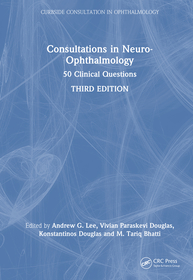
Consultations in Neuro-Ophthalmology
50 Clinical Questions
Sorozatcím: Curbside Consultation in Ophthalmology;
-
10% KEDVEZMÉNY?
- Kiadói listaár GBP 200.00
-
95 550 Ft (91 000 Ft + 5% áfa)
Az ár azért becsült, mert a rendelés pillanatában nem lehet pontosan tudni, hogy a beérkezéskor milyen lesz a forint árfolyama az adott termék eredeti devizájához képest. Ha a forint romlana, kissé többet, ha javulna, kissé kevesebbet kell majd fizetnie.
- Kedvezmény(ek) 10% (cc. 9 555 Ft off)
- Kedvezményes ár 85 995 Ft (81 900 Ft + 5% áfa)
85 995 Ft

Beszerezhetőség
Még nem jelent meg, de rendelhető. A megjelenéstől számított néhány héten belül megérkezik.
Why don't you give exact delivery time?
A beszerzés időigényét az eddigi tapasztalatokra alapozva adjuk meg. Azért becsült, mert a terméket külföldről hozzuk be, így a kiadó kiszolgálásának pillanatnyi gyorsaságától is függ. A megadottnál gyorsabb és lassabb szállítás is elképzelhető, de mindent megteszünk, hogy Ön a lehető leghamarabb jusson hozzá a termékhez.
A termék adatai:
- Kiadás sorszáma 3
- Kiadó CRC Press
- Megjelenés dátuma 2026. május 13.
- ISBN 9781041059004
- Kötéstípus Keménykötés
- Terjedelem240 oldal
- Méret 254x178 mm
- Nyelv angol
- Illusztrációk 36 Illustrations, black & white; 47 Illustrations, color; 28 Halftones, black & white; 46 Halftones, color; 8 Line drawings, black & white; 1 Line drawings, color; 35 Tables, black & white 700
Kategóriák
Rövid leírás:
This new edition contains concise practical and evidence-based answers to the most frequently asked questions posed during a consultation between ophthalmology and neuro-ophthalmology colleagues. It provides information basic enough for residents while incorporating expert pearls that even high-volume ophthalmologists will appreciate.
TöbbHosszú leírás:
This new Third Edition contains concise practical and evidence-based answers to the most frequently asked questions posed during a consultation between ophthalmology and neuro-ophthalmology colleagues. It provides information basic enough for residents while incorporating expert pearls that even high-volume ophthalmologists will appreciate. Residents, fellows, and practicing physicians alike will benefit from the user-friendly casual format of this book containing expert advice from the leaders in the field of neuro-ophthalmology.
Key Features:
- Updated content on all 49 cases from the previous edition plus one additional new case
- Updated references based on the most recent peer-reviewed publications
- New figures, algorithms, diagrams, and tables
Tartalomjegyzék:
Editor Biographies. Acknowledgements. List of Contributors. Preface. Question 1 How Should a Childhood Optic Nerve Glioma Be Worked Up? Question 2 How Should a Optic Nerve Sheath Meningioma Be Managed? Question 3 When Should You Consider the Diagnosis of Neuromyelitis Optica Spectrum Disease with Positive Aquaporin 4-IgG (AQP4+ NMOSD)? Question 4 How Should I Evaluate and Manage Suspected Optic Neuritis? Question 5 What Is the Treatment of Optic Neuritis? Question 6 What is the Workup and Treatment for Neuroretinitis? Question 7 How Do You Evaluate and Treat Nonarteritic Anterior Ischemic Optic Neuropathy? Question 8 How Do You Differentiate Arteritic from Nonarteritic Anterior Ischemic Optic Neuropathy? Question 9 How Should I Treat Giant Cell Arteritis? Question 10 What Is the Evaluation of Traumatic Optic Neuropathy? Question 11 What Is the Evaluation and Management for Papilledema? Question 12 Is There a Difference in the Management of Idiopathic Intracranial Hypertension in Pregnancy? Question 13 What Is the Acute Idiopathic Blind Spot Enlargement (AIBSE) Syndrome and How Can I Confirm the Diagnosis? Question 14 How Do I Work Up and Manage an Internuclear Ophthalmoplegia? Question 15 What Is the Workup and Treatment of Myasthenia Gravis? Question 16 How Do You Manage Visual Loss in Thyroid Eye Disease? Question 17 When Do You Use Radiation, Steroids, or Teprotumumab in Thyroid Eye Disease? Question 18 How Do You Manage Diplopia in Thyroid Eye Disease? Question 19 What Are the Evaluations and Treatments for Acquired Nystagmus? Question 20 What Is the Evaluation for Anisocoria? Question 21 How and When Should I Work Up Horner Syndrome? Question 22 What Should I Do with a Dilated Pupil? Question 23 What Is the Evaluation for Episodic Anisocoria? Question 24 How Do You Diagnose and Manage Toxic and Nutritional Optic Neuropathies? Question 25 What Are Visual Processing Defects and How Can I Recognize Them? Question 26 How Do I Manage Patients With Headache Syndromes Who Come to Me as an Ophthalmologist? Question 27 What Is the Evaluation of Optic Atrophy? Question 28 How Do I Treat a Child with Asymmetric Nystagmus? Question 29 What Is Opsoclonus and How Do I Manage It? Question 30 What Is Wernicke Syndrome and How Does It Affect the Eye? Question 31 How Do I Manage Postoperative Visual Loss After Nonocular Surgery? Question 32 How Do I Manage Transient Monocular Visual Loss in a Young, Otherwise Healthy Patient? Question 33 What Is the Evaluation for Transient Monocular Visual Loss in an Older Adult? Question 34 What Is the Evaluation for a Homonymous Hemianopia? Question 35 What Is the Evaluation for a Painful Third Nerve Palsy Without a Fixed and Dilated Pupil but With Anisocoria (Partial Pupillary Involvement)? Question 36 How Do You Manage an Isolated and Presumed Vasculopathic, Pupil-Sparing Third Nerve Palsy? Question 37 What Is the Appropriate Evaluation of a Fourth Nerve Palsy? Question 38 What Is the Appropriate Evaluation in a Patient Suspected of Having a Sixth Nerve Palsy? Question 39 How Do You Evaluate a Patient with Multiple Ocular Cranial Nerve Palsies? Question 40 What Is Blepharospasm? Question 41 What Is Hemifacial Spasm? Question 42 How Do You Deal with a Patient Who Has Functional Visual Loss? Question 43 How Do You Diagnose and Manage Migraine Visual Aura? Question 44 How Do I Recognize Leber Hereditary Optic Neuropathy? Question 45 How Do I Manage an Orbital Apex Syndrome? Question 46 How Do I Evaluate and Manage Nonspecific Orbital Inflammation? Question 47 How Should I Evaluate and Manage a Carotid-Cavernous Fistula? Question 48 How Do I Evaluate and Treat Radiation-Induced Optic Neuropathy? Question 49 What Should I Do with a Seventh Nerve Palsy? Question 50 How Do You Diagnose and Treat Myelin Oligodendrocyte Glycoprotein Antibody-Associated Disease? Index.
Több
