

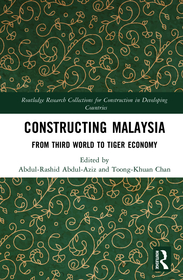
Constructing Malaysia
From Third World to Tiger Economy
Sorozatcím: Routledge Research Collections for Construction in Developing Countries;
-
10% KEDVEZMÉNY?
- Kiadói listaár GBP 187.99
-
84 877 Ft (80 835 Ft + 5% áfa)
Az ár azért becsült, mert a rendelés pillanatában nem lehet pontosan tudni, hogy a beérkezéskor milyen lesz a forint árfolyama az adott termék eredeti devizájához képest. Ha a forint romlana, kissé többet, ha javulna, kissé kevesebbet kell majd fizetnie.
- Kedvezmény(ek) 10% (kb. 8 488 Ft)
- Kedvezményes ár 76 389 Ft (72 752 Ft + 5% áfa)
76 389 Ft

Beszerezhetőség
Még nem jelent meg, de rendelhető. A megjelenéstől számított néhány héten belül megérkezik.
Why don't you give exact delivery time?
A beszerzés időigényét az eddigi tapasztalatokra alapozva adjuk meg. Azért becsült, mert a terméket külföldről hozzuk be, így a kiadó kiszolgálásának pillanatnyi gyorsaságától is függ. A megadottnál gyorsabb és lassabb szállítás is elképzelhető, de mindent megteszünk, hogy Ön a lehető leghamarabb jusson hozzá a termékhez.
A termék adatai:
- Kiadás sorszáma 1
- Kiadó Routledge
- Megjelenés dátuma 2026. október 19.
- ISBN 9781032873589
- Kötéstípus Keménykötés
- Terjedelem238 oldal
- Méret 234x156 mm
- Nyelv angol
- Illusztrációk 16 Illustrations, black & white; 16 Line drawings, black & white; 41 Tables, black & white 700
Kategóriák
Rövid leírás:
This book addresses the evolution of the construction industry in Malaysia from its independence in 1957 until the present day. It is a fascinating look at Malaysia?s story of achievements and setbacks told for the first time from an infrastructure development and construction perspective.
Több
Hosszú leírás:
This book addresses the evolution of the construction industry in Malaysia from its independence in 1957 until the present day. It is a fascinating look at Malaysia?s story of achievements and setbacks told for the first time from an infrastructure development and construction perspective.
Chapters cover topics such as the government?s economic development policies, the transition from foreign to local contractors, employment of migrant construction workers, the adoption of privatisation policies and the reliance on private financing for public infrastructure. Many features of modern construction principles such as privatisations, public-private financing, industrialised building systems, alliancing or partnership approach were rapidly adopted and are discussed in the book. Contemporary issues such as climate change, environmental sustainability, occupational health and safety, quality and technology are also discussed. The second part of the book provides six case studies of pertinent projects over the last sixty years to illustrate the transformation of the Malaysian construction industry and the challenges faced along the way. These include:
??????????? North-South Expressway (1981)
??????????? Penang Bridge (1982)
??????????? Petronas Twin Towers (1993)
??????????? East-Coast Rail Link (2016)
??????????? Merdeka 118 Tower (2024)
This latest addition to the Routledge Research Collections for Construction in Developing Countries series is essential reading for students and scholars of the international construction sector, economic development, infrastructure, and the history of Asian economies.
TöbbTartalomjegyzék:
1. Malaysia?s Development Context and the Construction Industry? 2.?Malaysian Contractors and The Affirmative Action Policy? 3.?Foreign Construction Companies in Malaysia? 4.?Foreign Construction Workers in Malaysia??5. Construction Industry Development Board? 6.?Construction Industry Development Strategies? 7.?Prefabrication, Mechanisation and Industrialised Building Systems? 8.?Environmental Sustainability and Green Building? 9.?The Evolution of the Malaysian Architectural Consultancy Industry: From Independence to Present??10. Engineers and Engineering Consultants??11. The Evolution of the Quantity Surveying Profession in Malaysia: Institutionalisation, Regulation, and Professional Transformation??12. The North South Expressway: Privatisation, Risk Allocation and Political Economy? 13.?Conclusions
Több

