

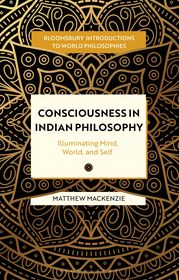
Consciousness in Indian Philosophy
Illuminating Mind, World, and Self
Sorozatcím: Bloomsbury Introductions to World Philosophies;
-
10% KEDVEZMÉNY?
- A kedvezmény csak az 'Értesítés a kedvenc témákról' hírlevelünk címzettjeinek rendeléseire érvényes.
- Kiadói listaár GBP 60.00
-
27 090 Ft (25 800 Ft + 5% áfa)
Az ár azért becsült, mert a rendelés pillanatában nem lehet pontosan tudni, hogy a beérkezéskor milyen lesz a forint árfolyama az adott termék eredeti devizájához képest. Ha a forint romlana, kissé többet, ha javulna, kissé kevesebbet kell majd fizetnie.
- Kedvezmény(ek) 10% (kb. 2 709 Ft)
- Kedvezményes ár 24 381 Ft (23 220 Ft + 5% áfa)
Iratkozzon fel most és részesüljön kedvezőbb árainkból!
Feliratkozom
27 090 Ft

Beszerezhetőség
Még nem jelent meg, de rendelhető. A megjelenéstől számított néhány héten belül megérkezik.
Why don't you give exact delivery time?
A beszerzés időigényét az eddigi tapasztalatokra alapozva adjuk meg. Azért becsült, mert a terméket külföldről hozzuk be, így a kiadó kiszolgálásának pillanatnyi gyorsaságától is függ. A megadottnál gyorsabb és lassabb szállítás is elképzelhető, de mindent megteszünk, hogy Ön a lehető leghamarabb jusson hozzá a termékhez.
A termék adatai:
- Kiadó Bloomsbury Publishing (UK)
- Megjelenés dátuma 2026. július 23.
- ISBN 9781350342996
- Kötéstípus Keménykötés
- Terjedelem248 oldal
- Méret 216x138 mm
- Nyelv 700
Kategóriák
Rövid leírás:
A comparative and critical introduction to influential theories of consciousness developed in the Indian tradition.
TöbbHosszú leírás:
Consciousness has been a central theme of Indian philosophy for more than 2500 years. Returning to the theories that originated in the Classical age, Matthew MacKenzie presents the first comprehensive overview of Indian views about the nature and structure of consciousness.
MacKenzie looks to the Upanisads and the early Buddhist discourses for the roots of the theories, following consciousness as it developed in the Abhidharma, Yogacara, and Pramaavada schools of Buddhism and the Nyaya, Yoga, Advaita, and Nondual Saiva schools of Hinduism. In the Upanisads, he introduces us to sages and kings who discussed the elusive light (prakasa) of consciousness and its relation to one's deepest self (atman). In early Buddhist texts the complex flow of conscious mental events are explored within an impermanent, selfless reality. In yogic texts we find a sharp distinction between ever-shifting objects and the pure light of consciousness.
Addressing timeless questions surrounding the fundamental nature of reality, MacKenzie focuses throughout on whether and how consciousness illuminates objects as well as itself. A critical and comparative introduction to a major philosophical subject, this book marks a new direction for understanding the cross-cultural philosophy of consciousness.
Tartalomjegyzék:
Introduction: Cosmopolitan Philosophy of Consciousness
Chapter 1: Consciousness as Luminosity
Origins
Other-Luminosity
Self-Luminosity
The Self
Comparative Connections
Chapter 2: Nyaya
The Nyaya School
Other Luminosity
Self and World
Comparative Connections
Chapter 3: Abhidharma
Abhidharma Schools
Mind and Mental Factors
Perception and Cognition
Selflessness
Comparative Connections
Chapter 4: Yoga
The Yoga School
Stilling the Modifications
Self and World
Self-Luminosity
Comparative Connections
Chapter 5: Yogacara
The Yogacara School
Eight Dimensions of Consciousness
Three Natures of Phenomena
Idealism
Comparative Connections
Chapter 6: Advaita
Advaita Vedanta
The Witness
Mind, Body, World
Individuation
Comparative Connections
Chapter 7: Buddhist Pramaavada
Pramaavada
Dual-Aspects
Reflexive Awareness
Selflessness
Comparative Connections
Chapter 8: Nondual Saiva
Kashmir Saiva
Consciousness and Power
Light and reflection
Dynamic Nonduality
Comparative Connections
Conclusion: New directions
Bibliography
Index

