

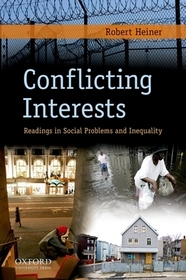
Conflicting Interests
Readings in Social Problems and Inequality
-
10% KEDVEZMÉNY?
- A kedvezmény csak az 'Értesítés a kedvenc témákról' hírlevelünk címzettjeinek rendeléseire érvényes.
- Kiadói listaár GBP 96.99
-
46 336 Ft (44 130 Ft + 5% áfa)
Az ár azért becsült, mert a rendelés pillanatában nem lehet pontosan tudni, hogy a beérkezéskor milyen lesz a forint árfolyama az adott termék eredeti devizájához képest. Ha a forint romlana, kissé többet, ha javulna, kissé kevesebbet kell majd fizetnie.
- Kedvezmény(ek) 10% (cc. 4 634 Ft off)
- Kedvezményes ár 41 703 Ft (39 717 Ft + 5% áfa)
Iratkozzon fel most és részesüljön kedvezőbb árainkból!
Feliratkozom
46 336 Ft

Beszerezhetőség
Bizonytalan a beszerezhetőség. Érdemes még egyszer keresni szerzővel és címmel. Ha nem talál másik, kapható kiadást, forduljon ügyfélszolgálatunkhoz!
Why don't you give exact delivery time?
A beszerzés időigényét az eddigi tapasztalatokra alapozva adjuk meg. Azért becsült, mert a terméket külföldről hozzuk be, így a kiadó kiszolgálásának pillanatnyi gyorsaságától is függ. A megadottnál gyorsabb és lassabb szállítás is elképzelhető, de mindent megteszünk, hogy Ön a lehető leghamarabb jusson hozzá a termékhez.
A termék adatai:
- Kiadó OUP USA
- Megjelenés dátuma 2009. november 5.
- ISBN 9780195375077
- Kötéstípus Puhakötés
- Terjedelem320 oldal
- Méret 155x231x15 mm
- Súly 454 g
- Nyelv angol 0
Kategóriák
Rövid leírás:
Featuring twenty-six in-depth and engaging articles, Conflicting Interests: Readings in Social Problems and Inequality is a unique social problems reader in which the majority of the selections reflect the conflict perspective. Several articles address the contemporary economic crisis and the role that the media plays in constructing social problems.
TöbbHosszú leírás:
Featuring twenty-six in-depth and engaging articles, Conflicting Interests: Readings in Social Problems and Inequality is a unique social problems reader in which the majority of the selections reflect the conflict perspective. This approach views social problems as the consequence of social and economic inequalities and therefore encourages students to critically analyze American public policy responses to social problems.
Conflicting Interests is organized into five sections: Thinking about Social Problems, The Economics of Inequality, Social Inequalities, Problems of the Family, Crime and Drugs, and Problems of the Environment. Several articles address the contemporary economic crisis and the role that the media plays in constructing social problems. In addition, many of the essays describe public policies in countries outside of the United States, providing students with alternative, cross-cultural perspectives and solutions to social problems. Each section begins with an introduction that briefly summarizes the articles and shows how they are interrelated. Each essay concludes with critical thinking questions that are designed to stimulate class discussion and to help students carefully evaluate the issues.
A thought-provoking and accessible supplement for social problems courses, Conflicting Interests can also be used in courses on inequality or social stratification. It is an ideal supplement to editor Robert Heiner's textbook, Social Problems: An Introduction to Critical Constructionism, Third Edition.
The primary strength [of this book] is the focus on a critical constructionist approach. This sets this text apart from the wide body of work that already exists. Furthermore, this perspective seems to strike an important cord in students, and once they begin to grasp the underpinnings of this paradigm, it dramatically alters the way in which they view the world around them. This approach is also most effective at enabling faculty to teach critical thinking skills, which is something that I am constantly striving to do.
Tartalomjegyzék:
Part One: Thinking about Social Problems
1. The Sociological Imagination: The Promise
2. Constructing Social Problems
3. An Introduction to the Sociology of Social Problems
4. The Problem of Journalism
Part Two: The Economics of Inequality
5. The Governing Class
6. The New Economic Insecurity
7. The Copenhagen Consensus
8. Global Inequality and the Challenges of Reducing Extreme Poverty
Part Three: Social Inequalities
9. Women and Wealth: A Primer
10. The Payoff from Women's Rights
11. Doubly Divided: The Racial Wealth Gap
12. School Finance: Inequality Persists
13. Double Standards in Health Care
Part Four: Problems of the Family
14. The Way We Wish We Were: Defining the Family Crisis
15. Striking a Balance
16. More than Welcome: Families Come First in Sweden
17. Life without Children
Part Five: Crime and Drugs
18. The Implicit Ideology of Criminal Justice
19. Schools and Prisons: How Far Have We Come since Brown v. Board of Education?
20. The Growth of Incarceration in the Netherlands
21. First, Reduce Harm
22. Rx Drugs
Part Six: Problems of the Environment
23. Reversal of Fortune
24. The Establishment vs. the Environment
25. The Wealth of the Poor: Managing Ecosystems to Fight Poverty
26. Differential Vulnerabilities: Environmental and Economic Inequality and Government Responses to Unnatural Disasters

