

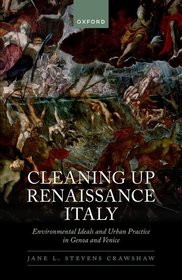
Cleaning Up Renaissance Italy
Environmental Ideals and Urban Practice in Genoa and Venice
-
10% KEDVEZMÉNY?
- A kedvezmény csak az 'Értesítés a kedvenc témákról' hírlevelünk címzettjeinek rendeléseire érvényes.
- Kiadói listaár GBP 74.00
-
33 411 Ft (31 820 Ft + 5% áfa)
Az ár azért becsült, mert a rendelés pillanatában nem lehet pontosan tudni, hogy a beérkezéskor milyen lesz a forint árfolyama az adott termék eredeti devizájához képest. Ha a forint romlana, kissé többet, ha javulna, kissé kevesebbet kell majd fizetnie.
- Kedvezmény(ek) 10% (cc. 3 341 Ft off)
- Kedvezményes ár 30 070 Ft (28 638 Ft + 5% áfa)
Iratkozzon fel most és részesüljön kedvezőbb árainkból!
Feliratkozom
33 411 Ft

Beszerezhetőség
Megrendelésre a kiadó utánnyomja a könyvet. Rendelhető, de a szokásosnál kicsit lassabban érkezik meg.
Why don't you give exact delivery time?
A beszerzés időigényét az eddigi tapasztalatokra alapozva adjuk meg. Azért becsült, mert a terméket külföldről hozzuk be, így a kiadó kiszolgálásának pillanatnyi gyorsaságától is függ. A megadottnál gyorsabb és lassabb szállítás is elképzelhető, de mindent megteszünk, hogy Ön a lehető leghamarabb jusson hozzá a termékhez.
A termék adatai:
- Kiadó OUP Oxford
- Megjelenés dátuma 2023. július 20.
- ISBN 9780198867432
- Kötéstípus Keménykötés
- Terjedelem226 oldal
- Méret 240x163x15 mm
- Súly 460 g
- Nyelv angol 422
Kategóriák
Rövid leírás:
Cleaning Up Renaissance Italy takes us to the streets, bridges, and waterways of Renaissance Genoa and Venice, exploring how environmental management -- street cleaning, water provision, waste disposal, and reuse -- relates to cultural ideals, individual and collective behaviour, political reputations, and social identities.
TöbbHosszú leírás:
People and goods from across the globe filled the vibrant ports of Genoa and Venice during the Renaissance. This book takes us onto the streets, bridges, and waterways of these significant, sensuous cities to reveal the ambitious schemes undertaken to promote the cleanliness and health of their communities. Along the way, we encounter a broad and fascinating cross-section of Renaissance society -- from courtesans to street food sellers and architects to canal diggers -- and, using new archival sources, uncover both the ideals and lived experiences of health and environmental management.
During the Renaissance, vital connections were believed to exist between people's natures and those of the places they inhabited. Problems in urban or environmental bodies could have social and moral, as well as physical, effects. Street cleaning or the dredging of canals, therefore, were often justified in societal and religious, as well as natural, terms. These associations shaped government measures to regulate everyday life in ports, alongside communal responses to natural disasters. They informed the management of the environment, including waste disposal, flood defences, dredging, and land reclamation, and endowed such activity with both physical and symbolic purpose.
This is not simply a story of elite, official initiatives. Members of communities used public health structures to resolve the challenges of urban life -- social and physical. Occupational groups such as fishermen acted as environmental experts through the organisation of their guilds and provided reports on specific projects and proposals to government magistracies. Finally, the governments of both ports operated important systems of petitions and privileges, which encouraged innovation and the development of new technology by citizens and foreigners to address the central, environmental challenges of the day. Renaissance public health, then, emerges as a collaborate enterprise, as well as a site of tension within cosmopolitan neighbourhoods, and its study unveils more about forms of governance and community in this period.
An illuminating and original account of social policies, urban design, and environmental management between 1400 and 1600, Cleaning Up Renaissance Italy provides a new, multi-disciplinary history of Renaissance Italy.
Cleaning Up Renaissance Italy is a significant and welcome contribution that challenges longstanding narratives of premodern urban neglect and reconstructs proactive urban efforts to manage cleanliness and health. The book's wide range of fascinating topics and integration of diverse historiographies make it a valuable resource for scholars of Renaissance cities and environmental history.
Tartalomjegyzék:
Introduction
Constructing ideals and practices in Renaissance port cities
Part One: The ebbs and flows of daily life
Channelling health: the flow of the streets
Preserving purity: the symbolic and practical regulation of water
Stemming the tide: innovation and purgation
Part Two: Balance and blame
Working with waste: space, reuse, and the urban body
Dealing with disasters: environments, people, and piety
Conclusion
Corruptible cities

