

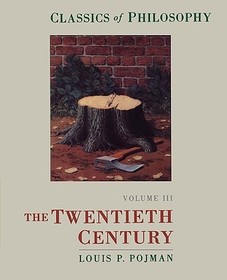
Classics of Philosophy: Volume III: The Twentieth Century
-
10% KEDVEZMÉNY?
- A kedvezmény csak az 'Értesítés a kedvenc témákról' hírlevelünk címzettjeinek rendeléseire érvényes.
- Kiadói listaár GBP 84.99
-
38 372 Ft (36 545 Ft + 5% áfa)
Az ár azért becsült, mert a rendelés pillanatában nem lehet pontosan tudni, hogy a beérkezéskor milyen lesz a forint árfolyama az adott termék eredeti devizájához képest. Ha a forint romlana, kissé többet, ha javulna, kissé kevesebbet kell majd fizetnie.
- Kedvezmény(ek) 10% (kb. 3 837 Ft)
- Kedvezményes ár 34 535 Ft (32 891 Ft + 5% áfa)
Iratkozzon fel most és részesüljön kedvezőbb árainkból!
Feliratkozom
38 372 Ft

Beszerezhetőség
Megrendelésre a kiadó utánnyomja a könyvet. Rendelhető, de a szokásosnál kicsit lassabban érkezik meg.
Why don't you give exact delivery time?
A beszerzés időigényét az eddigi tapasztalatokra alapozva adjuk meg. Azért becsült, mert a terméket külföldről hozzuk be, így a kiadó kiszolgálásának pillanatnyi gyorsaságától is függ. A megadottnál gyorsabb és lassabb szállítás is elképzelhető, de mindent megteszünk, hogy Ön a lehető leghamarabb jusson hozzá a termékhez.
A termék adatai:
- Kiadás sorszáma és címe :Volume III: The Twentieth Century
- Kiadó OUP USA
- Megjelenés dátuma 2000. október 5.
- ISBN 9780195132830
- Kötéstípus Puhakötés
- Terjedelem576 oldal
- Méret 231x189x25 mm
- Súly 962 g
- Nyelv angol
- Illusztrációk 3 line illustrations 0
Kategóriák
Rövid leírás:
This is Volume 3 of the most comprehensive anthology of writings in Western philosophy in print. It assembles the classic essays of Western philosophy of the twentieth century, from logical Positivism, American Pragmatism, and Ordinary Language Philosophy to Continental Philosophy.
TöbbHosszú leírás:
This is Volume 3 of the most comprehensive anthology of writings in Western philosophy in print. It assembles the classic essays of Western philosophy of the twentieth century which have given shape and value to its character and structure. From logical Positivism, American Pragmatism, and Ordinary Language Philosophy to Continental Philosophy, the selections have been chosen because they are creative, controversial, and typically fascinating. Fifty four selections of thirty nine authors are included, featuring the work of McTaggart, Moore, Russell, Wittgenstein, Carnap. Quine, Ayer, Kipke, Harrison, Gettier, Goldman, Strawson, Ryle, Dennett, Davidson, Putnam, Nagel, Serle, Nozick, Rawls, Hussert, Heidegger, Sartre, Foucault, Derrida, Rourty, and Habermas. Also featured are seminal works in the philosophy of mind, free will/determinism, the debate over religious truth, and political and moral philosophy while the emphasis of the earlier volumes on epistemological and metaphysical issues continues.
This is a collection which students and intelligent lay people can use without needing advanced technical ability in logic or semantics.
The volume opens with a general essay by the editor on philosophy in the twentieth century; a biographical sketch accompanies each author; and each selection includes by an abstract and short bibliography.
Tartalomjegyzék:
Preface
General Introduction
Part I: The Anglo-American Analytic Tradition
I: Background: British Idealism
John McTaggart, The Unreality of Time
II: British Pluarlist Realism
G.E. Moore
How to Make Our Ideas Clear
Presupposition of Science: Common Sense and Religion
Bertrand Russell
The Problems of Philsophy (ch. 1-12, 15)
On Denoting: The Theory of Definite Description
A Debate on the Existence of God between Father F.C. Copleston and Bertrand Russell
Part II: Pragmatism
Charles Sanders Pierce
How to Make Our Ideas Clear
Presupposition of Science: Common Sense and Religion
William James
The Will to Believe
What is Pragmatism?
The Pragmatic Notion of Truth
Part III: Logical Positivism and Reactions To It
Rudolph Carnap, The Elimination of Metaphysics through Logical Analysis of Language
A.J. Ayer
The Abolition of Metaphysics
A Critique of Ethics and Theology
Ludwig Wittgenstein
Tractatus Logico-Philosophicus
Philosophical Investigations
J.L. Austin, Sense and Sensibilia: A Critique of the Theory of Sense Data
Karl Popper
Conjecture and Refutation
Knowledge Without a Knowing Subject
Thomas Kuhn, Objectivity, Value Judgments, and Theory Choice
W.V.O Quine
Two Dogmas of Empiricism
Epistemology Naturalized
Ontological Relativity
Saul Kripke, A Priority Knowledge, Necessity, and Contingency
Jonathan Harrison, A Defence of Empiricism
Part IV: Contemporary Issues
Edmund Gettier, Is Justified True Belief Knowledge
Alvin Goldman, What is Justified Belief?
Nelson Goodman, The New Riddle of Induction
Donald Davidson, Truth and Meaning
Hilary Putnam, Meaning and Reference
Peter F. Strawson, Freedom and Resentment
Harry Frankfurt, On Freedom of the Will and the Conception of a Person
Richard Taylor, Defense of Libertarian Freedom
Anthony Flew, R.M. Hare, and Basil Mitchell, The Falsification Debate on Religious Belief
Gilbert Ryle, Exorcizing Descartes, "Ghost in the Machine"
Thomas Nagel
What Is It Like to Be a Bat?
Moral Luck
Daniel Dennett, The International Stance
John Searle, Minds, Brains, and Programs (The Chinese Room)
Derek Parfit, Personal Identity
Robert Nozick
A Defense of Libertarianism
The Experience Machine
John Rawls, A Liberal Theory of Justice
Wallace Matson, Justice, A Funeral Option
Part V: Contemporary Continental and Post-Modern Philosophy
Edmund Husserl: Ideas: General Introduction to Pure Phenomenology
Martin Heidegger
On Dasein and Anxiety
The Fundamental Question of Metaphysics
Jean Paul Sartre
Being and Nothingness: Bad Faith
Existentialism and Humanism
Michel Foucault, Knowledge/Power
Jacques Derrida, Plato's Pharmacy
Richard Rorty, Dismantling Truth: Solidarity versus Objectivity
Margarita Rosa Levin, A Defense of Objectivity
Jurgen Habermas, Philosohy as Stand-In and Interpreter

