

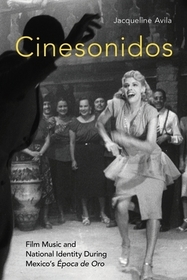
Cinesonidos
Film Music and National Identity During Mexico's Época de Oro
Sorozatcím: Oxford Music/Media Series;
-
10% KEDVEZMÉNY?
- A kedvezmény csak az 'Értesítés a kedvenc témákról' hírlevelünk címzettjeinek rendeléseire érvényes.
- Kiadói listaár GBP 37.49
-
16 926 Ft (16 120 Ft + 5% áfa)
Az ár azért becsült, mert a rendelés pillanatában nem lehet pontosan tudni, hogy a beérkezéskor milyen lesz a forint árfolyama az adott termék eredeti devizájához képest. Ha a forint romlana, kissé többet, ha javulna, kissé kevesebbet kell majd fizetnie.
- Kedvezmény(ek) 10% (cc. 1 693 Ft off)
- Kedvezményes ár 15 233 Ft (14 508 Ft + 5% áfa)
Iratkozzon fel most és részesüljön kedvezőbb árainkból!
Feliratkozom
16 926 Ft

Beszerezhetőség
Becsült beszerzési idő: A Prosperónál jelenleg nincsen raktáron, de a kiadónál igen. Beszerzés kb. 3-5 hét..
A Prosperónál jelenleg nincsen raktáron.
Why don't you give exact delivery time?
A beszerzés időigényét az eddigi tapasztalatokra alapozva adjuk meg. Azért becsült, mert a terméket külföldről hozzuk be, így a kiadó kiszolgálásának pillanatnyi gyorsaságától is függ. A megadottnál gyorsabb és lassabb szállítás is elképzelhető, de mindent megteszünk, hogy Ön a lehető leghamarabb jusson hozzá a termékhez.
A termék adatai:
- Kiadó OUP USA
- Megjelenés dátuma 2019. október 14.
- ISBN 9780190671310
- Kötéstípus Puhakötés
- Terjedelem288 oldal
- Méret 155x231x20 mm
- Súly 499 g
- Nyelv angol
- Illusztrációk 29 illus. 0
Kategóriák
Rövid leírás:
Author Jacqueline Avila looks at the ways that Mexican cinema and its music during the silent and early sound periods continuously reshaped the contested, fluctuating space of Mexican identity, functioning both as a sign and symptom of social and political change.
TöbbHosszú leírás:
During Mexico's silent (1896-1930) and early sound (1931-52) periods, cinema saw the development of five significant genres: the prostitute melodrama (including the cabaretera subgenre), the indigenista film (on indigenous themes or topics), the cine de añoranza porfiriana (films of Porfirian nostalgia), the Revolution film, and the comedia ranchera (ranch comedy). In this book, author Jacqueline Avila looks at examples from all genres, exploring the ways that the popular, regional, and orchestral music in these films contributed to the creation of tropes and archetypes now central to Mexican cultural nationalism. Integrating primary source material--including newspaper articles, advertisements, films--with film music studies, sound studies, and Mexican film and cultural history, Avila examines how these tropes and archetypes mirrored changing perceptions of mexicanidad manufactured by the State and popular and transnational culture. As she shows, several social and political agencies were heavily invested in creating a unified national identity in an attempt to merge the previously fragmented populace as a result of the Revolution. The commercial medium of film became an important tool to acquaint a diverse urban audience with the nuances of Mexican national identity, and music played an essential and persuasive role in the process. In this heterogeneous environment, cinema and its music continuously reshaped the contested, fluctuating space of Mexican identity, functioning both as a sign and symptom of social and political change.
Cinesonidos is one of those rare first-of-a-kind books, due to its original work engaging Mexico through lines of musicology that are coming into their first dialogue with the work of Latin Americanist scholars working in cinema and communications. In doing so, Avila proposes an original, scholarly sound and intellectually valuable account of sound in Mexican cinema, one that will not only be an obligatory reference to scholars, but that opens new lines of scholars working on cinema and sound outside of Hollywood and Western European paradigms.
Tartalomjegyzék:
Acknowledgements
Introduction
Chapter One: The Prostitute and the Cinematic Cabaret: Musicalizing the "Fallen Woman" and Mexico City's Nightlife
Chapter Two: The Salon, the Stage, and Porfirian Nostalgia
Chapter Three: The Sounds of Indigenismo: Cultural Integration and Musical Exoticism in Janitzio (1934) and María Candelaria (1943)
Chapter Four: The Singing Charro in the Comedia Ranchera: Music, Machismo, and the Invention of a Tradition
Chapter Five: The Strains of the Revolution: Musicalizing the Soldadera in the Revolutionary Melodrama
Epilogue
Bibliography

