

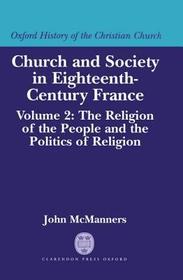
Church and Society in Eighteenth-Century France: Volume 2: The Religion of the People and the Politics of Religion
Sorozatcím: Oxford History of the Christian Church;
-
10% KEDVEZMÉNY?
- A kedvezmény csak az 'Értesítés a kedvenc témákról' hírlevelünk címzettjeinek rendeléseire érvényes.
- Kiadói listaár GBP 472.50
-
213 333 Ft (203 175 Ft + 5% áfa)
Az ár azért becsült, mert a rendelés pillanatában nem lehet pontosan tudni, hogy a beérkezéskor milyen lesz a forint árfolyama az adott termék eredeti devizájához képest. Ha a forint romlana, kissé többet, ha javulna, kissé kevesebbet kell majd fizetnie.
- Kedvezmény(ek) 10% (kb. 21 333 Ft)
- Kedvezményes ár 192 000 Ft (182 858 Ft + 5% áfa)
Iratkozzon fel most és részesüljön kedvezőbb árainkból!
Feliratkozom
213 333 Ft

Beszerezhetőség
Megrendelésre a kiadó utánnyomja a könyvet. Rendelhető, de a szokásosnál kicsit lassabban érkezik meg.
Why don't you give exact delivery time?
A beszerzés időigényét az eddigi tapasztalatokra alapozva adjuk meg. Azért becsült, mert a terméket külföldről hozzuk be, így a kiadó kiszolgálásának pillanatnyi gyorsaságától is függ. A megadottnál gyorsabb és lassabb szállítás is elképzelhető, de mindent megteszünk, hogy Ön a lehető leghamarabb jusson hozzá a termékhez.
A termék adatai:
- Kiadás sorszáma és címe :Volume 2: The Religion of the People and the Politics of Religion
- Kiadó OUP Oxford
- Megjelenés dátuma 1998. augusztus 27.
- ISBN 9780198269632
- Kötéstípus Keménykötés
- Terjedelem880 oldal
- Méret 243x162x51 mm
- Súly 1415 g
- Nyelv angol 0
Kategóriák
Rövid leírás:
Volume 2 concerns the religion of the people from religious practice and the routines of official devotion to 'popular religion' in all its aspects, from confraternities and pilgrimages to the dark margins of superstition. There is a section on morals, the confessional, commercial morality, sexual passion, and the theatre. Finally, two extended sections, one on the great Jesuit-Jansenist struggle incorporated in the feuds of Crown and Parlement, the other on the role of the Church in relations with the religious minorities -- Protestants and Jews.
TöbbHosszú leírás:
This second volume begins with a Section on the religion of the people. The clergy offered the liturgical services, sermons, evangelistic missions, and the offices sanctifying birth, marriage, and death; distinctions are made between what they intended and how their ministrations were popularly interpreted and incorporated into the social order. Statistical soundings concerning the extent of religious practice and the degree of conviction involved are evaluated. Further chapters deal with processions, pilgrimages, and popular practices and superstitions, with hermits and confraternities, with the impact of reading the Bible and other edifying literature in an age of increasing literacy. Finally comes a view of the twilight world of magic and sorcery. Throughout this Section the comments of theologians and thinkers of the Enlightenment are recorded, whether in coincidence or contradiction.
The next section deals with the efficacy of the confessional and the role of the casuistry of the Church in attempting to mould sexual mores, business practices, and in the world of the theatre.
In the next two Sections, the role of religious issues in political affairs is detailed. An overview of the Jansenist quarrel and of the activities of the Jesuits brings in the story of the struggle between Crown and Parlement, while an extended portrayal of the life of the Protestant and Jewish communities leads to the history of the debate on toleration, involving the Gallican Church in political interventions and controversy.
Throughout the two volumes the rising forces of anticlericalism and the tensions within the ecclesiastical establishment have been recorded, and these themes come to their climax in a final section on the role played by churchmen in the coming of the Revolution.
This massive two-volume work contained the fruits of over 50 years of research, and is a definitive book that will last as long as the subject is studied. It is, as Professor William Doyle has observed, the best book written by an Englishman on the French ancien regime.

