

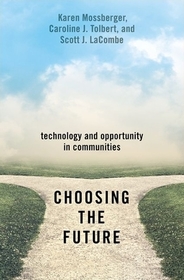
Choosing the Future
Technology and Opportunity in Communities
-
10% KEDVEZMÉNY?
- A kedvezmény csak az 'Értesítés a kedvenc témákról' hírlevelünk címzettjeinek rendeléseire érvényes.
- Kiadói listaár GBP 84.00
-
40 131 Ft (38 220 Ft + 5% áfa)
Az ár azért becsült, mert a rendelés pillanatában nem lehet pontosan tudni, hogy a beérkezéskor milyen lesz a forint árfolyama az adott termék eredeti devizájához képest. Ha a forint romlana, kissé többet, ha javulna, kissé kevesebbet kell majd fizetnie.
- Kedvezmény(ek) 10% (cc. 4 013 Ft off)
- Kedvezményes ár 36 118 Ft (34 398 Ft + 5% áfa)
Iratkozzon fel most és részesüljön kedvezőbb árainkból!
Feliratkozom
40 131 Ft

Beszerezhetőség
Bizonytalan a beszerezhetőség. Érdemes még egyszer keresni szerzővel és címmel. Ha nem talál másik, kapható kiadást, forduljon ügyfélszolgálatunkhoz!
Why don't you give exact delivery time?
A beszerzés időigényét az eddigi tapasztalatokra alapozva adjuk meg. Azért becsült, mert a terméket külföldről hozzuk be, így a kiadó kiszolgálásának pillanatnyi gyorsaságától is függ. A megadottnál gyorsabb és lassabb szállítás is elképzelhető, de mindent megteszünk, hogy Ön a lehető leghamarabb jusson hozzá a termékhez.
A termék adatai:
- Kiadó OUP USA
- Megjelenés dátuma 2021. augusztus 2.
- ISBN 9780197585757
- Kötéstípus Keménykötés
- Terjedelem254 oldal
- Méret 159x241x18 mm
- Súly 494 g
- Nyelv angol 0
Kategóriák
Rövid leírás:
While previous studies have examined the impacts of broadband infrastructure, they have indicated little about the extent to which local populations can afford and use the technology. Moreover, there has been limited scientific evidence on how broadband adoption matters for collective benefits. Including new data on broadband subscriptions from 2000-2017, and comprehensive analysis for U.S. states, counties, metros, cities, and neighborhoods, Choosing the Future argues that broadband use in the population is a form of digital human capital that benefits communities as well as individuals.
TöbbHosszú leírás:
Digital information drives participation in politics, the economy, and society. Yet great disparities exist as to which communities have access to the internet. In 2017, only half of residents of formerly industrial Flint, Michigan, had broadband or satellite internet at home, while over 90 percent of those in thriving Sunnyvale, California, in Silicon Valley, were connected. More recently, Covid-19 laid bare these persistent digital divides in both urban and rural communities, illustrating that broadband use is a fundamental resource for the future of opportunity in communities.
While previous studies have examined the impacts of broadband infrastructure, they have indicated little about the extent to which local populations can afford and use the technology. Moreover, there has been limited scientific evidence on how broadband adoption matters for collective benefits. Including new data on broadband subscriptions from 2000-2017, and comprehensive analysis for U.S. states, counties, metros, cities, and neighborhoods, Choosing the Future argues that broadband use in the population is a form of digital human capital that benefits communities as well as individuals.
Broadband has a causal impact across all types of communities--for economic prosperity, growth, income, employment, and policy innovation. Yet there are urban neighborhoods and rural counties where as little as one-quarter of the population has a broadband subscription, even when mobile is included. As we build "smart" cities and communities, as economies and jobs continue to experience rapid change, and as more information and services migrate online, it is communities with widespread broadband use that will be best positioned for inclusive innovation, with the digital human capital to thrive.
The United States is embarking on a major transformation through infrastructure. The timely research in this volume on broadband access, inclusive innovation, smart cities, and the future of work will comprise a vital source of knowledge and direction for policy makers, researchers, and those building our future. With their usual rigorous attention to detail, the authors explain in depth how inclusive broadband and digital human capital comprise essential dimensions of infrastructure for economic wellbeing.
Tartalomjegyzék:
Chapter 1: Innovation and Inequality: Two Narratives of Place
Chapter 2: Counties: Broadband Use and Prosperity Across Diverse Contexts
Chapter 3: Metros: Does Broadband Promote Growing and Prosperous Regions?
Chapter 4: Metros: Smart Cities and Neighborhoods
Chapter 5: States: The Innovative Environment
Chapter 6: Choosing the Future: Digital Human Capital and Inclusive Innovation
References

