

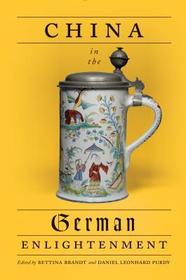
China in the German Enlightenment
Sorozatcím: German and European Studies;
-
10% KEDVEZMÉNY?
- A kedvezmény csak az 'Értesítés a kedvenc témákról' hírlevelünk címzettjeinek rendeléseire érvényes.
- Kiadói listaár GBP 41.00
-
18 511 Ft (17 630 Ft + 5% áfa)
Az ár azért becsült, mert a rendelés pillanatában nem lehet pontosan tudni, hogy a beérkezéskor milyen lesz a forint árfolyama az adott termék eredeti devizájához képest. Ha a forint romlana, kissé többet, ha javulna, kissé kevesebbet kell majd fizetnie.
- Kedvezmény(ek) % (cc. 0 Ft off)
- Kedvezményes ár 0 Ft (0 Ft + 5% áfa)
Iratkozzon fel most és részesüljön kedvezőbb árainkból!
Feliratkozom
18 511 Ft

Beszerezhetőség
A kiadónál véglegesen elfogyott, nem rendelhető. Érdemes újra keresni a címmel, hátha van újabb kiadás.
Why don't you give exact delivery time?
A beszerzés időigényét az eddigi tapasztalatokra alapozva adjuk meg. Azért becsült, mert a terméket külföldről hozzuk be, így a kiadó kiszolgálásának pillanatnyi gyorsaságától is függ. A megadottnál gyorsabb és lassabb szállítás is elképzelhető, de mindent megteszünk, hogy Ön a lehető leghamarabb jusson hozzá a termékhez.
A termék adatai:
- Kiadó University of Toronto Press
- Megjelenés dátuma 2016. április 11.
- ISBN 9781442648456
- Kötéstípus Keménykötés
- Terjedelem224 oldal
- Méret 235x161x20 mm
- Súly 500 g
- Nyelv angol 0
Kategóriák
Hosszú leírás:
Over the course of the eighteenth century, European intellectuals shifted from admiring China as a utopian place of wonder to despising it as a backwards and despotic state. That transformation had little to do with changes in China itself, and everything to do with Enlightenment conceptions of political identity and Europe’s own burgeoning global power.
China in the German Enlightenment considers the place of German philosophy, particularly the work of Leibniz, Goethe, Herder, and Hegel, in this development. Beginning with the first English translation of Walter Demel’s classic essay “How the Chinese Became Yellow,” the collection’s essays examine the connections between eighteenth-century philosophy, German Orientalism, and the origins of modern race theory.
TöbbTartalomjegyzék:
Introduction
Daniel Purdy and Bettina Brandt
1. How the Chinese became Yellow: A Contribution to the Early History of Race Theories
Walter Demel
2. Leibniz on the Existence of Philosophy in China
Franklin Perkins
3. Leibniz between Paris, Grand Tartary, and the Far East: Gerbillon’s Intercepted Letter
Michael C. Carhart
4. The Problem of China: Asia and Enlightenment Anthropology (Buffon, de Pauw, Blumenbach, Herder)
Carl Niekerk
5. Localizing China: Of Knowledge, Genres, and German Literary Historiography
Birgit Tautz
6. Eradicating the Orientalists: Goethe’s Chinesisch-deutsche Jahres- und Tageszeiten
John K. Noyes
7. China on Parade: Hegel’s Manipulation of His Sources and His Change of Mind
Robert Bernasconi
8. Neo-Romantic Modernism and Daoism: Martin Buber on the Teaching as Fulfillment
Jeffrey S. Librett

