

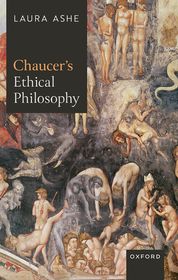
Chaucer’s Ethical Philosophy
-
10% KEDVEZMÉNY?
- A kedvezmény csak az 'Értesítés a kedvenc témákról' hírlevelünk címzettjeinek rendeléseire érvényes.
- Kiadói listaár GBP 25.00
-
11 287 Ft (10 750 Ft + 5% áfa)
Az ár azért becsült, mert a rendelés pillanatában nem lehet pontosan tudni, hogy a beérkezéskor milyen lesz a forint árfolyama az adott termék eredeti devizájához képest. Ha a forint romlana, kissé többet, ha javulna, kissé kevesebbet kell majd fizetnie.
- Kedvezmény(ek) 10% (cc. 1 129 Ft off)
- Kedvezményes ár 10 159 Ft (9 675 Ft + 5% áfa)
Iratkozzon fel most és részesüljön kedvezőbb árainkból!
Feliratkozom
11 287 Ft

Beszerezhetőség
Becsült beszerzési idő: A Prosperónál jelenleg nincsen raktáron, de a kiadónál igen. Beszerzés kb. 3-5 hét..
A Prosperónál jelenleg nincsen raktáron.
Why don't you give exact delivery time?
A beszerzés időigényét az eddigi tapasztalatokra alapozva adjuk meg. Azért becsült, mert a terméket külföldről hozzuk be, így a kiadó kiszolgálásának pillanatnyi gyorsaságától is függ. A megadottnál gyorsabb és lassabb szállítás is elképzelhető, de mindent megteszünk, hogy Ön a lehető leghamarabb jusson hozzá a termékhez.
A termék adatai:
- Kiadó OUP Oxford
- Megjelenés dátuma 2025. február 4.
- ISBN 9780198894964
- Kötéstípus Keménykötés
- Terjedelem224 oldal
- Méret 223x145x20 mm
- Súly 398 g
- Nyelv angol 686
Kategóriák
Rövid leírás:
Chaucer's Ethical Philosophy argues that Chaucer's fictions engage with the most urgent questions of modern political and moral philosophy. Close analysis of Troilus and Criseyde, the Canterbury Tales, and the Book of the Duchess reveals the ways in which Chaucer anticipates modern philosophical debates.
TöbbHosszú leírás:
Chaucer’s Ethical Philosophy argues that Chaucer's fictions engage with the most urgent questions of modern political and moral philosophy. Close analysis of Troilus and Criseyde, the Canterbury Tales, and the Book of the Duchess reveals the ways in which Chaucer anticipates modern philosophical debates, using his fictions to explore the ethics of subjectivity and recognition, agency and moral responsibility; concerns that Chaucer experimentally formulated and discomposed across his works are amongst those that most animate and trouble contemporary ethical philosophy.
This book places Chaucer in close dialogue not only with medieval philosophy and theology, and his great European literary sources (Boccaccio, Dante, Guillaume de Machaut), but with major figures and concepts of modern philosophical thought (Hegel, Levinas, Wittgenstein, Butler; recognition, subjectivity, gender). It illuminates his use of distinctively medieval forms of narrative to explore ideas and develop philosophies that we have been conditioned to think of as exclusively modern. In this he reveals both the essential nature of the questions, and the contingent, socially--and culturally--conditioned nature of our answers; and he shows us that medieval structures of thought remain central to our understandings of the world. In response to the fundamental ethical question-how should I treat another person?--Chaucer's fictional experiments are shown to be as philosophically complex and ethically powerful as anything in current thought.
Ashe gives us a Chaucer whose narratives are driven by ideas, who truly sees women as human beings, and who values human love in ways that reach beyond the norms of his time ... The prose style is passionate and charismatic throughout, and I found it refreshing to read scholarly work that dares to register an affective response to narratives of appalling suffering and dizzying joy. One achievement of this book is the way it gives readers permission to be moved by Chaucer's stories. Treating them as philosophical thought experiments does not, it turns out, attenuate their emotional resonance; on the contrary, this approach invites analogies to our own lived experiences as subjects navigating the world, such that Ashe's philosophical reading of Chaucer is also, and wonderfully, a personal one.

