

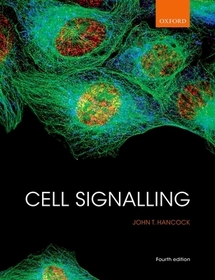
Cell Signalling
-
10% KEDVEZMÉNY?
- A kedvezmény csak az 'Értesítés a kedvenc témákról' hírlevelünk címzettjeinek rendeléseire érvényes.
- Kiadói listaár GBP 56.99
-
27 226 Ft (25 930 Ft + 5% áfa)
Az ár azért becsült, mert a rendelés pillanatában nem lehet pontosan tudni, hogy a beérkezéskor milyen lesz a forint árfolyama az adott termék eredeti devizájához képest. Ha a forint romlana, kissé többet, ha javulna, kissé kevesebbet kell majd fizetnie.
- Kedvezmény(ek) 10% (cc. 2 723 Ft off)
- Kedvezményes ár 24 504 Ft (23 337 Ft + 5% áfa)
Iratkozzon fel most és részesüljön kedvezőbb árainkból!
Feliratkozom
27 226 Ft

Beszerezhetőség
Bizonytalan ideig nincs raktáron a kiadónál, rendelése nem javasolt.
Why don't you give exact delivery time?
A beszerzés időigényét az eddigi tapasztalatokra alapozva adjuk meg. Azért becsült, mert a terméket külföldről hozzuk be, így a kiadó kiszolgálásának pillanatnyi gyorsaságától is függ. A megadottnál gyorsabb és lassabb szállítás is elképzelhető, de mindent megteszünk, hogy Ön a lehető leghamarabb jusson hozzá a termékhez.
A termék adatai:
- Kiadás sorszáma 4
- Kiadó OUP Oxford
- Megjelenés dátuma 2016. december 15.
- ISBN 9780199658480
- Kötéstípus Puhakötés
- Terjedelem456 oldal
- Méret 246x191x17 mm
- Súly 856 g
- Nyelv angol
- Illusztrációk Over 120 colour illustrations 0
Kategóriák
Rövid leírás:
Cell Signalling presents a carefully structured and accessible introduction to this intricate and rapidly growing field. A focus on common components and concepts, rather than mechanistic detail, allows the reader to gain a thorough understanding of the principles that underpin cell signalling.
TöbbHosszú leírás:
Signalling within and between cells is one of the most important aspects of modern biochemistry and cell biology. An understanding of signalling pathways is vital to a wide range of biologists, from those who are investigating the causes of cancer, to those who are concerned about the impact of environmental pollutants on the ecosystem. The way cells adapt to changing environments, and the way cell dysfunction causes disease, is underpinned by cell signalling events.
Cell Signalling presents a carefully structured and highly accessible introduction to this intricate and rapidly growing field. Starting with an overview of cell signalling and highlighting its importance in many biological systems, the book goes on to explore the key components of extracellular and intracellular signalling mechanisms, before examining how these components come together to create signalling pathways. A focus on common components and concepts, rather than mechanistic detail, allows the reader to gain a thorough understanding of the principles that underpin cell signalling.
Online Resource Centre
The Online Resource Centre to accompany Cell Signalling features:
For students:
- Links to useful websites
For registered adopters of the text:
- Journal Clubs: suggested research papers and discussion questions linked to topics featured in the book
- Figures from the book in electronic format for use in lectures
A good overview of the key underlying concepts and principles, allowing students to gain a solid grounding in the subject. I like the Case Study sections which link to research findings; these provide relevant context and help students to understand the key message in complex scientific articles.
Tartalomjegyzék:
Part 1: An overview of signalling
Aspects of cellular signalling
Pathways are the key to signalling
A look at some of the history and techniques of cell signalling
Part 2: Components that comprise signalling pathways
Extracellular signals: hormones, cytokines and growth factors
Detection of extracellular signals: the role of receptors
Protein phosphorylation, kinases and phosphatases
Cyclic nucleotides, cyclases and G proteins
Inositol phosphate metabolism and roles of membrane lipids
Intracellular calcium ions: control of their concentrations and roles in signalling
Reactive oxygen species, reactive nitrogen species and redox signalling
Part 3: Selected examples of signalling pathways and events
Insulin and the signal transduction cascades it invokes
Perception of the environment
Signalling in development and for the regulation of gene expression
Life, death and apoptosis
Part 4: Final thoughts
Cell signalling: importance, complexity and the future

