

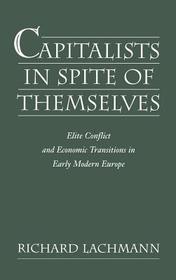
Capitalists in Spite of Themselves
Elite Conflict and Economic Transitions in Early Modern Europe
-
15% KEDVEZMÉNY?
- A kedvezmény csak az 'Értesítés a kedvenc témákról' hírlevelünk címzettjeinek rendeléseire érvényes.
- Kiadói listaár GBP 79.00
-
35 668 Ft (33 970 Ft + 5% áfa)
Az ár azért becsült, mert a rendelés pillanatában nem lehet pontosan tudni, hogy a beérkezéskor milyen lesz a forint árfolyama az adott termék eredeti devizájához képest. Ha a forint romlana, kissé többet, ha javulna, kissé kevesebbet kell majd fizetnie.
- Kedvezmény(ek) 15% (cc. 0 Ft off)
- Kedvezményes ár 30 318 Ft (28 875 Ft + 5% áfa)
- A kedvezmény érvényes eddig: 2026. augusztus 5.
Iratkozzon fel most és részesüljön kedvezőbb árainkból!
Feliratkozom
35 668 Ft

Beszerezhetőség
Megrendelésre a kiadó utánnyomja a könyvet. Rendelhető, de a szokásosnál kicsit lassabban érkezik meg.
Why don't you give exact delivery time?
A beszerzés időigényét az eddigi tapasztalatokra alapozva adjuk meg. Azért becsült, mert a terméket külföldről hozzuk be, így a kiadó kiszolgálásának pillanatnyi gyorsaságától is függ. A megadottnál gyorsabb és lassabb szállítás is elképzelhető, de mindent megteszünk, hogy Ön a lehető leghamarabb jusson hozzá a termékhez.
A termék adatai:
- Kiadó OUP USA
- Megjelenés dátuma 2000. február 17.
- ISBN 9780195075687
- Kötéstípus Keménykötés
- Terjedelem328 oldal
- Méret 162x235x27 mm
- Súly 694 g
- Nyelv angol
- Illusztrációk line figures 0
Kategóriák
Rövid leírás:
Richard Lachmann's work offers a new explanation for the origins of nation-states and capitalist markets in early modern Europe. Comparing regions and cities within and across England, France, Italy, Spain, and the Netherlands from the twelfth to the eighteenth centuries, Lachmann shows how conflict among feudal elites---landlords, clerics, kings and officeholders---transformed the bases of their control over land and labor, forcing the winners of feudal conflicts to become capitalists in spite of themselves as they took defensive actions to protect their privileges from rivals in the aftermath of the Reformation.
TöbbHosszú leírás:
Richard Lachmann's work offers a new explanation for the origins of nation-states and capitalist markets in early modern Europe. Comparing regions and cities within and across England, France, Italy, Spain, and the Netherlands from the twelfth to the eighteenth centuries, Lachmann shows how conflict among feudal elites---landlords, clerics, kings and officeholders---transformed the bases of their control over land and labor, forcing the winners of feudal conflicts to become capitalists in spite of themselves as they took defensive actions to protect their privileges from rivals in the aftermath of the Reformation.
Bold intervention in scholarly debates and a dense narrative grounded in an admirably broad selection of historical monographs in English and French distinguish Capitalists in Spite of Themselves. Even historians well versed in the issues will find much food for thought in Lachmann's observations on such subjects as the establishment of nation-states, early modern social relations, or the limits of popular politics. What is more, his [Lachmann's] nuanced account succeeds well in balancing structural constraints, the impact of contingent events, and human agency ... this is an important book that deserves a wide readership as much for its own thesis as for its critical overview of a mass of secondary literature.

