

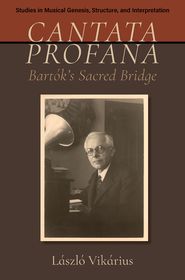
Cantata profana
Bart?k's Sacred Bridge
Sorozatcím: Studies in Musical Genesis, Structure, and Interpretation;
-
10% KEDVEZMÉNY?
- A kedvezmény csak az 'Értesítés a kedvenc témákról' hírlevelünk címzettjeinek rendeléseire érvényes.
- Kiadói listaár GBP 86.00
-
38 829 Ft (36 980 Ft + 5% áfa)
Az ár azért becsült, mert a rendelés pillanatában nem lehet pontosan tudni, hogy a beérkezéskor milyen lesz a forint árfolyama az adott termék eredeti devizájához képest. Ha a forint romlana, kissé többet, ha javulna, kissé kevesebbet kell majd fizetnie.
- Kedvezmény(ek) 10% (kb. 3 883 Ft)
- Kedvezményes ár 34 946 Ft (33 282 Ft + 5% áfa)
Iratkozzon fel most és részesüljön kedvezőbb árainkból!
Feliratkozom
38 829 Ft

Beszerezhetőség
Becsült beszerzési idő: A Prosperónál jelenleg nincsen raktáron, de a kiadónál igen. Beszerzés kb. 3-5 hét..
A Prosperónál jelenleg nincsen raktáron.
Why don't you give exact delivery time?
A beszerzés időigényét az eddigi tapasztalatokra alapozva adjuk meg. Azért becsült, mert a terméket külföldről hozzuk be, így a kiadó kiszolgálásának pillanatnyi gyorsaságától is függ. A megadottnál gyorsabb és lassabb szállítás is elképzelhető, de mindent megteszünk, hogy Ön a lehető leghamarabb jusson hozzá a termékhez.
A termék adatai:
- Kiadó OUP USA
- Megjelenés dátuma 2026. március 25.
- ISBN 9780190083236
- Kötéstípus Keménykötés
- Terjedelem324 oldal
- Méret 241x168x26 mm
- Súly 640 g
- Nyelv angol
- Illusztrációk 91 b/w figures, 6 tables 2656
Kategóriák
Rövid leírás:
The composition of Cantata profana (1930) by Hungarian composer B?la Bart?k--among the twentieth century's most important composers and one of the founders of comparative musicology--was inseparable from the composer's lifelong involvement with folk musics and folklore. In this volume of the Studies in Musical Genesis, Structure, and Interpretation series, L?szl? Vik?rius, a leading authority on Bart?k, uncovers the many layers of ethnographic, historical, and personal meaning embedded in the Cantata profana.
TöbbHosszú leírás:
Hungarian composer B?la Bart?k declared his Cantata profana, composed in 1930 and premi?red in London in 1934, his "credo," the composition of which was inseparable from the history of his involvement with folklore. Not only was Bart?k one of the twentieth century's most important composers, he was also one of the founders of comparative musicology, the precursor to the field of ethnomusicology. His collection and analytical studies of Hungarian, Romanian, and Slovak folk musics shaped his distinctive musical style, as well as complex scholarly publications. In this volume of the Studies in Musical Genesis, Structure, and Interpretation series, L?szl? Vik?rius, a leading authority on Bart?k, uncovers the many layers of ethnographic, historical, and personal meaning embedded in the Cantata profana.
The work's libretto was based on a Romanian folk ballad from his collection, and the mystical story of a hunter's nine sons who turn into stags--never to return home--was close to the composer's heart. Vik?rius analyzes the origins of the piece, rooted in one of Bart?k's most intensive periods of collecting activities in Transylvania just before the outbreak of World War I. The multi-ethnic folkloric landscape of "historic" Hungary (part of Austro-Hungary at the time) is embodied by the source materials for Cantata profana that survive in full to be analyzed, from the sketches to the various translations of the libretto. As Vik?rius demonstrates, the choice of a Romanian winter solstice ceremonial text as libretto for Cantata profana combines Bart?k's folklorism with a markedly neoclassical allusion to J. S. Bach's St Matthew Passion and is necessarily underpinned by the severe criticism Bart?k faced because of his interest in and work on Romanian folklore. Throughout the book, Vik?rius reveals numerous hidden details that prove crucial to the concept of the work and explores how its ideologically charged text underlines the aesthetic concept behind the musical decisions.
Tartalomjegyzék:
Series Editor Foreword
Abbreviations
Acknowledgements
Prologue: Between Sacred and Profane
Chapter 1: Bart?k the Folklorist
Chapter 2: Romanian Christmas Songs
Chapter 3: The Composition of Cantata profana: Covert Genesis
Chapter 4: Documents of an Overt Genesis
Chapter 5: An Analysis of Cantata profana
Chapter 6: The Reception of Cantata profana
Epilogue: An ars poetica
Appendices
Select Bibliography
Index

