

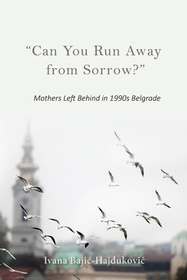
"Can You Run Away from Sorrow?" – Mothers Left Behind in 1990s Belgrade
Mothers Left Behind in 1990s Belgrade
Sorozatcím: New Anthropologies of Europe;
-
10% KEDVEZMÉNY?
- A kedvezmény csak az 'Értesítés a kedvenc témákról' hírlevelünk címzettjeinek rendeléseire érvényes.
- Kiadói listaár GBP 60.00
-
28 665 Ft (27 300 Ft + 5% áfa)
Az ár azért becsült, mert a rendelés pillanatában nem lehet pontosan tudni, hogy a beérkezéskor milyen lesz a forint árfolyama az adott termék eredeti devizájához képest. Ha a forint romlana, kissé többet, ha javulna, kissé kevesebbet kell majd fizetnie.
- Kedvezmény(ek) 10% (cc. 2 867 Ft off)
- Kedvezményes ár 25 799 Ft (24 570 Ft + 5% áfa)
Iratkozzon fel most és részesüljön kedvezőbb árainkból!
Feliratkozom
28 665 Ft

Beszerezhetőség
Becsült beszerzési idő: A Prosperónál jelenleg nincsen raktáron, de a kiadónál igen. Beszerzés kb. 3-5 hét..
A Prosperónál jelenleg nincsen raktáron.
Why don't you give exact delivery time?
A beszerzés időigényét az eddigi tapasztalatokra alapozva adjuk meg. Azért becsült, mert a terméket külföldről hozzuk be, így a kiadó kiszolgálásának pillanatnyi gyorsaságától is függ. A megadottnál gyorsabb és lassabb szállítás is elképzelhető, de mindent megteszünk, hogy Ön a lehető leghamarabb jusson hozzá a termékhez.
A termék adatai:
- Kiadó MH – Indiana University Press
- Megjelenés dátuma 2020. október 6.
- Kötetek száma Print PDF
- ISBN 9780253050045
- Kötéstípus Keménykötés
- Terjedelem158 oldal
- Méret 235x159x17 mm
- Súly 390 g
- Nyelv angol 60
Kategóriák
Hosszú leírás:
"
How does emigration affect those left behind? The fall of Yugoslavia in the 1990s led citizens to look for a better, more stable life elsewhere. For the older generations, however, this wasn't an option. In this powerful and moving work, Ivana Bajic-Hajdukovic reveals the impact that waves of emigration from Serbia had on family relationships and, in particular, on elderly mothers who stayed.
With nowhere to go, and any savings given to their children to help establish new lives, these seniors faced the crumbling country, waves of refugees from Croatia and Bosnia-Herzegovina, NATO bombing, the failing economy, and the trial and ouster of Slobodan Milosevic. ""Can You Run Away from Sorrow?"" poignantly depicts the intimacy of family relationships sustained through these turbulent times in Serbia and through the next generation's search for a new life. Bajic-Hajdukovic explores transformations in family intimacy during everyday life practices—in people's homes, in their food and cooking practices, in their childcare, and even in remittances and the exchange of gifts.
""Can You Run Away from Sorrow?"" illustrates not only the tremendous sacrifice of parents, but also their profound sense of loss—of their families, their country, their stability and dignity, and most importantly, of their own identity and hope for what they thought their future would be.

