

-
10% KEDVEZMÉNY?
- A kedvezmény csak az 'Értesítés a kedvenc témákról' hírlevelünk címzettjeinek rendeléseire érvényes.
- Kiadói listaár GBP 167.50
-
80 023 Ft (76 212 Ft + 5% áfa)
Az ár azért becsült, mert a rendelés pillanatában nem lehet pontosan tudni, hogy a beérkezéskor milyen lesz a forint árfolyama az adott termék eredeti devizájához képest. Ha a forint romlana, kissé többet, ha javulna, kissé kevesebbet kell majd fizetnie.
- Kedvezmény(ek) 10% (cc. 8 002 Ft off)
- Kedvezményes ár 72 020 Ft (68 591 Ft + 5% áfa)
Iratkozzon fel most és részesüljön kedvezőbb árainkból!
Feliratkozom
80 023 Ft

Beszerezhetőség
A kiadónál véglegesen elfogyott, nem rendelhető. Érdemes újra keresni a címmel, hátha van újabb kiadás.
Why don't you give exact delivery time?
A beszerzés időigényét az eddigi tapasztalatokra alapozva adjuk meg. Azért becsült, mert a terméket külföldről hozzuk be, így a kiadó kiszolgálásának pillanatnyi gyorsaságától is függ. A megadottnál gyorsabb és lassabb szállítás is elképzelhető, de mindent megteszünk, hogy Ön a lehető leghamarabb jusson hozzá a termékhez.
A termék adatai:
- Kiadó Oxford University Press
- Megjelenés dátuma 1999. december 9.
- Kötetek száma laminated boards
- ISBN 9780199637393
- Kötéstípus Keménykötés
- Terjedelem302 oldal
- Méret 241x161x21 mm
- Súly 660 g
- Nyelv angol
- Illusztrációk 15 halftones, 24 line illustrations 0
Kategóriák
Rövid leírás:
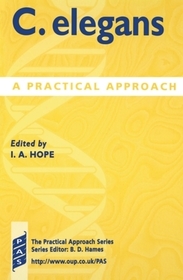
Caenorhabditis elegans has been a popular model organism for biological research for over thirty years with a dramatic interest since the publication of the entire genome sequence in 1998. It is currently the only multicellular animal to have its entire genome sequenced. This Practical Approach book provides all the essential background information required for use of C. elegans as a model system and includes information on how to use the genome
sequence information.
Hosszú leírás:
Caenorhabditis Elegans has been a popular model organism for biological research for over thirty years and has been used to investigate many aspects of animal development, for example apoptosis, the Hox genes, signal transduction pathways, and the development of the nervous system. It has recently taken on new importance with the publication of the entire genome sequence in 1998. The first chapter gives all the basic information on C.
elegans required to use it: it's natural history, anatomy, life cycle, development, and evolution. Information on how to obtain, grow, and maintain C. elegans for use as a model system is given in Chapter 4. Chapters 2 and 3 describe the genome project and show how to use genome sequence information by searching the database for
homologues using different search methods and then how to analyse the search data. The next chapter gives the essential practical details of transformation and common uses for the technique. Chapter 6 covers reverse genetics and describes strategies for gene inactivation that are known to work in C elegans: epigenetic inactivation and mutational germ line inactivation. Chapter 7 is designed to help the user analyse phenotype by microscopy and includes Normaski, fluorescence,
4-dimensional, and electron microscopy. Techniques for studying the neurobiology of C. elegans are given in chapter 8. Chapter 9 describes the three commonly used approaches for studying gene expression and Chapter 10 deals with the common methods of molecular biology essential for gene characterization. C. elegans is
not the ideal organism for biochemical studies, but chapter 11 describes several procedures for producing biochemically useful quantities of pure tissues. The final chapter is about conventional genetics and details the standard procedures for selfing and crossing; mutagenesis and mutant screening; characterization of mutants; gene mapping; temperature-shift experiments and mosaic analysis. Caenorhabditis Elegans: A Practical Approach will therefore provide all the background information
necessary for use of C. elegans as a model system.

