

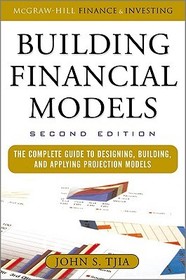
Building Financial Models
Sorozatcím: PROFESSIONAL FINANCE & INVESTM;
-
10% KEDVEZMÉNY?
- A kedvezmény csak az 'Értesítés a kedvenc témákról' hírlevelünk címzettjeinek rendeléseire érvényes.
- Kiadói listaár GBP 67.99
-
32 482 Ft (30 935 Ft + 5% áfa)
Az ár azért becsült, mert a rendelés pillanatában nem lehet pontosan tudni, hogy a beérkezéskor milyen lesz a forint árfolyama az adott termék eredeti devizájához képest. Ha a forint romlana, kissé többet, ha javulna, kissé kevesebbet kell majd fizetnie.
- Kedvezmény(ek) 10% (cc. 3 248 Ft off)
- Kedvezményes ár 29 234 Ft (27 842 Ft + 5% áfa)
Iratkozzon fel most és részesüljön kedvezőbb árainkból!
Feliratkozom
32 482 Ft

Beszerezhetőség
Bizonytalan a beszerezhetőség. Érdemes még egyszer keresni szerzővel és címmel. Ha nem talál másik, kapható kiadást, forduljon ügyfélszolgálatunkhoz!
Why don't you give exact delivery time?
A beszerzés időigényét az eddigi tapasztalatokra alapozva adjuk meg. Azért becsült, mert a terméket külföldről hozzuk be, így a kiadó kiszolgálásának pillanatnyi gyorsaságától is függ. A megadottnál gyorsabb és lassabb szállítás is elképzelhető, de mindent megteszünk, hogy Ön a lehető leghamarabb jusson hozzá a termékhez.
A termék adatai:
- Kiadás sorszáma 2
- Kiadó McGraw-Hill Education
- Megjelenés dátuma 2009. július 16.
- ISBN 9780071608893
- Kötéstípus Keménykötés
- Terjedelem464 oldal
- Méret 236x160x27 mm
- Súly 792 g
- Nyelv angol 0
Kategóriák
Rövid leírás:
The most up-to-date guide available for designing, building, and implementing valuation projection models
TöbbHosszú leírás:
The ability to effectively create and interpret financial models is one of the most valued skills in corporate finance--from Wall Street to Main Street. Now, the acclaimed guide to designing, building, and implementing valuation projection models is fully revised and expanded to keep finance and accounting professionals competitive in today's marketplace.
This second edition of Building Financial Models continues the tradition of its predecessor by providing a hands-on approach to creating a core model that is supported by broad coverage of cornerstone accounting and finance principles. Additionally, this updated volume features:
- Entirely new coverage of discounted cash flow (DCF) modeling
- Excel formulas for making powerful calculations within the spreadsheet
- In-depth explanations of both the principles and mechanics of projection models
Building Financial Models helps readers practice good thinking and apply sound knowledge of their tools--two key attributes to producing robust and easy-to-use models. This practical guide takes you step by step through the entire process of developing a projection model, with a full chapter dedicated to each phase. By the end, you will have a working, dynamic spreadsheet financial model for making projections for industrial and manufacturing companies.
Furthermore, this Second Edition provides the vocabulary and syntax of model building so you can tailor core models to fit any size company and allow for quick input changes to test sensitivity. The companion website www.buildingfinancialmodel.com offering example spreadsheets will give you a head start on developing your own models.
A flexible and successful financial projection model does more than just add numbers--it explains the complex relationships between those numbers and illuminates ways to use those associations to add value to an enterprise. Building Financial Models is the only book you need to create and implement a fluid financial projection model that is both state of the art and user friendly.
The ability to effectively create and interpret financial models is one of the most valued skills in corporate finance--from Wall Street to Main Street. Now, the acclaimed guide to designing, building, and implementing valuation projection models is fully revised and expanded to keep finance and accounting professionals competitive in today's marketplace.
This second edition of Building Financial Models continues the tradition of its predecessor by providing a hands-on approach to creating a core model that is supported by broad coverage of cornerstone accounting and finance principles. Additionally, this updated volume features:
- Entirely new coverage of discounted cash flow (DCF) modeling
- Excel formulas for making powerful calculations within the spreadsheet
- In-depth explanations of both the principles and mechanics of projection models
Building Financial Models helps readers practice good thinking and apply sound knowledge of their tools--two key attributes to producing robust and easy-to-use models. This practical guide takes you step by step through the entire process of developing a projection model, with a full chapter dedicated to each phase. By the end, you will have a working, dynamic spreadsheet financial model for making projections for industrial and manufacturing companies.
Furthermore, this Second Edition provides the vocabulary and syntax of model building so you can tailor core models to fit any size company and allow for quick input changes to test sensitivity. The companion website www.buildingfinancialmodel.com offering example spreadsheets will give you a head start on developing your own models.
A flexible and successful financial projection model does more than just add numbers--it explains the complex relationships between those numbers and illuminates ways to use those associations to add value to an enterprise. Building Financial Models is the only book you need to create and implement a fluid financial projection model that is both state of the art and user friendly.
TöbbTartalomjegyzék:
1.A Financial Projection Model
2.Best Practices in Modeling
3.Starting Out
4.Your Model-Building Toolbox: F Keys and Ranges
5.Your Model Building Toolbox: Functions
6.The Role of Cash in Modeling
7.Balancing the Balance Sheet
8.Income Statement and Balance Sheet Accounts
9.Putting Everything Together
10.The IS and BS Output Sheets
11.The CF sheet
12.Ratios: Key Performance Indicators
13.Forecasting Guidelines
14.The Cash Sweep
15.The Cash Flow Variation for Cash Sweep
16.Recording macros
17.Discounted Cash Flow Valuation
18.On-screen controls
19.Bells and whistles
20.Writing a macro in visual basic for applications

