

-
8% KEDVEZMÉNY?
- A kedvezmény csak az 'Értesítés a kedvenc témákról' hírlevelünk címzettjeinek rendeléseire érvényes.
- Kiadói listaár GBP 28.95
-
13 070 Ft (12 448 Ft + 5% áfa)
Az ár azért becsült, mert a rendelés pillanatában nem lehet pontosan tudni, hogy a beérkezéskor milyen lesz a forint árfolyama az adott termék eredeti devizájához képest. Ha a forint romlana, kissé többet, ha javulna, kissé kevesebbet kell majd fizetnie.
- Kedvezmény(ek) 8% (kb. 1 045 Ft)
- Kedvezményes ár 12 025 Ft (11 452 Ft + 5% áfa)
Iratkozzon fel most és részesüljön kedvezőbb árainkból!
Feliratkozom
13 070 Ft

Beszerezhetőség
Még nem jelent meg, de rendelhető. A megjelenéstől számított néhány héten belül megérkezik.
Why don't you give exact delivery time?
A beszerzés időigényét az eddigi tapasztalatokra alapozva adjuk meg. Azért becsült, mert a terméket külföldről hozzuk be, így a kiadó kiszolgálásának pillanatnyi gyorsaságától is függ. A megadottnál gyorsabb és lassabb szállítás is elképzelhető, de mindent megteszünk, hogy Ön a lehető leghamarabb jusson hozzá a termékhez.
A termék adatai:
- Kiadó Wesleyan University Press
- Megjelenés dátuma 2026. augusztus 18.
- ISBN 9780819501141
- Kötéstípus Puhakötés
- Terjedelem424 oldal
- Méret 228x152 mm
- Nyelv angol
- Illusztrációk 25 b&w photos 700
Kategóriák
Hosszú leírás:
A new understanding of the birth of jazz through a fine-grained social history of early African American musicians
Winner of the 2025 Robert M. Stevenson Award, presented by the American Musicological Society (AMS)
Winner of the Harry and Claire Brook Award, bestowed by the Harry Brook Center for Music Research and Documentation (The Graduate Center of The City University of New York)
Finalist for the MAAH Stone Book Award, bestowed by the Museum of African American History (2025)
Honorable mention for The Portia K. Maultsby Prize, granted by Society for Ethnomusicology (SEM)
Winner of the 2026 Nicolás Cristóbal Guillén Batista Outstanding Book Award, granted by the Caribbean Philosophical Association
Honorable Mention for the 2026 IASPM-US Woody Guthrie Book Award
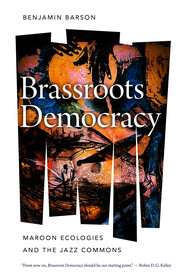
Brassroots Democracy recasts the birth of jazz, unearthing vibrant narratives of New Orleans musicians to reveal how early jazz was inextricably tied to the mass mobilization of freedpeople during Reconstruction and the decades that followed. Benjamin Barson presents a "music history from below," following the musicians as they built communes, performed at Civil Rights rallies, and participated in general strikes. Perhaps most importantly, Barson locates the first emancipatory revolution in the Americas—Haiti—as a nexus for cultural and political change in nineteenth-century Louisiana. In dialogue with the work of recent historians who have inverted traditional histories of Latin American and Caribbean independence by centering the influence of Haitian activists abroad, this work traces the impact of Haitian culture in New Orleans and its legacy in movements for liberation.
Brassroots Democracy demonstrates how Black musicians infused participatory music practice with innovative forms of grassroots democracy. Late nineteenth-century Black brass bands and activists rehearsed these participatory models through collective performance that embodied the democratic ethos of Black Reconstruction. Termed "Brassroots Democracy," this fusion of political and musical spheres revolutionized both. Brassroots Democracy illuminates the Black Atlantic struggles that informed music-as-world-making from the Haitian Revolution through Reconstruction to the jazz revolution. The work theorizes the roots of the New Orleans brass band tradition in the social relations grown in maroon ecologies across the Americas. Their fruits contributed to the socio-sonic commons of the music we call jazz today.
"The book is a groundbreaking one. It offers a rich, absorbing and wide-ranging treatment of neglected issues at the interface of music and politics. There are plentiful archival photos and sheet music, and Brassroots Democracy is a beautiful artefact of the kind that American publishers still seem able to produce."—Andy Hamilton, Jazz Journal
"This sprawling and pioneering text is perhaps only the beginning of not just a new outlook on jazz scholarship, but an invigorated musicology which might engage with its site of research literally from the ground up."—Elizabeth Frickey, Journal of Jazz Studies
"Benjamin Barson's outstanding Brassroots Democracy, which inspires hope about what is possible under the bleakest conditions... details the beautiful and bleak ways that jazz music created the soundtrack of an emancipatory movement that lasts to this day."—Shyam K. Sriram, PopMatters
"The broader jazz commons delineated in Brassroots Democracy offers evidence that aesthetic choices have social causes and consequences, that 'playing' music is work but labor can be creative, that workers' politics neither begin nor end on the shop floor, and that musical texts can draw their determinate shape and influence from their social and historical contexts."—George Lipsitz, Jazz and Culture
"Barson provides a rich historical portrait that illuminates how these joyful festive practices confronted hegemonic power and offered alternatives. While I, having played in many brass bands in protest parades myself, am a particularly soft target for his approach, I do not think it is an understatement to suggest that Barson's book might mark a paradigm shift that will blow into the common wind for years to come."—Andrew Snyder, Ethnomusicology Institute, NOVA University Lisbon, Journal of Festive Studies
"Brassroots Democracy joins a mighty cohort of studies on African American music and liberation that extends to W. E. B. Du Bois and Frederick Douglass... a wonderful addition to this mighty crew."—Museum of African American History Stone Book Award Committee
"Brassroots Democracy is a field-defining achievement, marshaling historical research, incisive archival counter-readings, and musicological insight to reimagine the genealogies of Black opposition to plantation capitalism in Louisiana... a luminous guide."—ASA Lora Romero Prize Committee
"Brassroots Democracy is not a work that claims some grand new discovery in the archive or some theoretical revolution, and this is the ultimate strength of the work. Barson's book exists to connect dots. It is a work of clarification. It is a work of explication. The potency of the work is in its careful attendance to the minutiae of Black history, Black musical life, and Black radicalism—its interest in the lives and politics of sex and dock workers, in fugitives and civil rights activists, in war veterans and immigrants. There is no Black life without Black music. There is no Black music without Black politics. There is no jazz without New Orleans. There is no New Orleans without Haiti. There is no Haiti without revolution. These realities and practices exist in a way so interrelated that no part of it is beginning or end. This is the lesson of the brassroots."—D'Ondre Juwan Swails, Global Black Thought
Tartalomjegyzék:
Acknowledgements
Introduction: A Long Song from Haiti
Chapter 1: The Common Wind's
Second Gale, the Desdunes Family
Chapter 2: Mamie Desdunes in the Neo-Plantation: Legacies of Black Feminism among Storyville's Blues People
Chapter 3: La Frontera Sónica and the Mexican Revolutions in Borderlands Jazz
Chapter 4. Black Atlantic Ecologies: Afro-Caribbean Ecosocialism in Louisiana's Sugar Parishes
Chapter 5: Black Reconstruction and Brassroots Democracy
Conclusion: Telegrams from Spiritual Plane
Bibliography

