

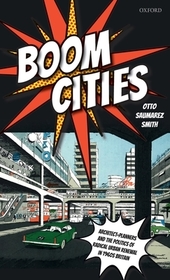
Boom Cities
Architect Planners and the Politics of Radical Urban Renewal in 1960s Britain
-
10% KEDVEZMÉNY?
- A kedvezmény csak az 'Értesítés a kedvenc témákról' hírlevelünk címzettjeinek rendeléseire érvényes.
- Kiadói listaár GBP 115.00
-
51 922 Ft (49 450 Ft + 5% áfa)
Az ár azért becsült, mert a rendelés pillanatában nem lehet pontosan tudni, hogy a beérkezéskor milyen lesz a forint árfolyama az adott termék eredeti devizájához képest. Ha a forint romlana, kissé többet, ha javulna, kissé kevesebbet kell majd fizetnie.
- Kedvezmény(ek) 10% (kb. 5 192 Ft)
- Kedvezményes ár 46 730 Ft (44 505 Ft + 5% áfa)
Iratkozzon fel most és részesüljön kedvezőbb árainkból!
Feliratkozom
51 922 Ft

Beszerezhetőség
Megrendelésre a kiadó utánnyomja a könyvet. Rendelhető, de a szokásosnál kicsit lassabban érkezik meg.
Why don't you give exact delivery time?
A beszerzés időigényét az eddigi tapasztalatokra alapozva adjuk meg. Azért becsült, mert a terméket külföldről hozzuk be, így a kiadó kiszolgálásának pillanatnyi gyorsaságától is függ. A megadottnál gyorsabb és lassabb szállítás is elképzelhető, de mindent megteszünk, hogy Ön a lehető leghamarabb jusson hozzá a termékhez.
A termék adatai:
- Kiadó OUP Oxford
- Megjelenés dátuma 2019. március 26.
- ISBN 9780198836407
- Kötéstípus Keménykötés
- Terjedelem210 oldal
- Méret 222x146x20 mm
- Súly 388 g
- Nyelv angol
- Illusztrációk 37 black and white figures/illustrations 0
Kategóriák
Rövid leírás:
In this volume, Otto Saumarez Smith recounts the fraught history of the urban development of British city centres in the 1960s, uncovering the planning philosophy, and the political, cultural, and legislative background that created the conditions for these transformations to occur across the country.
TöbbHosszú leírás:
Boom Cities is the first published history of the profound transformations of British city centres in the 1960s. It has often been said that urban planners did more damage to Britain's cities than even the Luftwaffe had managed, and this study details the rise and fall of modernist urban planning, revealing its origins and the dissolution of the cross-party consensus, before the ideological smearing that has ever since characterized the high-rise towers, dizzying ring roads, and concrete precincts that were left behind.
The rebuilding of British city centres during the 1960s drastically affected the built form of urban Britain, including places ranging from traditional cathedral cities through to the decaying towns of the industrial revolution. Boom Cities uncovers both the planning philosophy, and the political, cultural, and legislative background that created the conditions for these processes to occur across the country.
Boom Cities reveals the role of architect-planners in these transformations. The book also provides an unconventional account of the end of modernist approaches to the built environment, showing it from the perspective of planning and policy elites, rather than through the emergence of public opposition to planning.
ingeniously researched, well-written and subtly argued study
Tartalomjegyzék:
Introduction
Optimism, Traffic, and the Historic City in Post-war British Planning
Blue, White and Red Heat: Central Government and City Centre Redevelopment
Blackburn Goes Pop: City Centre Redevelopment in a Provincial City
Planning for Affluence: Graeme Shankland and the Political Culture of the British Left
Modernism in an Old Country: Lionel Brett, an Establishment Architect-planner
The Trajectory of Central Area Redevelopment
Bibliography

