

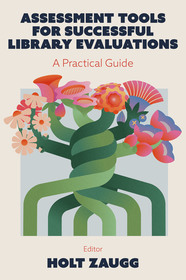
Assessment Tools for Successful Library Evaluations
A Practical Guide
-
10% KEDVEZMÉNY?
- A kedvezmény csak az 'Értesítés a kedvenc témákról' hírlevelünk címzettjeinek rendeléseire érvényes.
- Kiadói listaár GBP 80.00
-
36 120 Ft (34 400 Ft + 5% áfa)
Az ár azért becsült, mert a rendelés pillanatában nem lehet pontosan tudni, hogy a beérkezéskor milyen lesz a forint árfolyama az adott termék eredeti devizájához képest. Ha a forint romlana, kissé többet, ha javulna, kissé kevesebbet kell majd fizetnie.
- Kedvezmény(ek) 10% (kb. 3 612 Ft)
- Kedvezményes ár 32 508 Ft (30 960 Ft + 5% áfa)
Iratkozzon fel most és részesüljön kedvezőbb árainkból!
Feliratkozom
36 120 Ft

Beszerezhetőség
Becsült beszerzési idő: A Prosperónál jelenleg nincsen raktáron, de a kiadónál igen. Beszerzés kb. 3-5 hét..
A Prosperónál jelenleg nincsen raktáron.
Why don't you give exact delivery time?
A beszerzés időigényét az eddigi tapasztalatokra alapozva adjuk meg. Azért becsült, mert a terméket külföldről hozzuk be, így a kiadó kiszolgálásának pillanatnyi gyorsaságától is függ. A megadottnál gyorsabb és lassabb szállítás is elképzelhető, de mindent megteszünk, hogy Ön a lehető leghamarabb jusson hozzá a termékhez.
A termék adatai:
- Kiadó Emerald Publishing Limited
- Megjelenés dátuma 2026. június 1.
- ISBN 9781836627555
- Kötéstípus Keménykötés
- Terjedelem280 oldal
- Méret 229x152x19 mm
- Súly 502 g
- Nyelv angol 692
Kategóriák
Rövid leírás:
This is an essential guide for professionals involved in evaluating library operations or teaching assessment methods.& Contributions offer clear, detailed descriptions of key assessment and evaluation techniques, complemented by practical examples that demonstrate how these principles can be applied and adapted to any library setting.
TöbbHosszú leírás:
Assessment Tools for Successful Library Evaluations is an essential guide for professionals involved in evaluating library operations or teaching assessment methods. Contributions offer clear, detailed descriptions of key assessment and evaluation techniques, complemented by practical examples that demonstrate how these principles can be applied and adapted to any library setting.
Various performance measurement tools are evaluated, such as ethnographic techniques, focus groups, interviews, observations, surveys, and usability testing. Chapters provide examples of how librarians have used these methods, along with guidance on applying each method to assess different aspects of library operations. This helps describe the library’s value and supports data-driven decision-making for strategic improvements. Examples of each assessment method are drawn from different types of libraries worldwide, including academic, public, school, government, and medical libraries.
This is a valuable resource for library managers and assessment librarians across all sectors. For those with assessment experience, it provides a quick refresher of the learning and skills related to library evaluation. For those teaching or learning about assessment as part of an MLS program, Assessment Tools for Successful Library Evaluations is a reference resource that will help instructors present methods and students to learn and apply the methods.
Assessment Tools for Successful Library Evaluations is an essential resource for practitioners, educators, and students seeking to develop or enhance their library assessment practices. Zaugg provides clear explanations of core assessment methods, including focus groups, interviews, surveys, usability testing, visual assessments, and more. Each methodological chapter is paired with practical case studies contributed by library assessment practitioners from around the world, which illustrate how these approaches are applied in real-world settings. This approachable resource helps librarians overcome common speed bumps in assessment and build confidence in data-driven decision-making.
TöbbTartalomjegyzék:
Introduction to First Section
Chapter 1. An Introduction to Focus Groups; Holt Zaugg
Chapter 2. An Introduction to Interviews; Holt Zaugg
Chapter 3. An Introduction to Observations and Ethnographies; Holt Zaugg
Chapter 4. An Introduction to Surveys; Holt Zaugg
Chapter 5. An Introduction to Usability Testing; Holt Zaugg
Chapter 6. An Introduction to Visual Assessment Methods; Holt Zaugg
Introduction to Examples Section
Chapter 7. Passing the Baton: An Interview Between Mentor and Student on Library Assessment and Evaluation; Colleen Cook and Kara Schleck
Chapter 8. Using Focus Groups for Library Assessment: Insights from Three Projects; Jung Mi Scoulas
Chapter 9. User-driven Design: Usability Testing to Improve an Academic Library’s Research Guide; Mercedes Rutherford-Patten
Chapter 10. Conversations that Count: Using Interviews for Library Assessment; Lizzie Cope
Chapter 11. Instructional Repositories: Building from the Ground Up; Jillian Speck
Chapter 12. Fostering Connections and Community Through Celebrating Virginia Tech's Therapy Dogs: A Series of Observation Studies; Esther Dowell and Kelsey Hammer
Chapter 13. Is This Really an Ethnography? Using “Ethnographish” Methods to Study Library Space; Kimberly Vardeman and Sarah D. DeVille-Holly
Chapter 14. Using Surveys to Evaluate Digital Literacy Competencies among Undergraduate Students in Nigerian University Libraries; Bolaji David Oladokun and Yusuf Ayodeji Ajani
Chapter 15. Survey-Driven Improvement in Academic Libraries: Methodology and Application in a Communication and Trust Study; Rebecca J. Peterson, Pamela R. Hallam, Lane Fischer, and Ross Larsen
Chapter 16. Joining Forces: Enhancing Website Usability Through UX and Assessment at an Academic Library; Josie Cotton and Liz Bober
Chapter 17. Evaluating Website Effectiveness Through Student-Centered Usability Testing; Lori L.Steckervetz, Olivia Rossetti, and Connie Strittmatter
Chapter 18. Small Changes, Big Impact: Improving Accessibility in Library Spaces Through Student Collaboration; Dan Herbert
Chapter 19. What’s Next?; Holt Zaugg

