

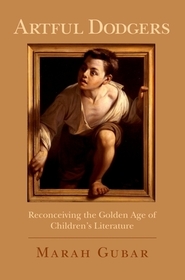
Artful Dodgers
Reconceiving the Golden Age of Children's Literature
-
10% KEDVEZMÉNY?
- A kedvezmény csak az 'Értesítés a kedvenc témákról' hírlevelünk címzettjeinek rendeléseire érvényes.
- Kiadói listaár GBP 41.99
-
18 958 Ft (18 055 Ft + 5% áfa)
Az ár azért becsült, mert a rendelés pillanatában nem lehet pontosan tudni, hogy a beérkezéskor milyen lesz a forint árfolyama az adott termék eredeti devizájához képest. Ha a forint romlana, kissé többet, ha javulna, kissé kevesebbet kell majd fizetnie.
- Kedvezmény(ek) 10% (cc. 1 896 Ft off)
- Kedvezményes ár 17 062 Ft (16 250 Ft + 5% áfa)
Iratkozzon fel most és részesüljön kedvezőbb árainkból!
Feliratkozom
18 958 Ft

Beszerezhetőség
Megrendelésre a kiadó utánnyomja a könyvet. Rendelhető, de a szokásosnál kicsit lassabban érkezik meg.
Why don't you give exact delivery time?
A beszerzés időigényét az eddigi tapasztalatokra alapozva adjuk meg. Azért becsült, mert a terméket külföldről hozzuk be, így a kiadó kiszolgálásának pillanatnyi gyorsaságától is függ. A megadottnál gyorsabb és lassabb szállítás is elképzelhető, de mindent megteszünk, hogy Ön a lehető leghamarabb jusson hozzá a termékhez.
A termék adatai:
- Kiadó OUP USA
- Megjelenés dátuma 2010. november 11.
- ISBN 9780199756742
- Kötéstípus Puhakötés
- Terjedelem280 oldal
- Méret 234x156x15 mm
- Súly 395 g
- Nyelv angol 0
Kategóriák
Rövid leírás:
In this groundbreaking contribution to Victorian and children's literature studies, Marah Gubar proposes a fundamental reconception of the nineteenth-century attitude toward childhood. The ideology of innocence was much slower to spread than we think, she contends, and the people whom we assume were most committed to it--children's authors and members of the infamous "cult of the child"--were actually deeply ambivalent about this Romantic notion. Rather than wholeheartedly promoting a static ideal of childhood purity, Golden Age children's authors often characterize young people as collaborators who are caught up in the constraints of the culture they inhabit, and yet not inevitably victimized as a result of this contact with adults and their world. Such nuanced meditations on the vexed issue of the child's agency, Gubar suggests, can help contemporary scholars to generate more flexible critical approaches to the study of childhood and children's literature.
TöbbHosszú leírás:
This is an open access title available under the terms of a CC BY-NC-ND 4.0 International license. It is free to read at Oxford Scholarship Online and offered as a free PDF download from OUP and selected open access locations.
In this groundbreaking contribution to Victorian and children's literature studies, Marah Gubar proposes a fundamental reconception of the nineteenth-century attitude toward childhood. The ideology of innocence was much slower to spread than we think, she contends, and the people whom we assume were most committed to it--children's authors and members of the infamous "cult of the child"--were actually deeply ambivalent about this Romantic notion. Rather than wholeheartedly promoting a static ideal of childhood purity, Golden Age children's authors often characterize young people as collaborators who are caught up in the constraints of the culture they inhabit, and yet not inevitably victimized as a result of this contact with adults and their world. Such nuanced meditations on the vexed issue of the child's agency, Gubar suggests, can help contemporary scholars to generate more flexible critical approaches to the study of childhood and children's literature.
One of the finest things about this remarkable book is that it does what so much scholarship strives for and so seldom does: it advances the entire field, and by a huge margin.
Tartalomjegyzék:
Preface
Introduction: "Six Impossible Things Before Breakfast"
'"Our Field': The Rise of the Child Narrator
Collaborating with the Enemy: Treasure Island
Reciprocal Aggression: Unromantic Agency in the Art of Lewis Carroll
Partners in Crime: E. Nesbit and the Art of Thieving
The Cult of the Child and the Controversy over Child Actors
Burnett, Barrie, and the Emergence of Children's Theatre
Index

