

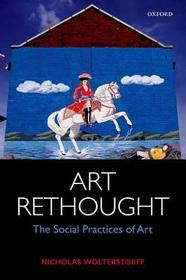
Art Rethought
The Social Practices of Art
-
10% KEDVEZMÉNY?
- A kedvezmény csak az 'Értesítés a kedvenc témákról' hírlevelünk címzettjeinek rendeléseire érvényes.
- Kiadói listaár GBP 66.00
-
29 799 Ft (28 380 Ft + 5% áfa)
Az ár azért becsült, mert a rendelés pillanatában nem lehet pontosan tudni, hogy a beérkezéskor milyen lesz a forint árfolyama az adott termék eredeti devizájához képest. Ha a forint romlana, kissé többet, ha javulna, kissé kevesebbet kell majd fizetnie.
- Kedvezmény(ek) 10% (cc. 2 980 Ft off)
- Kedvezményes ár 26 819 Ft (25 542 Ft + 5% áfa)
Iratkozzon fel most és részesüljön kedvezőbb árainkból!
Feliratkozom
29 799 Ft

Beszerezhetőség
Megrendelésre a kiadó utánnyomja a könyvet. Rendelhető, de a szokásosnál kicsit lassabban érkezik meg.
Why don't you give exact delivery time?
A beszerzés időigényét az eddigi tapasztalatokra alapozva adjuk meg. Azért becsült, mert a terméket külföldről hozzuk be, így a kiadó kiszolgálásának pillanatnyi gyorsaságától is függ. A megadottnál gyorsabb és lassabb szállítás is elképzelhető, de mindent megteszünk, hogy Ön a lehető leghamarabb jusson hozzá a termékhez.
A termék adatai:
- Kiadó OUP Oxford
- Megjelenés dátuma 2015. szeptember 10.
- ISBN 9780198747758
- Kötéstípus Keménykötés
- Terjedelem352 oldal
- Méret 240x163x25 mm
- Súly 678 g
- Nyelv angol 0
Kategóriák
Rövid leírás:
We engage with works of art in many ways, yet almost all modern philosophers of art have focused entirely on one mode of engagement: disinterested attention. Nicholas Wolterstorff explores why this is, and offers an alternative framework according to which arts are a part of social practice, and have different meaning in different practices.
TöbbHosszú leírás:
Human beings engage works of the arts in many different ways: they sing songs while working, they kiss icons, they create and dedicate memorials. Yet almost all philosophers of art of the modern period have ignored this variety and focused entirely on just one mode of engagement, namely, disinterested attention. In the first part of the book Nicholas Wolterstorff asks why philosophers have concentrated on just this one mode of engagement. The answer he proposes is that almost all philosophers have accepted what the author calls the grand narrative concerning art in the modern world. It is generally agreed that in the early modern period, members of the middle class in Western Europe increasingly engaged works of the arts as objects of disinterested attention. The grand narrative claims that this change represented the arts coming into their own, and that works of art, so engaged, are socially other and transcendent. Wolterstorff argues that the grand narrative has to be rejected as not fitting the facts.
Wolterstorff then offers an alternative framework for thinking about the arts. Central to the alternative framework that he proposes are the idea of the arts as social practices and the idea of works of the arts as having different meaning in different practices. He goes on to use this framework to analyse in some detail five distinct social practices of art and the meaning that works have within those practices: the practice of memorial art, of art for veneration, of social protest art, of works songs, and of recent art-reflexive art.
Tartalomjegyzék:
Introduction
Part One: The Grand Narrative of Art in the Modern World
The Early Modern Revolution in the Arts
Why the Revolution?
The Grand Narrative and the Grand Narrative Theses
Wherein Lies the Worth of Disinterested Attention?
Art, Religion, and the Grand Narrative
Part Two: Why The Grand Narrative Has To Go
The Inapplicability of the Grand Narrative to Recent Art
Why the Grand Narrative Never Was Tenable
Part Three: A New Framework For Thinking About The Arts
The Arts as Social Practices
Meaning of Works of the Arts and Artworks
Part Four: Memorial Art
The Social Practices of Memorial Art
The Memorial Meaning of the Mural Art of Belfast
Part Five: Art For Veneration
The Social Practices of Art for Veneration
Part Six: Social Protest Art
The Social Practices of Social Protest Art
The Social Protest Meaning of Uncle Tom's Cabin
The Social Protest Meaning of the Graphic Art of Käthe Kollwitz
Part Seven: Art That Enhances
Work Songs: Social Practice and Meaning
Part Eight: The Art-Reflexive Art of Today's Art World
The Social Practices of Art-Reflexive Art
Art-Reflexive Meaning in the Work of Sherrie Levine
Epilogue: Good Works and Just Practices
What Happened to Beauty?
The Pursuit of Justice and the Social Practices of Art

