

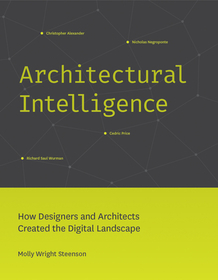
Architectural Intelligence
How Designers and Architects Created the Digital Landscape
-
10% KEDVEZMÉNY?
- A kedvezmény csak az 'Értesítés a kedvenc témákról' hírlevelünk címzettjeinek rendeléseire érvényes.
- Kiadói listaár GBP 28.00
-
13 377 Ft (12 740 Ft + 5% áfa)
Az ár azért becsült, mert a rendelés pillanatában nem lehet pontosan tudni, hogy a beérkezéskor milyen lesz a forint árfolyama az adott termék eredeti devizájához képest. Ha a forint romlana, kissé többet, ha javulna, kissé kevesebbet kell majd fizetnie.
- Kedvezmény(ek) 10% (cc. 1 338 Ft off)
- Kedvezményes ár 12 039 Ft (11 466 Ft + 5% áfa)
Iratkozzon fel most és részesüljön kedvezőbb árainkból!
Feliratkozom
13 377 Ft

Beszerezhetőség
Bizonytalan a beszerezhetőség. Érdemes még egyszer keresni szerzővel és címmel. Ha nem talál másik, kapható kiadást, forduljon ügyfélszolgálatunkhoz!
Why don't you give exact delivery time?
A beszerzés időigényét az eddigi tapasztalatokra alapozva adjuk meg. Azért becsült, mert a terméket külföldről hozzuk be, így a kiadó kiszolgálásának pillanatnyi gyorsaságától is függ. A megadottnál gyorsabb és lassabb szállítás is elképzelhető, de mindent megteszünk, hogy Ön a lehető leghamarabb jusson hozzá a termékhez.
A termék adatai:
- Kiadó MIT Press
- Megjelenés dátuma 2018. január 23.
- ISBN 9780262037068
- Kötéstípus Keménykötés
- Terjedelem328 oldal
- Méret 236x183x28 mm
- Súly 741 g
- Nyelv angol
- Illusztrációk 52 B&W ILLUS. 0
Kategóriák
Hosszú leírás:
Architects who engaged with cybernetics, artificial intelligence, and other technologies poured the foundation for digital interactivity.
In Architectural Intelligence, Molly Wright Steenson explores the work of four architects in the 1960s and 1970s who incorporated elements of interactivity into their work. Christopher Alexander, Richard Saul Wurman, Cedric Price, and Nicholas Negroponte and the MIT Architecture Machine Group all incorporated technologies including cybernetics and artificial intelligence into their work and influenced digital design practices from the late 1980s to the present day.
Alexander, long before his famous 1977 book A Pattern Language, used computation and structure to visualize design problems; Wurman popularized the notion of information architecture ; Price designed some of the first intelligent buildings; and Negroponte experimented with the ways people experience artificial intelligence, even at architectural scale. Steenson investigates how these architects pushed the boundaries of architecture and how their technological experiments pushed the boundaries of technology. What did computational, cybernetic, and artificial intelligence researchers have to gain by engaging with architects and architectural problems? And what was this new space that emerged within these collaborations? At times, Steenson writes, the architects in this book characterized themselves as anti-architects and their work as anti-architecture. The projects Steenson examines mostly did not result in constructed buildings, but rather in design processes and tools, computer programs, interfaces, digital environments. Alexander, Wurman, Price, and Negroponte laid the foundation for many of our contemporary interactive practices, from information architecture to interaction design, from machine learning to smart cities.
Több
