

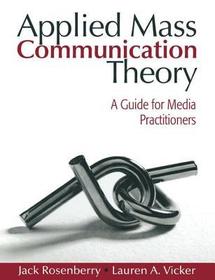
Applied Mass Communication Theory
A Guide for Media Practitioners
-
10% KEDVEZMÉNY?
- Kiadói listaár GBP 37.99
-
17 152 Ft (16 335 Ft + 5% áfa)
Az ár azért becsült, mert a rendelés pillanatában nem lehet pontosan tudni, hogy a beérkezéskor milyen lesz a forint árfolyama az adott termék eredeti devizájához képest. Ha a forint romlana, kissé többet, ha javulna, kissé kevesebbet kell majd fizetnie.
- Kedvezmény(ek) 10% (cc. 1 715 Ft off)
- Kedvezményes ár 15 437 Ft (14 702 Ft + 5% áfa)
15 437 Ft

Beszerezhetőség
Bizonytalan a beszerezhetőség. Érdemes még egyszer keresni szerzővel és címmel. Ha nem talál másik, kapható kiadást, forduljon ügyfélszolgálatunkhoz!
Why don't you give exact delivery time?
A beszerzés időigényét az eddigi tapasztalatokra alapozva adjuk meg. Azért becsült, mert a terméket külföldről hozzuk be, így a kiadó kiszolgálásának pillanatnyi gyorsaságától is függ. A megadottnál gyorsabb és lassabb szállítás is elképzelhető, de mindent megteszünk, hogy Ön a lehető leghamarabb jusson hozzá a termékhez.
A termék adatai:
- Kiadás sorszáma 1
- Kiadó Routledge
- Megjelenés dátuma 2008. január 22.
- ISBN 9780205548736
- Kötéstípus Puhakötés
- Terjedelem307 oldal
- Méret 247x190 mm
- Súly 513 g
- Nyelv angol 0
Kategóriák
Rövid leírás:
Applied Mass Communication Theory: A Guide for Media Practitioners
Jack Rosenberry, St. JohnFisher College
Lauren A. Vicker, St. JohnFisher College
Are you preparing for a career in the field of Mass Communication? Applied Mass Communication Theory: A Guide for Media Practitioners bridges a review of theory to the contemporary work of media professionals to help you prepare. This text is organized into three units to help you successfully tackle your capstone courseload. The first unit, ?Theory and Research,? provides a framework for constructing an undergraduate research project. The second unit, ?Mass Communication Theories,? presents vital chronological information on the progression of theory in mass communication. The final unit, ?Bridge to the Real World,? provides information on media law, ethics, economics and mass media careers, effectively establishing a critical framework as you leave college and start working in the field of Mass Communication.
What reviewers are saying about Applied Mass Communication Theory: A Guide for Media Practitioners:
?The strength of this (text) is its coverage of mass communication theory. Clearly evident is the wealth of knowledge on media theory emblazoned by the authors. In pursuing the manuscript, it was impossible not to be impressed with the authors? command of this subject.?
- Craig Allen, PhD, Arizona State University
?? I would definitely recommend the text to colleagues in mass communication programs as I think it is well written and would be very helpful to students in a mass communication capstone course.?
- W. Bradford Mello, PhD, Trinity-Washington University
?The concepts are clearly explained and use contemporary examples that the students can relate to? It provides an excellent overview of theory and research methods.?
- Monica Brasted, PhD, SUNY Brockport
Több
Hosszú leírás:
Applied Mass Communication Theory: A Guide for Media Practitioners bridges a review of theory to the contemporary work of media professionals. The book is organized into three units. The first, "Mass Communication Theory and Research," provides a framework for constructing an undergraduate research project, which is often required for upper-level mass communication courses. The second, "Mass Communication Theories," presents vital chronological information on the progression of theory in mass communication, including a model that integrates mass communication theories and shows how they relate to one another. Finally, Unit 3, "Bridge to the Real World," provides information on media law, ethics, economics and mass media careers, effectively establishing a critical framework for students as they leave college and begin their first job.
Applied Mass Communication Theory: A Guide for Media Practitioners bridges a review of theory to the contemporary work of media professionals. The book is organized into three units. The first, "Mass Communication Theory and Research," provides a framework for constructing an undergraduate research project, which is often required for upper-level mass communication courses. The second, "Mass Communication Theories," presents vital chronological information on the progression of theory in mass communication, including a model that integrates mass communication theories and shows how they relate to one another. Finally, Unit 3, "Bridge to the Real World," provides information on media law, ethics, economics and mass media careers, effectively establishing a critical framework for students as they leave college and begin their first job.

