

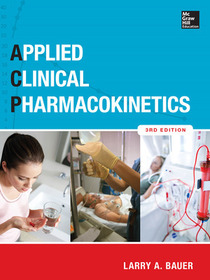
Applied Clinical Pharmacokinetics 3/E
Sorozatcím: PHARMACY;
-
10% KEDVEZMÉNY?
- A kedvezmény csak az 'Értesítés a kedvenc témákról' hírlevelünk címzettjeinek rendeléseire érvényes.
- Kiadói listaár GBP 74.99
-
33 857 Ft (32 245 Ft + 5% áfa)
Az ár azért becsült, mert a rendelés pillanatában nem lehet pontosan tudni, hogy a beérkezéskor milyen lesz a forint árfolyama az adott termék eredeti devizájához képest. Ha a forint romlana, kissé többet, ha javulna, kissé kevesebbet kell majd fizetnie.
- Kedvezmény(ek) 10% (cc. 3 386 Ft off)
- Kedvezményes ár 30 472 Ft (29 021 Ft + 5% áfa)
Iratkozzon fel most és részesüljön kedvezőbb árainkból!
Feliratkozom
33 857 Ft

Beszerezhetőség
Megrendelésre a kiadó utánnyomja a könyvet. Rendelhető, de a szokásosnál kicsit lassabban érkezik meg.
Why don't you give exact delivery time?
A beszerzés időigényét az eddigi tapasztalatokra alapozva adjuk meg. Azért becsült, mert a terméket külföldről hozzuk be, így a kiadó kiszolgálásának pillanatnyi gyorsaságától is függ. A megadottnál gyorsabb és lassabb szállítás is elképzelhető, de mindent megteszünk, hogy Ön a lehető leghamarabb jusson hozzá a termékhez.
A termék adatai:
- Kiadás sorszáma 3
- Kiadó McGraw Hill
- Megjelenés dátuma 2014. augusztus 16.
- ISBN 9780071794589
- Kötéstípus Keménykötés
- Terjedelem880 oldal
- Méret 241x188x38 mm
- Súly 1458 g
- Nyelv angol 0
Kategóriák
Hosszú leírás:
Publisher's Note: Products purchased from Third Party sellers are not guaranteed by the publisher for quality, authenticity, or access to any online entitlements included with the product.
The most current, hands-on book in the field, Applied Clinical Pharmacokinetics The perfect textbook for pharmacy students learning the clinical application of pharmacokinetics, which is the mathematical tools for modifying doages. Students like that each chapter includes sample problems throughout the chapter, with a ton of practice problems at the end. Answers for the practice problems are in the back, but not detailed like the sample problems)
*Changes in the 3/e includes:
*All chapters updated and revised, as needed, including critical new references
*Antibiotic individualization and monitoring sections increases use of pharmacodynamic parameters (Cmax/MIC, AUC24/MIC, Time above MIC) in addition to pharmacokinetic parameters to adjust dosages
*Anticonvulsants section includes 5 new agents (Fosphenytoin, Lamotrigine, Levetiracetam, Oxcarbazepine, Eslicarbazepine)
*Immunosuppressants section includes 1 new agent (Sirolimus),
About the Book
Text focuses on the latest standardized techniques and approaches to patient-specific dosing and provides up-to-date information on more recently moniotored drugs.
Features
Clear, useful coverage of drug dosing and drug monitoring Clear and concise summary of pharmacokinetic and pharmacodynamic concepts
Practical help with calculations and equations
Focus on the latest standardized techniques and approaches to patient-specific dosing
Up-to-date information on more recently monitored drugs
Essential information on drug dosing in special populations, including patients with renal and hepatic disease, obesity, and congestive heart failure
All the information practitioners need on drug categories such as antibiotics, cardiovascular agents, anticonvulsants, and immunosuppressants
Full coverage of drugs such as Aminoglycosides, Vancomycin, Digoxin, Phenytoin, Carbamazepine, Theophylline, Cyclosporine, Tacrolimus, and Lithium Student friendly approach to teaching pharmacokinetics--sample problems embedded into the text to allow for students to apply what they are learing..
Publisher's Note: Products purchased from Third Party sellers are not guaranteed by the publisher for quality, authenticity, or access to any online entitlements included with the product.
The most current, hands-on book in the field, Applied Clinical Pharmacokinetics The perfect textbook for pharmacy students learning the clinical application of pharmacokinetics, which is the mathematical tools for modifying doages. Students like that each chapter includes sample problems throughout the chapter, with a ton of practice problems at the end. Answers for the practice problems are in the back, but not detailed like the sample problems)
*Changes in the 3/e includes:
*All chapters updated and revised, as needed, including critical new references
*Antibiotic individualization and monitoring sections increases use of pharmacodynamic parameters (Cmax/MIC, AUC24/MIC, Time above MIC) in addition to pharmacokinetic parameters to adjust dosages
*Anticonvulsants section includes 5 new agents (Fosphenytoin, Lamotrigine, Levetiracetam, Oxcarbazepine, Eslicarbazepine)
*Immunosuppressants section includes 1 new agent (Sirolimus),
About the Book
Text focuses on the latest standardized techniques and approaches to patient-specific dosing and provides up-to-date information on more recently moniotored drugs.
Features
Clear, useful coverage of drug dosing and drug monitoring Clear and concise summary of pharmacokinetic and pharmacodynamic concepts
Practical help with calculations and equations
Focus on the latest standardized techniques and approaches to patient-specific dosing
Up-to-date information on more recently monitored drugs
Essential information on drug dosing in special populations, including patients with renal and hepatic disease, obesity, and congestive heart failure
All the information practitioners need on drug categories such as antibiotics, cardiovascular agents, anticonvulsants, and immunosuppressants
Full coverage of drugs such as Aminoglycosides, Vancomycin, Digoxin, Phenytoin, Carbamazepine, Theophylline, Cyclosporine, Tacrolimus, and Lithium Student friendly approach to teaching pharmacokinetics--sample problems embedded into the text to allow for students to apply what they are learing..
TöbbTartalomjegyzék:
Part I. Basic Concepts
Chapter 1. Clinical Pharmacokinetic and Pharmacodynamic Concepts
Chapter 2. Clinical Pharmacokinetic Equations and Calculations
Chapter 3. Drug Dosing in Special Populations: Renal and Hepatic Disease, Dialysis, Heart Failure, Obesity, and Drug Interactions
Part II. Antibiotics
Chapter 4. The Aminoglycoside Antibiotics
Chapter 5. Vancomycin
Part III. Cardiovascular Agents
Chapter 6. Digoxin
Chapter 7. Lidocaine
Chapter 8. Procainamide/N-Acetyl Procainamide
Chapter 9. Quinidine
Part IV. Anticonvulsants
Chapter 10. Phenytoin
Chapter 11. Carbamazepine
Chapter 12. Valproic Acid
Chapter 13. Phenobarbital/Primidone
Chapter 14. Ethosuximide
Chapter 15. Lamotrigine
Chapter 16. Levetiracetam
Chapter 17. Oxcarbazepine
Part V. Immunosuppressants
Chapter 18. Cyclosporine
Chapter 19. Tacrolimus
Chapter 20. Sirolimus
Part VI. Other Drugs
Chapter 21. Lithium
Chapter 22. Theophylline

