

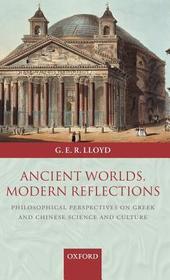
Ancient Worlds, Modern Reflections
Philosophical Perspectives on Greek and Chinese Science and Culture
-
10% KEDVEZMÉNY?
- A kedvezmény csak az 'Értesítés a kedvenc témákról' hírlevelünk címzettjeinek rendeléseire érvényes.
- Kiadói listaár GBP 120.00
-
54 180 Ft (51 600 Ft + 5% áfa)
Az ár azért becsült, mert a rendelés pillanatában nem lehet pontosan tudni, hogy a beérkezéskor milyen lesz a forint árfolyama az adott termék eredeti devizájához képest. Ha a forint romlana, kissé többet, ha javulna, kissé kevesebbet kell majd fizetnie.
- Kedvezmény(ek) 10% (cc. 5 418 Ft off)
- Kedvezményes ár 48 762 Ft (46 440 Ft + 5% áfa)
Iratkozzon fel most és részesüljön kedvezőbb árainkból!
Feliratkozom
54 180 Ft

Beszerezhetőség
Megrendelésre a kiadó utánnyomja a könyvet. Rendelhető, de a szokásosnál kicsit lassabban érkezik meg.
Why don't you give exact delivery time?
A beszerzés időigényét az eddigi tapasztalatokra alapozva adjuk meg. Azért becsült, mert a terméket külföldről hozzuk be, így a kiadó kiszolgálásának pillanatnyi gyorsaságától is függ. A megadottnál gyorsabb és lassabb szállítás is elképzelhető, de mindent megteszünk, hogy Ön a lehető leghamarabb jusson hozzá a termékhez.
A termék adatai:
- Kiadó OUP Oxford
- Megjelenés dátuma 2004. február 5.
- ISBN 9780199270163
- Kötéstípus Keménykötés
- Terjedelem234 oldal
- Méret 225x145x17 mm
- Súly 394 g
- Nyelv angol 0
Kategóriák
Rövid leírás:
Geoffrey Lloyd's pioneering new book uses a study of ancient Greek and Chinese science and culture to throw light on fundamental problems, both intellectual and moral, that we still face today. The issues range from the debate about realism and relativism in philosophy of science to doubts concerning the universal applicability of the discourse of human rights. Lloyd provides compelling evidence that ancient civilizations have much to offer contemporary debates in many fields of study.
TöbbHosszú leírás:
Geoffrey Lloyd engages in a wide-ranging exploration of what we can learn from the study of ancient civilisations that is relevant to fundamental problems, both intellectual and moral, that we still face today.
How far is it possible to arrive at an understanding of alien systems of belief? Is it possible to talk meaningfully of 'science' and of its various constituent disciplines, 'astronomy', 'geography', 'anatomy', and so on, in the ancient world? Are logic and its laws universal? Is there one ontology - a single world - to which all attempts at understanding must be considered to be directed? When we encounter apparently very different views of reality, how far can that be put down to a difference in conceptions of what needs explaining, or of what counts as an explanation, or to different preferred modes of reasoning or styles of inquiry? Do the notions of truth and belief represent reliable cross-cultural universals?
In another area, what can ancient history teach us about today's social and political problems? Are the discourses of human nature and of human rights universally applicable? What political institutions do we need to help secure equity and justice within nation states and between them?
Lloyd sets out to answer all these questions, and to convince us that the science and culture of ancient Greece and China provide precious resources to advance modern debates.
...goes far beyond his forays to date ... A bravura performance
Tartalomjegyzék:
Understanding Ancient Societies
Science in Ancient Civilizations?
Carving out Territories
A Common Logic
Searching for Truth
The Questionability of Belief
Styles of Inquiry and the Question of a Common Ontology
The Use and Abuse of Classification
For Example and Against
Universities: their Histories and Responsibilities
Human Nature and Human Rights
A Critique of Democracy
Conclusion
Glossary of Chinese and Greek Terms

