

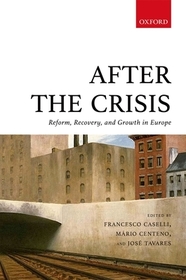
After the Crisis
Reform, Recovery, and Growth in Europe
-
10% KEDVEZMÉNY?
- A kedvezmény csak az 'Értesítés a kedvenc témákról' hírlevelünk címzettjeinek rendeléseire érvényes.
- Kiadói listaár GBP 79.00
-
37 742 Ft (35 945 Ft + 5% áfa)
Az ár azért becsült, mert a rendelés pillanatában nem lehet pontosan tudni, hogy a beérkezéskor milyen lesz a forint árfolyama az adott termék eredeti devizájához képest. Ha a forint romlana, kissé többet, ha javulna, kissé kevesebbet kell majd fizetnie.
- Kedvezmény(ek) 10% (cc. 3 774 Ft off)
- Kedvezményes ár 33 968 Ft (32 351 Ft + 5% áfa)
Iratkozzon fel most és részesüljön kedvezőbb árainkból!
Feliratkozom
37 742 Ft

Beszerezhetőség
Megrendelésre a kiadó utánnyomja a könyvet. Rendelhető, de a szokásosnál kicsit lassabban érkezik meg.
Why don't you give exact delivery time?
A beszerzés időigényét az eddigi tapasztalatokra alapozva adjuk meg. Azért becsült, mert a terméket külföldről hozzuk be, így a kiadó kiszolgálásának pillanatnyi gyorsaságától is függ. A megadottnál gyorsabb és lassabb szállítás is elképzelhető, de mindent megteszünk, hogy Ön a lehető leghamarabb jusson hozzá a termékhez.
A termék adatai:
- Kiadó OUP Oxford
- Megjelenés dátuma 2016. június 30.
- ISBN 9780198754688
- Kötéstípus Keménykötés
- Terjedelem222 oldal
- Méret 241x160x17 mm
- Súly 472 g
- Nyelv angol
- Illusztrációk 68 Figures and 39 Tables 0
Kategóriák
Rövid leírás:
The volume discusses the way forward for European countries as they face the challenges of a period of protracted growth in the wake of the economic and sovereign debt crisis.
TöbbHosszú leírás:
After the Crisis reassesses the twin projects of structural reform and European integration in the wake of the Great Recession and the European Sovereign Debt Crisis.
The introduction compares the pre-crises debate to the current situation, and highlights a number of ways in which both reform and further integration may have become more difficult. Chapter 1 surveys the state of the structural-reform agenda, its successes, failures, and priorities for further action. The second chapter focuses on the fiscal-policy response to the crisis and advocates a greater balance between supply-side reforms and demand-side management. The third chapter focuses on the asymmetric shocks across economies in the monetary union, and discusses institutional mechanisms to reduce their frequency and impact. Chapter 4 examines the cyclical behavior of output and financial indicators, as well as the counter-cyclical role of macro-financial policies, both at the national and the European level. The fifth chapter studies changes in Europeans' attitudes, showing how the recent crises have eroded public confidence in European institutions. The sixth chapter tackles the demographic challenges facing Europe, and particularly the way that demographic change may impact the reform agenda. Chapter 7 highlights the under-appreciated extent to which 'Europe', taken as a whole, is characterized by a substantial amount of inequality and geographical income clustering, and the challenge this poses for further integration.
Tartalomjegyzék:
Foreword
Introduction
The Agenda for Structural Reform in Europe
Crisis Management and Economic Growth in the Eurozone
Dealing with EMU heterogeneity: National vs. European Institutional Reforms
Macro-Financial Stability under EMU
Demographics and the Secular Stagnation Hypothesis in Europe
Winners, Losers, and the Future of European integration
The Challenge of European Inequality

