

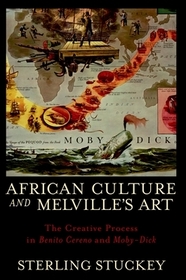
African Culture and Melville's Art
The Creative Process in Benito Cereno and Moby-Dick
-
10% KEDVEZMÉNY?
- A kedvezmény csak az 'Értesítés a kedvenc témákról' hírlevelünk címzettjeinek rendeléseire érvényes.
- Kiadói listaár GBP 29.99
-
13 540 Ft (12 895 Ft + 5% áfa)
Az ár azért becsült, mert a rendelés pillanatában nem lehet pontosan tudni, hogy a beérkezéskor milyen lesz a forint árfolyama az adott termék eredeti devizájához képest. Ha a forint romlana, kissé többet, ha javulna, kissé kevesebbet kell majd fizetnie.
- Kedvezmény(ek) 10% (kb. 1 354 Ft)
- Kedvezményes ár 12 186 Ft (11 606 Ft + 5% áfa)
Iratkozzon fel most és részesüljön kedvezőbb árainkból!
Feliratkozom
13 540 Ft

Beszerezhetőség
Megrendelésre a kiadó utánnyomja a könyvet. Rendelhető, de a szokásosnál kicsit lassabban érkezik meg.
Why don't you give exact delivery time?
A beszerzés időigényét az eddigi tapasztalatokra alapozva adjuk meg. Azért becsült, mert a terméket külföldről hozzuk be, így a kiadó kiszolgálásának pillanatnyi gyorsaságától is függ. A megadottnál gyorsabb és lassabb szállítás is elképzelhető, de mindent megteszünk, hogy Ön a lehető leghamarabb jusson hozzá a termékhez.
A termék adatai:
- Kiadó OUP USA
- Megjelenés dátuma 2011. február 10.
- ISBN 9780199768561
- Kötéstípus Puhakötés
- Terjedelem168 oldal
- Méret 234x156x9 mm
- Súly 245 g
- Nyelv angol 0
Kategóriák
Rövid leírás:
Presenting a groundbreaking reappraisal of these two powerful pieces of fiction, Sterling Stuckey reveals how African customs and rituals heavily influenced one of America's greatest novelists.
TöbbHosszú leírás:
Although Herman Melville's masterworks Moby-Dick and Benito Cereno have long been the subject of vigorous scholarly examination, the impact of African culture on these works has received surprisingly little critical attention. Presenting a groundbreaking reappraisal of these two powerful pieces of fiction, Sterling Stuckey reveals how African customs and rituals heavily influenced one of America's greatest novelists.
The Melville that emerges in this innovative, intertextual study is one profoundly shaped by the vibrant African-influenced music and dance culture of nineteenth-century America. Drawing on extensive research, Stuckey reveals how celebrations of African culture by black Americans, such as the Pinkster festival and the Ring Shout dance form, permeated Melville's environs during his formative years and found their way into his finest fiction. Also demonstrated is the extent to which the author of Moby-Dick is indebted to Frederick Douglass's depiction of music, especially the blues, in his classic slave narrative. Connections between Melville's work and African culture are also extended beyond America to the African continent itself. With readings of hitherto unexplored chapters in Delano's Voyages and Travels in the Northern and Southern Hemispheres and other nonfiction sources--such as Joseph Dupuis's Journal of a Residence in Ashantee --Stuckey links Benito Cereno and Moby-Dick , pinpointing the sources from which Melville drew to fashion major characters that appear aboard both the Pequod and the San Dominick .
Combining inventive literary and historical analysis, Stuckey shows how myriad aspects of African culture coalesced to create the unique vision conveyed in Moby-Dick and Benito Cereno. Ultimately, African Culture and Melville's Art provides a wealth of insight into the novelist's expressive power and the development of his distinct cross-cultural aesthetic.
Revisiting Melville's New York and Albany neighborhoods, Sterling Stuckey has given us a stunning reconstruction of the genesis of Moby-Dick and Benito Cereno. His Melville is an 'Africanist' in the best sense: in frequent contact with Ashantee culture, and inspired by the music and dance of the slaves to forge his own poetics of cheer and gloom.
Tartalomjegyzék:
Introduction
The Tambourine in Glory
Benito Cereno and Moby Dick
The Hatchet-Polishers, Benito Cereno, and Amasa Delano
Cheer and Gloom: Frederick Douglass and Herman Melville on Slave Music and Dance
Appendix: Chapter XVI from Captain Amasa Delano's A Narrative of Voyages and Travels

