

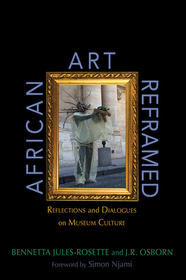
African Art Reframed
Reflections and Dialogues on Museum Culture
-
20% KEDVEZMÉNY?
- A kedvezmény csak az 'Értesítés a kedvenc témákról' hírlevelünk címzettjeinek rendeléseire érvényes.
- Kiadói listaár GBP 100.00
-
45 150 Ft (43 000 Ft + 5% áfa)
Az ár azért becsült, mert a rendelés pillanatában nem lehet pontosan tudni, hogy a beérkezéskor milyen lesz a forint árfolyama az adott termék eredeti devizájához képest. Ha a forint romlana, kissé többet, ha javulna, kissé kevesebbet kell majd fizetnie.
- Kedvezmény(ek) 20% (cc. 9 030 Ft off)
- Kedvezményes ár 36 120 Ft (34 400 Ft + 5% áfa)
- A kedvezmény érvényes eddig: 2026. június 30.
Iratkozzon fel most és részesüljön kedvezőbb árainkból!
Feliratkozom
45 150 Ft

Beszerezhetőség
Becsült beszerzési idő: A Prosperónál jelenleg nincsen raktáron, de a kiadónál igen. Beszerzés kb. 3-5 hét..
A Prosperónál jelenleg nincsen raktáron.
Why don't you give exact delivery time?
A beszerzés időigényét az eddigi tapasztalatokra alapozva adjuk meg. Azért becsült, mert a terméket külföldről hozzuk be, így a kiadó kiszolgálásának pillanatnyi gyorsaságától is függ. A megadottnál gyorsabb és lassabb szállítás is elképzelhető, de mindent megteszünk, hogy Ön a lehető leghamarabb jusson hozzá a termékhez.
A termék adatai:
- Kiadás sorszáma 1st Edition
- Kiadó University of Illinois Press
- Megjelenés dátuma 2020. június 22.
- Kötetek száma Hardback
- ISBN 9780252043277
- Kötéstípus Keménykötés
- Terjedelem408 oldal
- Méret 235x156x36 mm
- Súly 966 g
- Nyelv angol
- Illusztrációk 26 color photographs, 59 black & white photographs, 7 charts 14
Kategóriák
Hosszú leírás:
The authors take a three-pronged approach. Part One ranges from curiosity cabinets to virtual websites to offer a history of ethnographic and art museums and look at their organization and methods of reaching out to the public. In the second part, the authors examine museums as ecosystems and communities within communities, and they use semiotic methods to analyze images, signs, and symbols drawn from the experiences of curators and artists. The third part introduces innovative strategies for displaying, disseminating, and reclaiming African art. The authors also propose how to reinterpret the art inside and outside the museum and show ways of remixing the results.
Drawing on extensive conversations with curators, collectors, and artists, African Art Reframed is an essential guide to building new exchanges and connections in the dynamic worlds of African and global art.
Tartalomjegyzék:
List of Illustrations
Foreword by Simon Njami
Preface and Acknowledgments
Introduction: Reframing African Art
PART I: ENTERING MUSEUMS AT THE THRESHOLD
CHAPTER 1. Lost and Found: Postcolonial Reflections on Colonial Museums
CHAPTER 2. Revisiting the Storeroom: Collections and Cultural Surplus
CHAPTER 3. Reaching Out: Museums, Audiences, and the Public Sphere
PART II: DIALOGUES ON MUSEUM PRACTICES AND ART WORLDS
CHAPTER 4. Museums Speak Out: Curators' Dialogues
CHAPTER 5. Agitating African Art: Artists' Voices and Audience Responses
PART III: UNMIXING AFRICAN ART AND REMIXING THE RESULTS
CHAPTER 6. The Theory and Method of Unmixing
CHAPTER 7. Remixing the Results and Looking Ahead
CHAPTER 8. Personal Journeys and Reflections on African Art
Chronology
Notes
Bibliography
Index

