

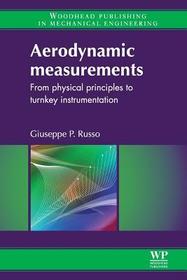
Aerodynamic Measurements
From Physical Principles to Turnkey Instrumentation
-
10% KEDVEZMÉNY?
- A kedvezmény csak az 'Értesítés a kedvenc témákról' hírlevelünk címzettjeinek rendeléseire érvényes.
- Kiadói listaár EUR 175.00
-
72 581 Ft (69 125 Ft + 5% áfa)
Az ár azért becsült, mert a rendelés pillanatában nem lehet pontosan tudni, hogy a beérkezéskor milyen lesz a forint árfolyama az adott termék eredeti devizájához képest. Ha a forint romlana, kissé többet, ha javulna, kissé kevesebbet kell majd fizetnie.
- Kedvezmény(ek) 10% (cc. 7 258 Ft off)
- Kedvezményes ár 65 323 Ft (62 213 Ft + 5% áfa)
Iratkozzon fel most és részesüljön kedvezőbb árainkból!
Feliratkozom
72 581 Ft

Beszerezhetőség
Megjelenése törölve vagy kivonva a forgalomból. Sajnos nem rendelhető.
Why don't you give exact delivery time?
A beszerzés időigényét az eddigi tapasztalatokra alapozva adjuk meg. Azért becsült, mert a terméket külföldről hozzuk be, így a kiadó kiszolgálásának pillanatnyi gyorsaságától is függ. A megadottnál gyorsabb és lassabb szállítás is elképzelhető, de mindent megteszünk, hogy Ön a lehető leghamarabb jusson hozzá a termékhez.
A termék adatai:
- Kiadó Elsevier Science
- Megjelenés dátuma 2018. október 30.
- ISBN 9780081016862
- Kötéstípus Puhakötés
- Terjedelem282 oldal
- Méret 233x155 mm
- Nyelv angol 0
Kategóriák
Hosszú leírás:
Aerodynamic measurements presents a comprehensive review of the theoretical bases on which experimental techniques used in aerodynamics are based. Limitations of each method in terms of accuracy, response time and complexity are addressed. This book serves as a guide to choosing the most pertinent technique for each type of flow field including: 1D, 2D, 3D, steady or unsteady, subsonic, supersonic or hypersonic.
TöbbTartalomjegyzék:
List of figures
List of tables
Preface
Acknowledgements
About the author
Chapter 1: Pressure sensors
Abstract:
1.1 Fundamental features
1.2 Hydrostatic manometers
1.3 Mechanical manometers
1.4 Pressure transducers
1.5 Pressure-sensitive paints
Chapter 2: Velocity and mass flow by pressure measurements
Abstract:
2.1 Introduction
2.2 Measurement of flow speed by pressures
2.3 Pitot tube
2.4 Prandtl tube
2.5 Pitot-static tube
2.6 Flow direction measurements
2.7 Mass flow measurements
Chapter 3: Hot wire anemometer
Abstract:
3.1 Introduction
3.2 Materials for probes
3.3 Probes
3.4 Operating principle
3.5 Constant current anemometer (CCA)
3.6 Constant temperature anemometer (CTA)
3.7 Comparison of CCA and CTA
3.8 Operating temperature of the wire
3.9 Compensation of the stream temperature
3.10 The linearizer
3.11 Measurements of absolute value and direction of average velocity
3.12 Measurements in turbulent flows
Chapter 4: Laser anemometry
Abstract:
4.1 Introduction
4.2 The gas laser
4.3 Laser-Doppler anemometer (LDA)
4.4 Laser two focus anemometer (L2F)
4.5 Particle image velocimetry (PIV)
Chapter 5: Temperature measurements
Abstract:
5.1 Sensors
5.2 Detection of transition
5.3 Measurement of stagnation temperature
Chapter 6: Flow visualization
Abstract:
6.1 Objectives of the visualization
6.2 Visualization techniques
6.3 Principles of operation of optical methods
6.4 Deflection of a light beam in the presence of a constant gradient of refractive index
6.5 Shadowgraph
6.6 The Schlieren method
6.7 Interferometry
6.8 Quantitative analysis of Schlieren images and interferograms
Chapter 7: Measurements of aerodynamic forces
Abstract:
7.1 Types of supports for models in wind tunnels
7.2 Calculating the aerodynamic forces from pressure measurements
7.3 Measuring the aerodynamic forces with balances
Index
Több
